

Asset allocation is the deliberate division of your investment capital across asset classes such as stocks, bonds, cash, and real estate, calibrated to your personal goals, risk tolerance, and time horizon. For women investors in Switzerland, understanding what asset allocation means in practice is not just a financial exercise. It is the single most important decision you will make for your long-term wealth. Research confirms that asset allocation accounts for over 90% of the variability in long-term investment returns, which means your choice of how to divide your portfolio matters far more than which individual stocks you pick. Women in Swiss cities from Zürich to Zug are increasingly taking control of their finances, and getting the allocation right from the start lays the foundation for lasting financial independence.
What is asset allocation for women investors?
Asset allocation, known in the industry as portfolio construction or investment allocation, is the process of deciding what percentage of your money goes into each type of investment. The core asset classes are equities (stocks), fixed income (bonds), cash or cash equivalents, and real assets such as property or commodities. Each class behaves differently under various market conditions, and combining them thoughtfully reduces the overall risk of your portfolio without sacrificing all of your growth potential.
The reason this matters so much for women specifically comes down to two factors: time and circumstance. Women in Switzerland, like women across Europe, statistically live longer than men by approximately six years. That longer retirement horizon means your money needs to work harder and for longer, which changes the entire logic of how you should allocate it. A portfolio built for a 20-year retirement looks very different from one built for a 30-year retirement.
Women also face a wave-like career pattern more often than men, with periods of reduced income due to parental leave, part-time work, or caring responsibilities. These interruptions affect how much you can save and when, which in turn shapes the allocation decisions you make at each stage of life. Recognising this reality is not a disadvantage. It is the starting point for building a strategy that actually fits your life.
How do women’s investment behaviours shape allocation decisions?
Women tend to trade less frequently than men, and that discipline pays off. Women’s portfolios often outperform male equivalents precisely because of this restrained approach, which avoids the transaction costs and timing errors that erode returns over time. This natural tendency towards patience is a genuine strength when it comes to maintaining a long-term asset allocation strategy.
That said, one common pattern works against women’s financial interests: holding excess cash beyond emergency needs. Cash feels safe, but inflation steadily erodes its purchasing power. A woman in Geneva or Basel holding 40% of her savings in a current account is not being cautious. She is quietly losing ground every year. The shift from saver to strategic investor means defining what that cash is actually for, keeping three to six months of expenses as a genuine emergency fund, and putting the rest to work in a structured allocation.
Another pattern worth understanding is the confidence gap. Women often underestimate their own investing ability, yet their natural tendency to research thoroughly and ask questions before acting is exactly what good investing requires. The issue is not capability. It is the absence of a clear framework that makes the decisions feel manageable. Once you have an allocation strategy in place, the day-to-day noise of markets becomes far less intimidating.
Moving from a saver mindset to a strategic investor mindset starts with defining your financial goals clearly. Are you investing for retirement in 25 years, a property purchase in five years, or your children’s education in ten? Each goal calls for a different allocation, and having that clarity removes the paralysis that stops many women from investing at all.
Pro Tip: If you find yourself holding more than six months of expenses in cash, treat the excess as uninvested capital and schedule a review to decide which asset class it belongs in. Even a conservative bond allocation will outperform cash over a five-year horizon in most market environments.
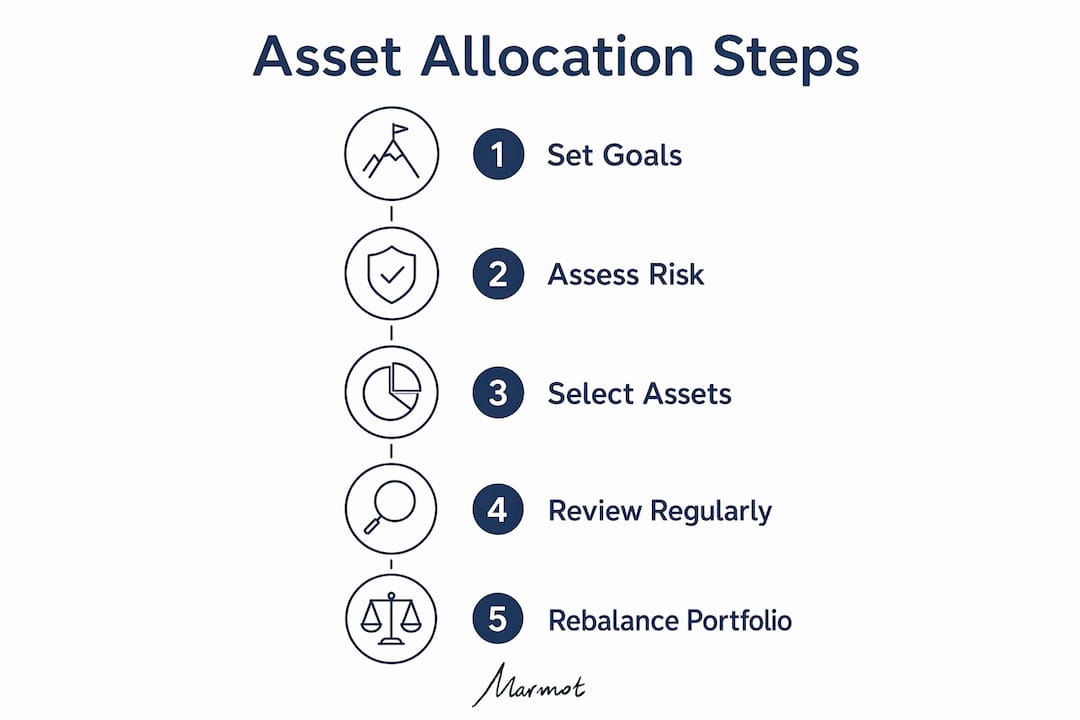
What are the best asset allocation strategies for women in Switzerland?
There is no single correct allocation, but there are well-tested frameworks you can adapt. The three most common models are conservative, balanced, and growth-oriented, each defined by the proportion of equities versus bonds and cash.
| Profile | Equities | Bonds | Cash/Other | Best suited for |
|---|---|---|---|---|
| Conservative | 30% | 60% | 10% | Near retirement, low risk tolerance |
| Balanced | 60% | 35% | 5% | Mid-career, moderate risk tolerance |
| Growth | 80% | 15% | 5% | Long horizon, higher risk tolerance |
| Aggressive growth | 95% | 5% | 0% | Early career, very long horizon |
The traditional rule of thumb, allocating bonds equal to your age as a percentage, is too conservative for women with longer life expectancies. A 55-year-old woman in Zürich following this rule would hold 55% in bonds, but she may have 35 more years of retirement to fund. Maintaining a higher equity allocation for longer is not reckless. It is a rational response to longevity.
Within the equity portion of your portfolio, Swiss investors have access to a distinctive set of options. Swiss equities, particularly large-cap companies listed on the SIX Swiss Exchange such as Nestlé, Novartis, and Roche, offer stability and consistent dividends. Complementing these with international equities across US, European, and emerging markets adds diversification that purely domestic portfolios lack. Swiss real estate, whether through direct property or listed real estate funds, provides inflation protection and income. Private equity, accessible through Swiss-based funds, can add growth potential for investors with a longer time horizon and higher risk tolerance.
Tax efficiency matters in Switzerland. Rebalancing a taxable account by selling winners triggers capital gains considerations, even though Switzerland does not levy capital gains tax on private investors in most circumstances. The cleaner approach is to direct new contributions towards underperforming asset classes, which restores your target allocation without unnecessary transaction costs. This is particularly relevant for women in Zug or Wollerau who are in high-income phases and making regular investment contributions.
Pro Tip: When building your allocation, separate your goals by time horizon. Money you need within three years belongs in cash or short-term bonds. Money you will not touch for ten or more years can carry a much higher equity weighting. Mixing these in a single pot is one of the most common and costly mistakes.
For women with life stage-specific needs, a glide path approach works well. This means starting with a growth-oriented allocation in your 30s and 40s, gradually shifting towards a balanced and then income-focused mix as you approach retirement. The transition should be gradual, not sudden, and should reflect your actual retirement date rather than a generic age milestone.
You can find more detail on building personalised portfolio strategies that reflect your specific circumstances and goals.
How should you maintain and rebalance your portfolio over time?
Portfolio drift is what happens when markets move and your original allocation gets distorted. If equities rise strongly, your 60% equity allocation might drift to 75%, leaving you with more risk than you intended. Rebalancing corrects this by selling or redirecting contributions to bring the portfolio back to its target.
The most practical rebalancing schedule for most investors is annual, ideally at a fixed date such as the start of the year or your birthday. This removes the temptation to react to short-term market movements and keeps the process disciplined. Some investors also rebalance when any asset class drifts more than five percentage points from its target, which is a sensible trigger-based approach.
For Swiss investors in taxable accounts, the preferred method is to redirect new contributions rather than sell existing holdings. This achieves the rebalancing effect without triggering any transaction costs or administrative complexity. For pension accounts such as Pillar 3a, rebalancing is simpler because the tax-deferred environment removes most of the friction.
Life events should also prompt an allocation review. A career break, a divorce, an inheritance, or a move from Lausanne to Zurich for a new role all change your financial picture in ways that may require adjusting your allocation. The best portfolio is dynamic, not a fixed set of funds you set up once and forget. Reviewing your allocation at major life transitions is not overcomplicating things. It is good financial hygiene.
Emotional discipline is the hardest part of rebalancing. When markets fall sharply, the instinct is to move to cash. This is the single most damaging decision a long-term investor can make, because it locks in losses and removes you from the recovery. Maintaining your allocation through volatility is where the real returns are earned.
Pro Tip: Set a calendar reminder for an annual portfolio review. At that review, check three things: whether your allocation still matches your goals, whether any asset class has drifted significantly, and whether any major life changes require a structural adjustment.
How does asset allocation connect to your broader financial plan?
Asset allocation does not exist in isolation. For women in Switzerland, it sits within a broader financial picture that includes pension planning, tax planning, and long-term wealth goals. Getting the allocation right means understanding how it interacts with each of these.
Switzerland’s three-pillar pension system shapes how you think about allocation. Pillar 1 (AHV) and Pillar 2 (occupational pension) provide a base, but they are often insufficient for the retirement income women need, particularly those who have taken career breaks. Pillar 3a contributions, which are tax-deductible, should be invested rather than left in a savings account. The allocation within your Pillar 3a, typically a choice between equity-heavy and bond-heavy funds, is one of the most impactful decisions you can make for long-term growth.
For international clients living in Zürich, Geneva, or Basel, cross-border tax considerations add another layer. Investments held in different countries may be subject to different tax treatments, withholding taxes on dividends, and reporting requirements. Getting the allocation right across jurisdictions requires advice that accounts for both Swiss and home-country tax rules.
Goal-based investing is the framework that ties allocation to purpose. Rather than managing one large portfolio, you mentally (or literally) separate your capital into buckets: short-term needs, medium-term goals such as property or education, and long-term retirement capital. Each bucket carries a different allocation, and together they form a coherent financial plan.
Sustainable investing is increasingly part of allocation decisions for women in Switzerland. Integrating ESG (environmental, social, and governance) criteria into your equity selection does not require sacrificing returns. Swiss-listed ESG funds and impact investment options through platforms like those available via FINMA-regulated advisers give you access to values-aligned portfolios without compromising diversification. You can explore more on sustainable investing approaches that work within a Swiss portfolio context.
Key takeaways
Asset allocation, not stock selection, is the primary driver of long-term investment returns, and women in Switzerland benefit most from a strategy tailored to their longer life expectancy, career patterns, and specific financial goals.
| Point | Details |
|---|---|
| Allocation drives returns | Over 90% of long-term return variability comes from asset allocation, not individual stock picks. |
| Longevity changes the maths | Women live approximately six years longer than men, requiring higher equity exposure for longer. |
| Avoid excess cash | Holding too much cash beyond emergency reserves erodes purchasing power through inflation over time. |
| Rebalance with contributions | In Swiss taxable accounts, redirect new contributions to restore target allocation rather than selling assets. |
| Align allocation to life stages | Shift from growth-oriented to income-focused allocation gradually as retirement approaches, not all at once. |
Why I think most women underestimate how much allocation matters
The most common conversation I have with women investors is not about which stocks to buy. It is about why they have been sitting in cash for three years waiting to feel ready. The confidence gap is real, but it is almost never about knowledge. Most women I speak with understand the basics perfectly well. What they lack is a clear, personal framework that makes the first move feel justified.
What I have observed is that once a woman has a defined allocation, even a simple one, the anxiety around investing drops significantly. The allocation becomes the plan, and the plan removes the need to make a new decision every time markets move. That is the real value of getting this right early.
Switzerland has a particular cultural tendency towards financial conservatism, which is not always a bad thing, but it does mean that many women here are significantly underinvested relative to their actual risk capacity. A 45-year-old professional in Zürich with a 20-year investment horizon and a stable income can almost certainly carry more equity than she thinks. The numbers support it. The longevity data supports it. What is missing is the confidence to act on it.
My honest view is that the women who build real wealth are not the ones who find the best fund. They are the ones who commit to a sensible allocation, stay in it through difficult markets, and review it regularly without overreacting. That is not complicated. It is just consistent.
— Sophie Steinmann
How Marmot supports women investors in Switzerland
Marmot is Switzerland’s only FINMA-accredited wealth manager dedicated exclusively to women and families, with clients across Zürich, Geneva, Basel, and beyond.
If you are ready to move from thinking about asset allocation to actually building a portfolio that fits your life, Marmot’s advisers work with you to create a strategy aligned with your goals, your timeline, and your Swiss tax situation. Whether you are starting from scratch or reviewing an existing portfolio, the process begins with understanding where you are now. Marmot manages CHF, EUR, and USD accounts and covers pension planning, international tax considerations, and long-term wealth management. Explore wealth management for women and take the first step towards a portfolio that works as hard as you do.
FAQ
What is asset allocation and why does it matter for women?
Asset allocation is the process of dividing your investments across stocks, bonds, cash, and real assets to balance risk and return. It accounts for over 90% of long-term return variability, making it the most important investment decision you will make.
How should women in Switzerland adjust their allocation for longevity?
Women statistically live around six years longer than men, which means a more conservative bond-heavy allocation can leave retirement savings short. Maintaining a higher equity weighting for longer, and reducing it gradually rather than abruptly, is the more appropriate approach.
How often should I rebalance my investment portfolio?
An annual review is sufficient for most investors, with an additional check whenever a major life event occurs such as a career change, inheritance, or approaching retirement. In Swiss taxable accounts, rebalancing via new contributions is more efficient than selling existing holdings.
Is it too late to start building an asset allocation strategy at 50?
No. A 50-year-old woman in Switzerland may have a 35-year investment horizon ahead of her. A balanced to growth-oriented allocation still makes sense at this stage, with a gradual shift towards income-generating assets as retirement approaches.
How does asset allocation differ from diversification?
Asset allocation is the strategic decision about how much to put in each asset class. Diversification is what happens within each class, spreading investments across different sectors, geographies, or issuers. Both matter, but allocation is the higher-level decision that shapes the overall risk and return profile of your portfolio.

.webp)





.jpeg)




.png)

.svg)


