
Chart of the Week
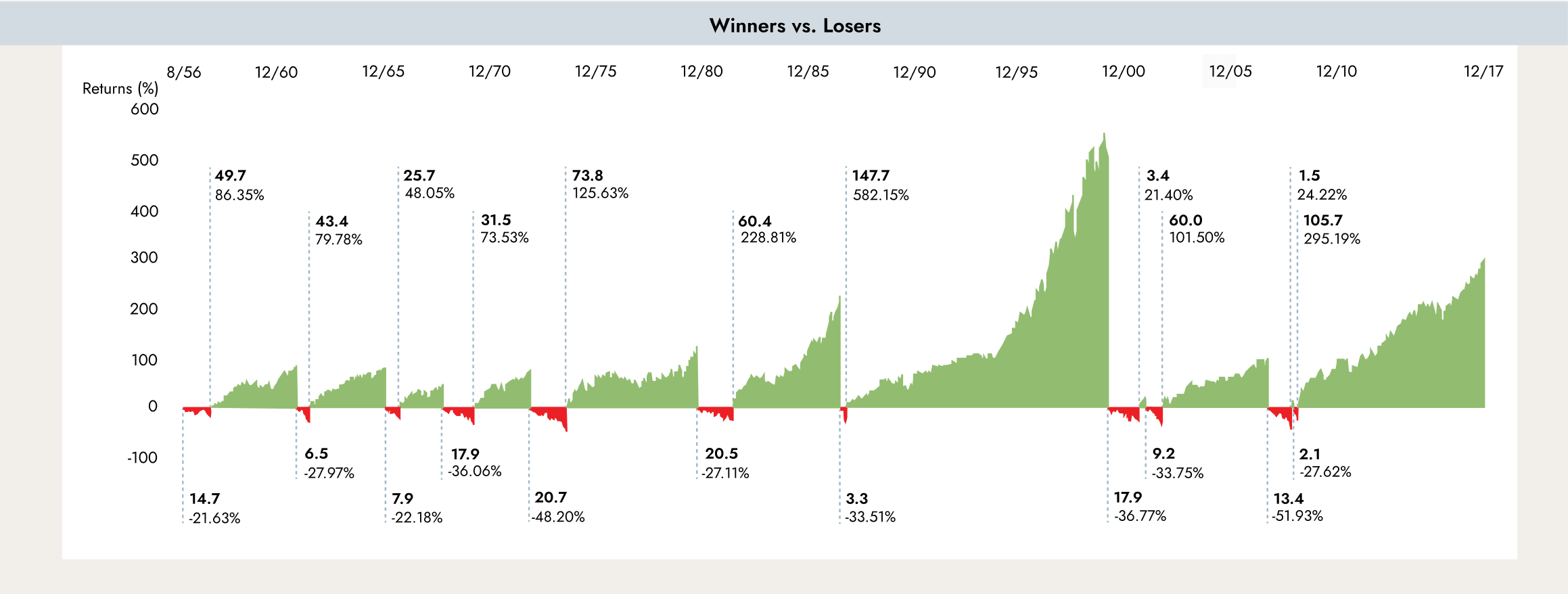
The chart is already several years old, but it remains very striking. It shows the phases of rising markets (bull markets, green) and the phases of declining markets (bear markets, red) from 1956 to 2018.
Why This Matters
As is easy to see, periods of rising markets (green) far outweigh periods of declining markets (red).
Clients often ask us why we remain 80–90% invested even though we currently view the markets as overvalued. The chart above shows the reason. It is better to risk the red phases than to exit too early during the green phases.
Conclusion: In the long term, it pays to stay invested. During periods of declining markets, investment strategy should not be changed completely. In negative market phases, we try to reduce risk somewhat by holding higher cash reserves, but over the medium and long term, we aim to remain invested.
Artificial Intelligence: Too Much Spending, Too Little Benefit?
A study published by Goldman Sachs a few days ago carried this title. Goldman Sachs is one of the most renowned investment banks in the United States. It is also known for its strong connections to the U.S. government. In almost every U.S. administration, one or two cabinet members can be found who previously worked at Goldman Sachs.
Until now, studies on the topic of artificial intelligence have been predominantly positive. If such a renowned bank now presents a rather negative report, it could be a sign of an impending shift in trend.
The core message of the study is that a great deal of money is being invested in artificial intelligence applications, but the companies using these AI applications are unable to increase their revenues accordingly.
ChatGPT is on everyone’s lips, and many people have already come to appreciate it. Microsoft, which has integrated ChatGPT into its tool Copilot, writes: “A new era of AI begins.” Unfortunately, Microsoft Copilot has received largely negative user ratings. Here is one example: “Copilot in its current state is not even a nice gimmick, but unfortunately still nearly unusable and not worth the money.”
But let us not be misunderstood. Artificial intelligence will change all of our lives and society as a whole — just not yet. At present, there is still a wide gap between the expectations placed on companies seeking to profit from the technology and reality.
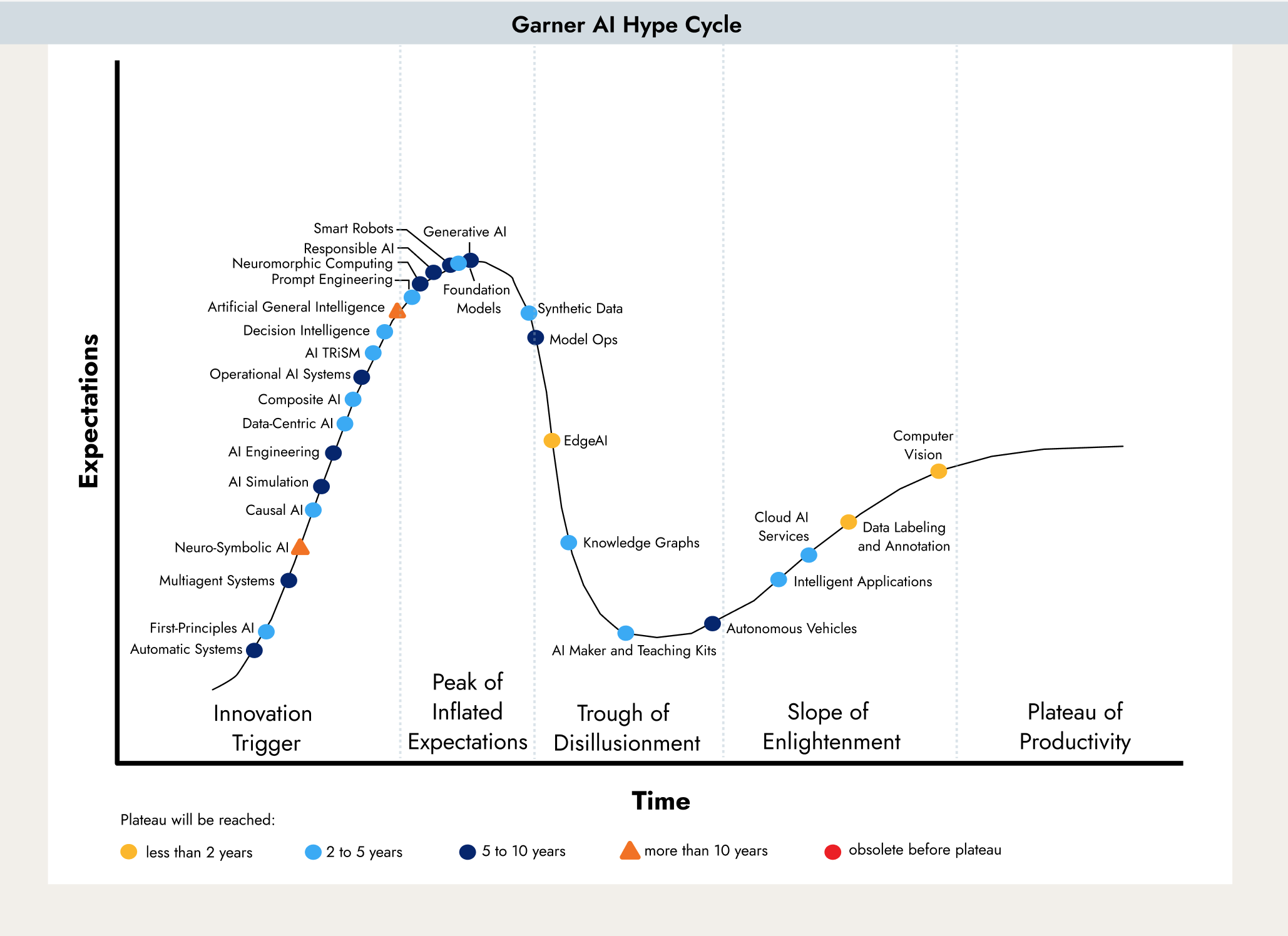
Gartner is a highly respected company that identifies future trends and advises businesses accordingly. The chart shows that many artificial intelligence applications are still in an early stage of development, where expectations are often overestimated. In most cases, it is advisable to invest in a trend only during the fourth stage (Slope of Enlightenment) — that is, once the initial disillusionment has been processed.
What we are currently seeing are all tools that fall into the category of Generative AI. This is the first stage in AI development. ChatGPT, for example, is a good chatbot that delivers better answers than previous search engines through optimized models, but this still has little to do with “intelligence.” The results are achieved through sophisticated training and massive computing power — computing power that comes at a cost:
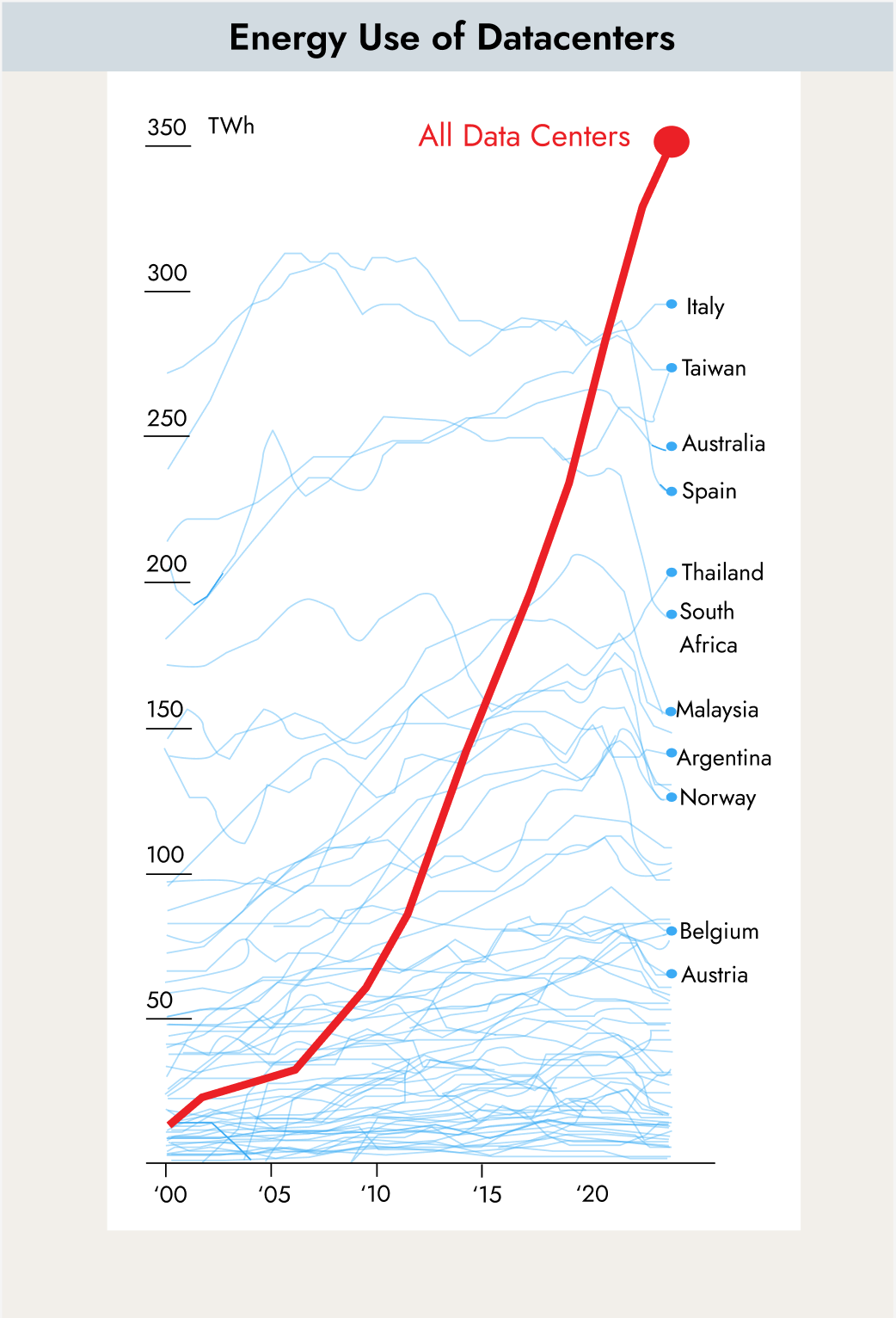
The data centers used for search queries and artificial intelligence applications such as ChatGPT consume more electricity than entire countries such as Italy, Taiwan, or Australia. A single query entered into ChatGPT can require up to 25 times more energy than a typical Google search.

The chart shows an estimate by Goldman Sachs. By 2030, the use of artificial intelligence is expected to increase energy demand in Europe by more than 40%. This does not align with current goals to reduce energy consumption and achieve carbon neutrality by 2030 or 2040.
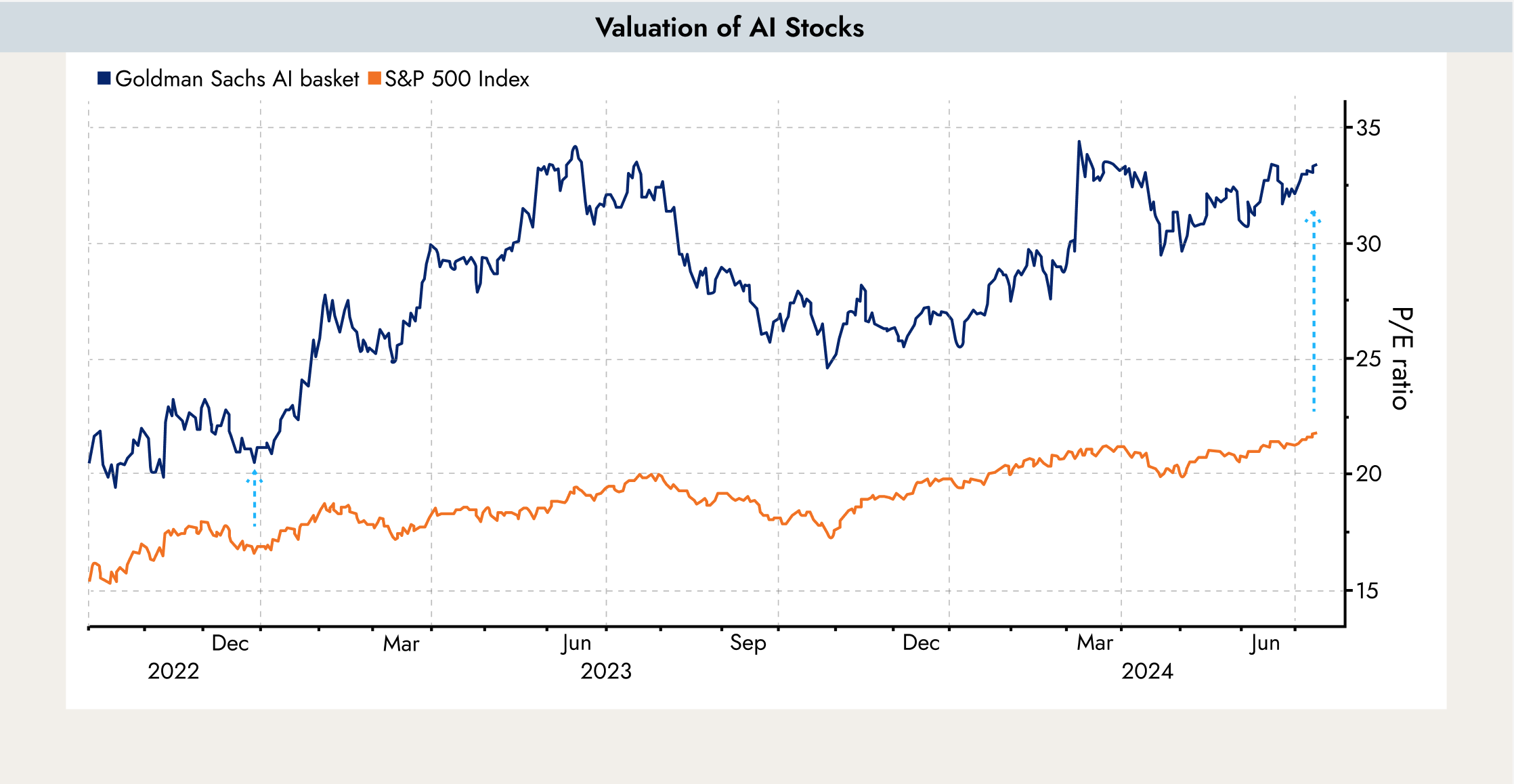
The chart shows the valuation of artificial intelligence-related stocks (black line, a basket of AI stocks compiled by Goldman Sachs) compared with the S&P 500 (yellow line). The valuation measure used is the price-to-earnings ratio (P/E ratio). The valuation of AI-related stocks is significantly higher than that of the other stocks in the benchmark S&P 500 benchmark index. As the Goldman Sachs study suggests, this valuation may not be justified.
A correction in these stocks in the near future would therefore not come as a surprise.


.webp)





.jpeg)




.jpeg)

.svg)


