
Chart of the Week

The chart shows when companies in the United States are scheduled to release their earnings results. Other important companies not shown in the chart above include Google and Microsoft on July 23, 2024, Apple on August 1, 2024, and NVIDIA on August 23, 2024. Read more in our other market analysis about Tesla and NVIDIA stocks.
Why This Matters
At the same time as quarterly earnings are released, the CEO usually also holds a press conference discussing the outlook for the coming quarters. Stocks often react very strongly to the earnings figures or to statements made during these press conferences. Moves of 10% up or down are not uncommon. If you own these stocks, you should closely follow the news on those days. Read more in our other market analysis on the second quarter 2024 earnings season.
One of the most important days for the stock market will be July 23. On the same day, Tesla, Google, and Microsoft will release their results. Another important date for investors is July 17, when the US Federal Reserve will hold its final meeting before the summer break. Currently, there is a 95% probability that interest rates will remain unchanged.
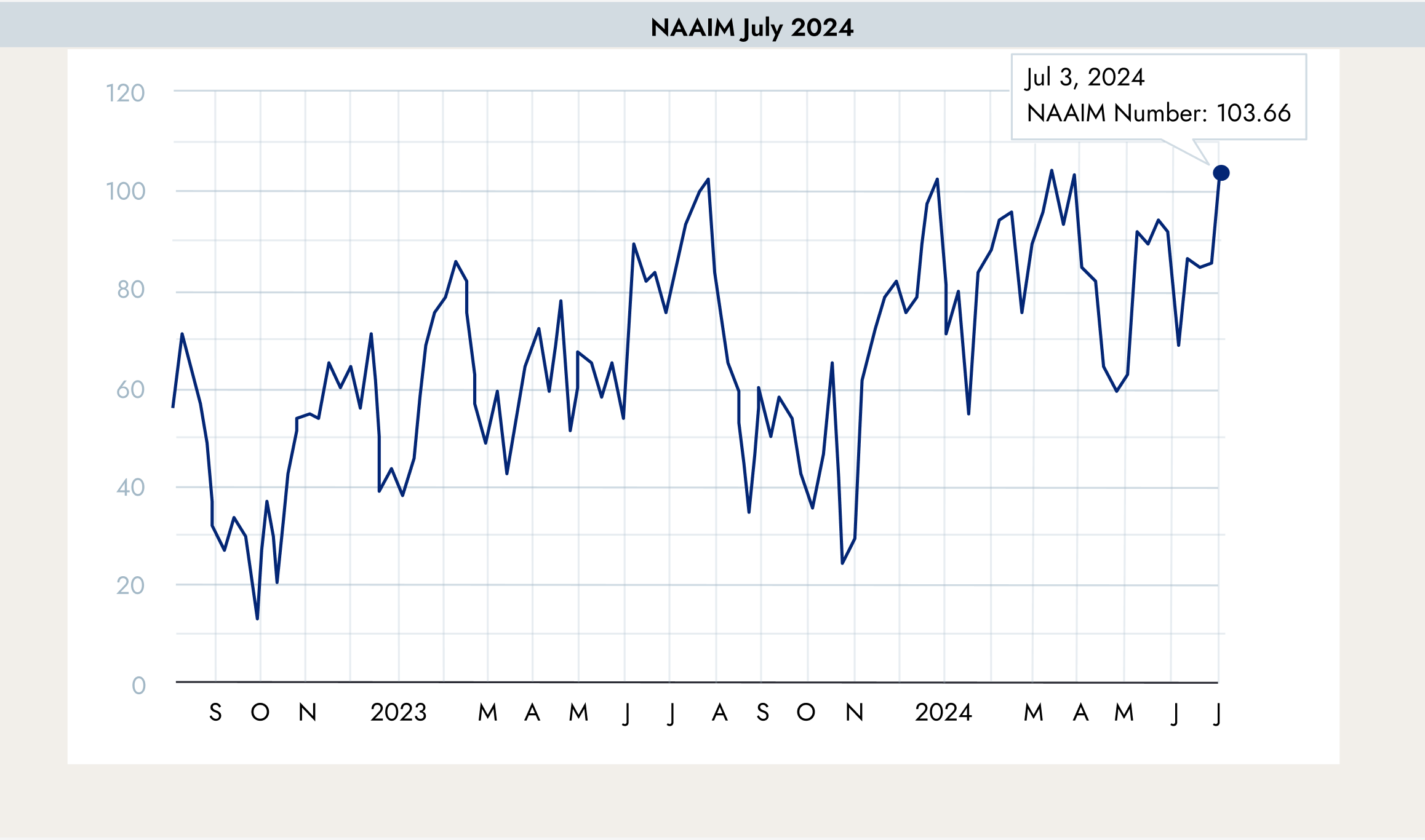
The chart from the “National Association of Active Investment Managers” shows the level of market exposure among active managers. Most active managers are already as heavily invested as they rarely are. This creates the risk that they may take profits and sell after strong earnings reports, while also selling in response to weak results.
They no longer have additional cash available for further purchases.
The US economy is collapsing while the stock market climbs to new all-time highs.
Last week, several economic indicators were released in the United States, and all of them came in significantly worse than expected:
- Services Purchasing Managers’ Index: In May, the index stood at 53, but it has now fallen to 49. A reading below 50 signals a contracting economy. In recent months, the Manufacturing Purchasing Managers’ Index had already remained below 50, while the strong performance of the services sector helped prevent a recession. Now, the services sector is also slipping into recession.
- Business Activity / Production: In May, the index was still at 63, but in June it fell to 49. Industrial production has declined sharply.
- New Orders Index: In May, the index still stood at 54, but it has now dropped to 46. New orders are also collapsing.
- Backlog of Orders: In May, the index was still at 51, but it has now fallen to 44. Even though production is declining, the order backlog is also shrinking.
All four indicators turned negative in June after a long upward trend.
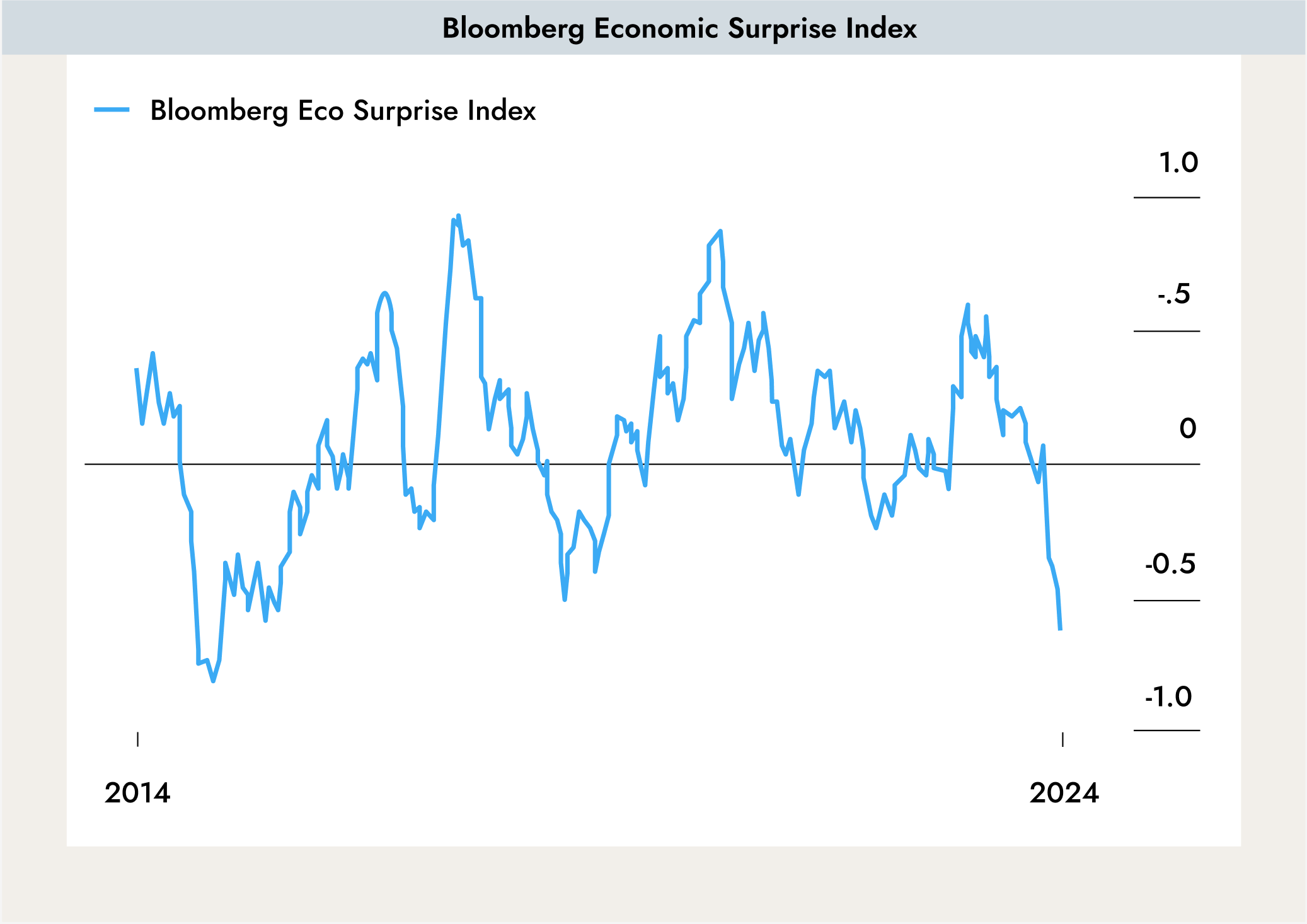
The Surprise Index also shows whether the published economic data surprised to the upside or downside.
US economic data is performing worse than ever before. The Bloomberg Eco Surprise Index shows that the data is falling far short of expectations — a trend not seen in more than a decade.
Normally, the stock market should fall sharply after so many negative reports. Instead, the exact opposite is happening, with US stock markets climbing to new all-time highs.
This is happening because inflation is also declining sharply at the same time.
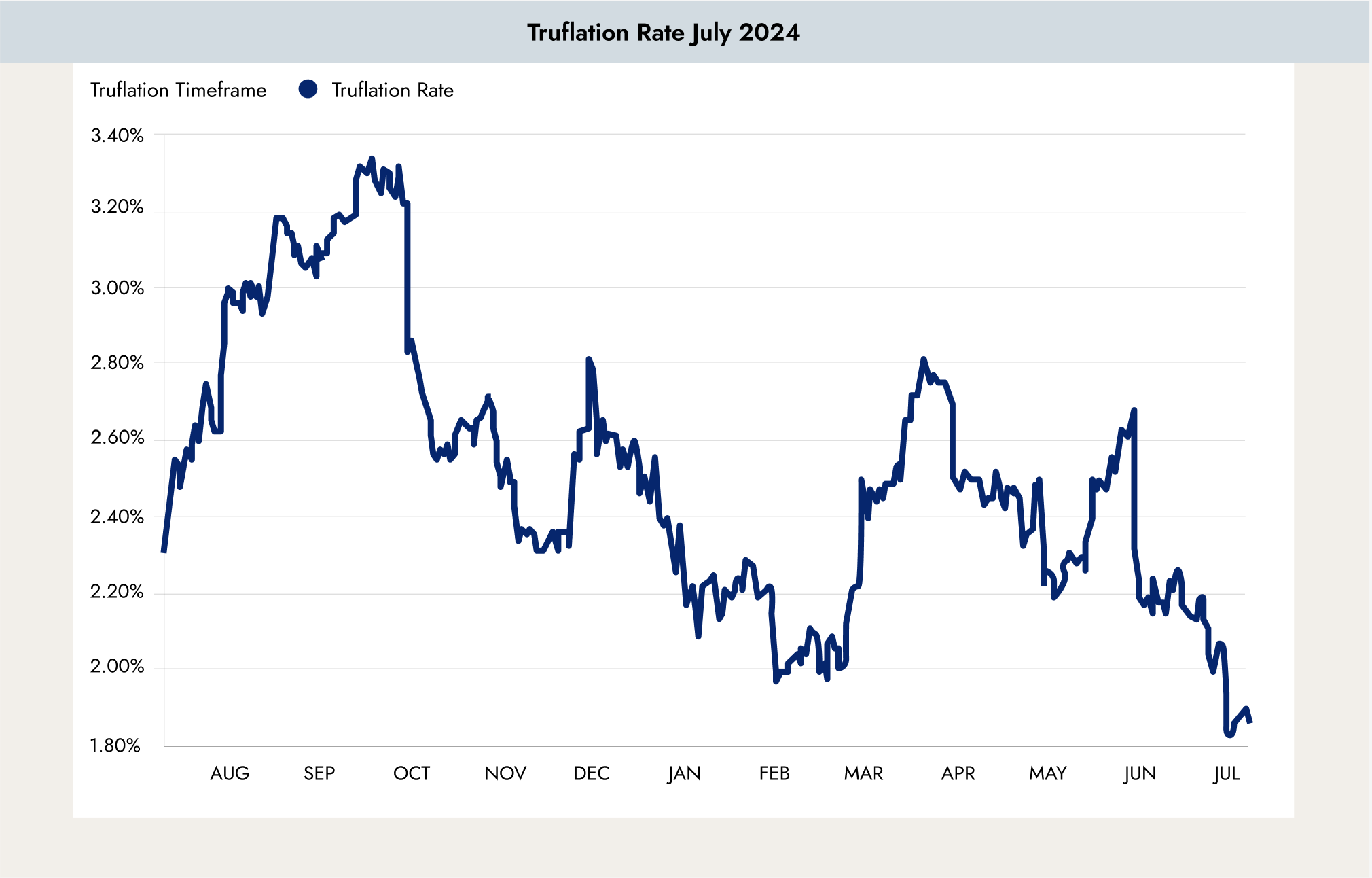
The chart shows the US Truflation Rate. Truflation is a new financial data service that provides real-time economic and inflation data using blockchain technology. The platform was developed to deliver more accurate and transparent inflation data compared to traditional methods such as the Consumer Price Index (CPI). The data is updated daily rather than monthly like the official CPI.
The sharply declining inflation is fueling hopes that the US Federal Reserve will cut interest rates sooner than expected. That alone has been enough to put the stock markets in a party mood. Whether those hopes will materialize remains to be seen. There is a risk that corporate earnings could decline more sharply than companies would benefit from lower interest rates.
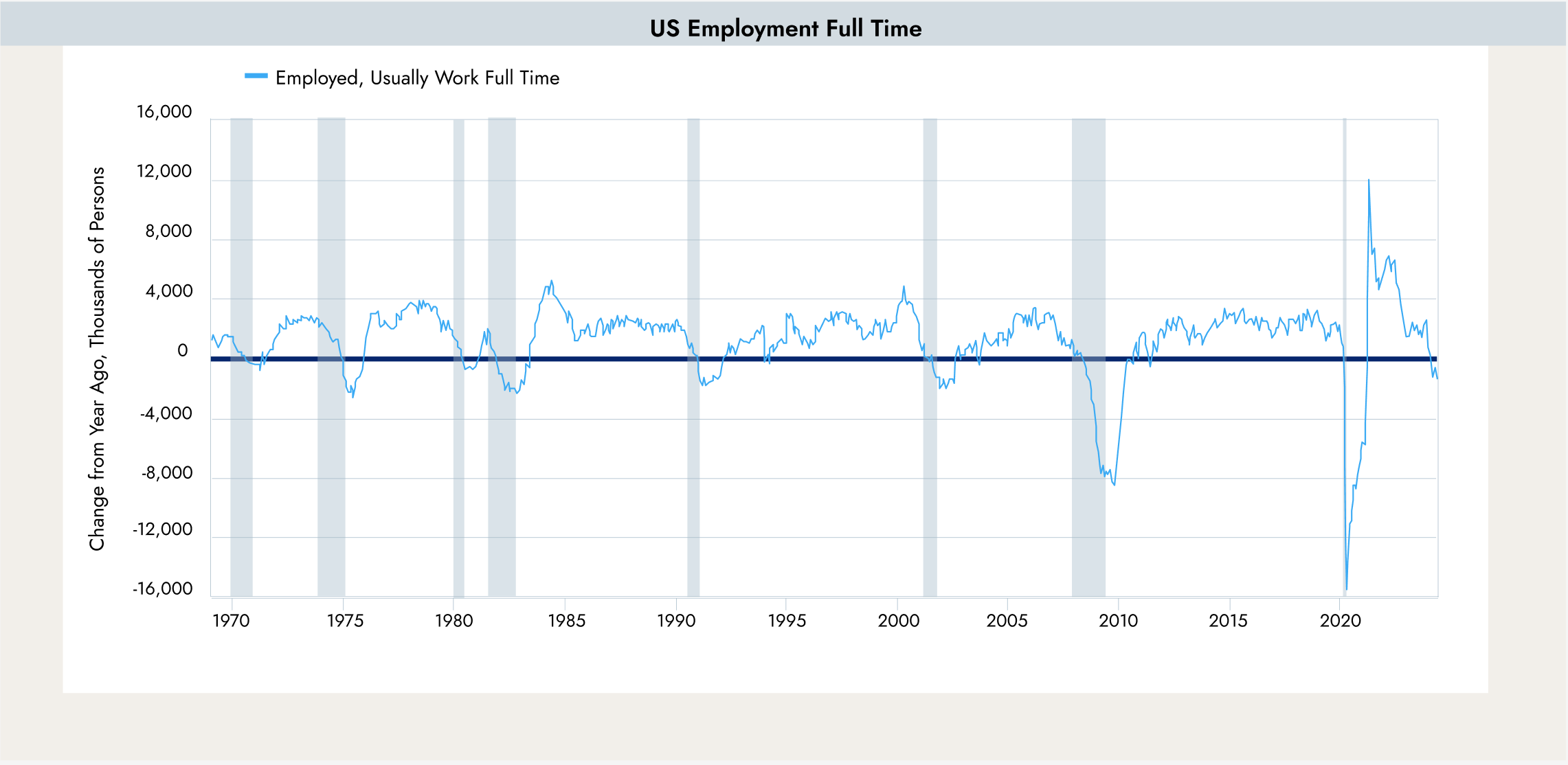
The chart shows the change in full-time jobs in the United States. The unemployment rate recently declined slightly, but this was mainly due to the creation of a large number of new part-time jobs. When companies no longer trust the economic outlook, they tend to create only part-time positions and avoid making long-term commitments.
It would be the first time in six decades that so many full-time jobs have disappeared without being associated with a recession.
For this reason, investors should not place too much trust in these new all-time highs and should remain cautiously invested. Keeping a higher cash allocation in order to buy at lower prices later on could also prove worthwhile.


.webp)





.jpeg)




.jpeg)

.svg)


