

The best asset classes for women investors are generally low-cost diversified index funds and ETFs, supported by bonds for stability and selective alternatives for growth. This combination is not a compromise. It is a deliberate structure that matches how women naturally invest: with patience, discipline, and a clear sense of purpose. In Switzerland, where local markets offer real estate in, for example, Zürich and Zug, private equity access, and a stable currency environment, the right asset allocation can make a meaningful difference to your long-term financial independence. This article breaks down each asset class, what it does for your portfolio, and how to put it together.
1. Why index funds and ETFs are the foundation for female investor portfolios
Low-cost index funds and ETFs form the core of the best asset classes for women investors, and the evidence is straightforward. Passive index funds outperform 90% of individual stock pickers over a ten-year period. That figure matters because it means you do not need to be a market expert to build real wealth. You need consistency and a sensible structure.
Most financial advisors recommend allocating 60 to 70% of your portfolio to diversified index funds or ETFs. This gives you broad market exposure across hundreds or thousands of companies, which reduces the risk that any single company’s poor performance damages your overall returns. Funds like Vanguard VTI, Vanguard VOO, and Swiss-focused ETFs tracking the SMI (Swiss Market Index) are practical starting points for investors based in Switzerland managing CHF, EUR, or USD accounts.

The behavioural case for index funds is just as strong as the financial one. Women outperform men by up to 1.8% annually in investing, largely because of longer holding periods and less impulsive trading. Index funds reward exactly that behaviour. They are designed to be held, not traded. Pairing them with automated investing tools like systematic investment plans removes the temptation to time the market and keeps your contributions steady regardless of short-term noise.
Pro Tip: Set up a monthly automatic transfer into your chosen ETF. Even CHF 200 per month invested consistently over 20 years compounds into a significant sum. The habit matters more than the amount.
2. How bonds stabilise your portfolio at every life stage
Bonds are the part of your portfolio that holds its ground when equity markets fall. They are not exciting, but they are reliable, and that reliability has real value when you are building wealth over decades.
For a growth-oriented portfolio, experts recommend a 20 to 30% allocation to bonds. As you approach retirement, that figure should rise significantly, with bond allocations of 60 to 70% appropriate for women aged 50 and above who are focused on capital preservation rather than growth. This shift is not about becoming conservative for its own sake. It is about protecting what you have built.
In Switzerland, the bond universe includes Swiss government bonds (considered among the safest in the world), Swiss corporate bonds from companies like Nestlé and Novartis, and international bond ETFs that provide currency-diversified exposure. Swiss pension fund structures, particularly the second pillar, already incorporate a bond-like stability element, so your personal portfolio can be calibrated to complement rather than duplicate that exposure.
Bond ETFs are particularly practical for individual investors because they offer diversification within the fixed-income space without requiring large minimum investments. If you are managing a portfolio in Lausanne or Basel and want to reduce volatility without sacrificing all growth potential, a blend of short and medium-duration bond ETFs is a sensible approach.
Pro Tip: Do not treat bonds as a single category. Short-duration bonds behave very differently from long-duration ones in a rising interest rate environment. Ask your advisor to explain the duration of any bond fund before you invest.
3. Alternative investments and individual stocks: adding depth to your portfolio
Alternative investments, which include private equity, Swiss real estate, gold, and hedge funds, are no longer the preserve of institutional investors. 44% of qualified women currently invest in alternatives, and the interest is growing. The recommended allocation sits at 5 to 10% of your total portfolio, which is enough to add meaningful diversification without taking on excessive risk.
Swiss real estate deserves particular attention. Property markets in, for example, Zürich, Zug, and Geneva have historically delivered strong long-term returns, and real estate investment trusts (REITs) or Swiss real estate funds allow you to access this asset class without the complexity of direct property ownership. Gold and real estate provide psychological security alongside financial value, acting as a hedge against inflation and currency volatility. For many women, the tangible nature of these assets also makes them easier to relate to as part of a goal-based investing approach.
Private equity is more complex and typically requires a higher minimum investment, but it offers access to growth-stage companies that are not listed on public markets. For investors in Switzerland with access to local networks in Zug or Zürich, private equity can be a genuinely differentiated return source.
The challenge with alternatives is access and advice. 63% of women rely entirely on professional guidance to access private markets. This is not a weakness. It reflects the reality that alternatives are complex and require specialist knowledge. The key is working with an advisor who will proactively raise these options rather than waiting for you to ask.
“Women often frame investments as securing life goals rather than abstract returns. Advisors should tailor their communication accordingly, especially when discussing Swiss real estate and wealth preservation.” — GARP
4. Comparing asset classes: what suits you and when
Understanding how asset classes compare helps you make decisions with confidence rather than guesswork. The table below summarises the key characteristics of the main investment options for women investors in Switzerland.
| Asset class | Risk level | Typical liquidity | Approximate long-term return | Swiss market relevance |
|---|---|---|---|---|
| Index funds and ETFs | Medium | High | 6 to 8% annually | SMI-tracking ETFs widely available |
| Government bonds | Low | High | 1 to 3% annually | Swiss government bonds are AAA-rated |
| Corporate bonds | Low to medium | Medium to high | 2 to 5% annually | Nestlé, Novartis, Roche bonds accessible |
| Swiss real estate | Medium | Low | 4 to 6% annually | Strong markets in Zürich, Zug, Geneva |
| Gold | Medium | High | 3 to 5% annually | CHF-denominated gold products available |
| Private equity | High | Very low | 8 to 12% annually | Active ecosystem in Zug and Zürich |
The table above is a guide, not a guarantee. Returns vary by period, fund, and market conditions. What it illustrates clearly is the trade-off between liquidity and return potential. Private equity offers the highest potential return but locks up your capital for years. Government bonds offer safety and liquidity but modest growth. Index funds sit in the middle and are the most practical core holding for most investors.
Combining these asset classes is what reduces overall portfolio volatility. When equities fall, bonds often hold steady or rise. When inflation rises, gold and real estate tend to perform well. A diversified portfolio does not eliminate risk, but it spreads it intelligently across different economic conditions.
5. Tailoring your asset allocation to your life stage and Swiss context
Your ideal asset allocation is not fixed. It should evolve as your life does, reflecting your age, income, goals, and the specific financial structures available to you in Switzerland.
A practical starting point is the “100 minus your age” rule for equity allocation. At 35, you might hold 65% in equities (primarily index funds and ETFs), with the remainder in bonds and alternatives. At 55, that equity share reduces as you prioritise capital preservation. This is a rough guide, not a rigid formula, and your personal risk appetite matters as much as your age.
Switzerland’s three-pillar pension system creates a specific context for your personal investments. Your first and second pillar contributions provide a baseline of retirement income, which means your personal portfolio can afford to take a longer-term view and accept more growth-oriented risk in earlier decades. The third pillar (Säule 3a) offers tax-advantaged investing that should be maximised before allocating to a standard brokerage account.
Swiss market assets in cities like Basel, Geneva, and Zürich offer genuine local diversification opportunities, from listed Swiss equities to regional real estate funds. If you live or work in one of these cities, investing in local markets also gives you a natural currency hedge, since your income and expenses are already in CHF.
Regular rebalancing at least once a year keeps your portfolio aligned with your intended risk profile. Markets move, and without rebalancing, a strong equity year can leave you overexposed to stocks without you realising it. Setting a calendar reminder to review your allocation is one of the simplest and most effective habits you can build.
Key takeaways
The most effective investment strategy for women in Switzerland combines a core of low-cost index funds with bonds for stability and a selective allocation to alternatives for growth and diversification.
| Point | Details |
|---|---|
| Index funds as the core | Allocate 60 to 70% to diversified ETFs; they outperform most active strategies over time. |
| Bonds for stability | Hold 20 to 30% in bonds for growth portfolios; increase to 60 to 70% near retirement. |
| Alternatives add depth | A 5 to 10% allocation to real estate, gold, or private equity improves diversification. |
| Life stage shapes allocation | Adjust your equity and bond split as you age, and use Switzerland’s third pillar tax advantages. |
| Rebalance annually | Review your portfolio at least once a year to maintain your intended risk profile. |
Why I think women in Switzerland are better positioned than they realise
I have worked with women investors across Switzerland for years, and the pattern I see most often is not a lack of knowledge. It is a lack of confidence. Women tend to research more thoroughly, hold positions longer, and make fewer impulsive decisions than their male counterparts. These are genuine advantages, and the data backs this up. The behavioural edge women hold in investing is not a soft observation. It translates directly into better long-term returns.
What I find frustrating is that many high-net-worth women in Switzerland remain underinvested in alternatives, not because they are uninterested, but because their advisors have not raised the conversation. If your advisor has never mentioned private equity, Swiss real estate funds, or gold as part of your portfolio, that is worth addressing directly. You are entitled to a full picture of what is available to you.
The Swiss market also offers something genuinely distinctive: a stable currency, a world-class pension framework, and access to private markets through networks in Zug and Zürich that most international investors cannot easily reach. If you are based in Switzerland, these are structural advantages worth using. The investors I see building real wealth are not doing anything complicated. They are holding diversified, low-cost portfolios, rebalancing consistently, and making the most of local opportunities. That is a strategy anyone can follow with the right support.
For women who want to build financial independence on their own terms, the tools are already there. The question is whether you have the right partner to help you use them well.
— Sophie Steinmann
How Marmot supports women investors across Switzerland
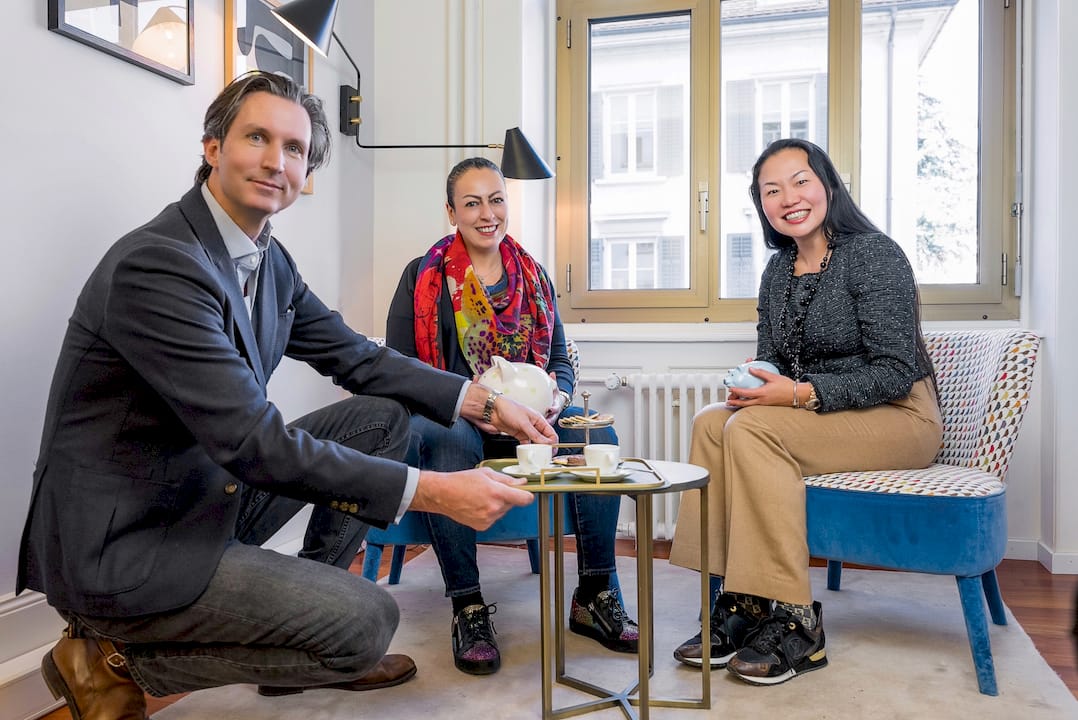
Marmot is Switzerland’s only FINMA-accredited wealth manager built specifically for women and families. Whether you are based in Zürich, Geneva, Basel, Davos, or Zug, Marmot’s advisors work with you to build a portfolio that reflects your goals, your life stage, and the Swiss market opportunities available to you. The approach combines personal consultations with practical digital tools, so you always know where you stand and why. Over 350 women have already worked with Marmot to take control of their financial future. If you are ready to build a diversified, goal-oriented portfolio with independent advice behind you, explore Marmot’s wealth management services and take the first step.
FAQ
What are the best asset classes for women investors in Switzerland?
The best asset classes are low-cost index funds and ETFs as the core holding (60 to 70%), supported by bonds (20 to 30%) for stability, and a 5 to 10% allocation to alternatives such as Swiss real estate, gold, or private equity for diversification and growth.
How much should women allocate to bonds?
For growth-focused portfolios, a 20 to 30% bond allocation is recommended. Women aged 50 and above who are focused on capital preservation should consider increasing this to 60 to 70%, according to life-stage portfolio guidance.
Are alternative investments suitable for women investors?
Yes. Around 44% of qualified women already invest in alternatives, and a 5 to 10% allocation is considered appropriate for most portfolios. Swiss real estate and gold are particularly relevant for investors in Switzerland seeking tangible, inflation-resistant assets.
How does Switzerland’s pension system affect personal investment strategy?
Switzerland’s three-pillar pension system provides a baseline of retirement income through the first and second pillars, which means your personal portfolio can take a longer-term, growth-oriented view in earlier decades. Maximising third-pillar (Säule 3a) contributions first is advisable for tax efficiency.
How often should I rebalance my investment portfolio?
Rebalancing at least once a year is recommended to keep your portfolio aligned with your intended risk profile. If markets move significantly, a mid-year review may also be warranted to avoid unintended overexposure to any single asset class.
.webp)





.jpeg)



.png)

.svg)


