
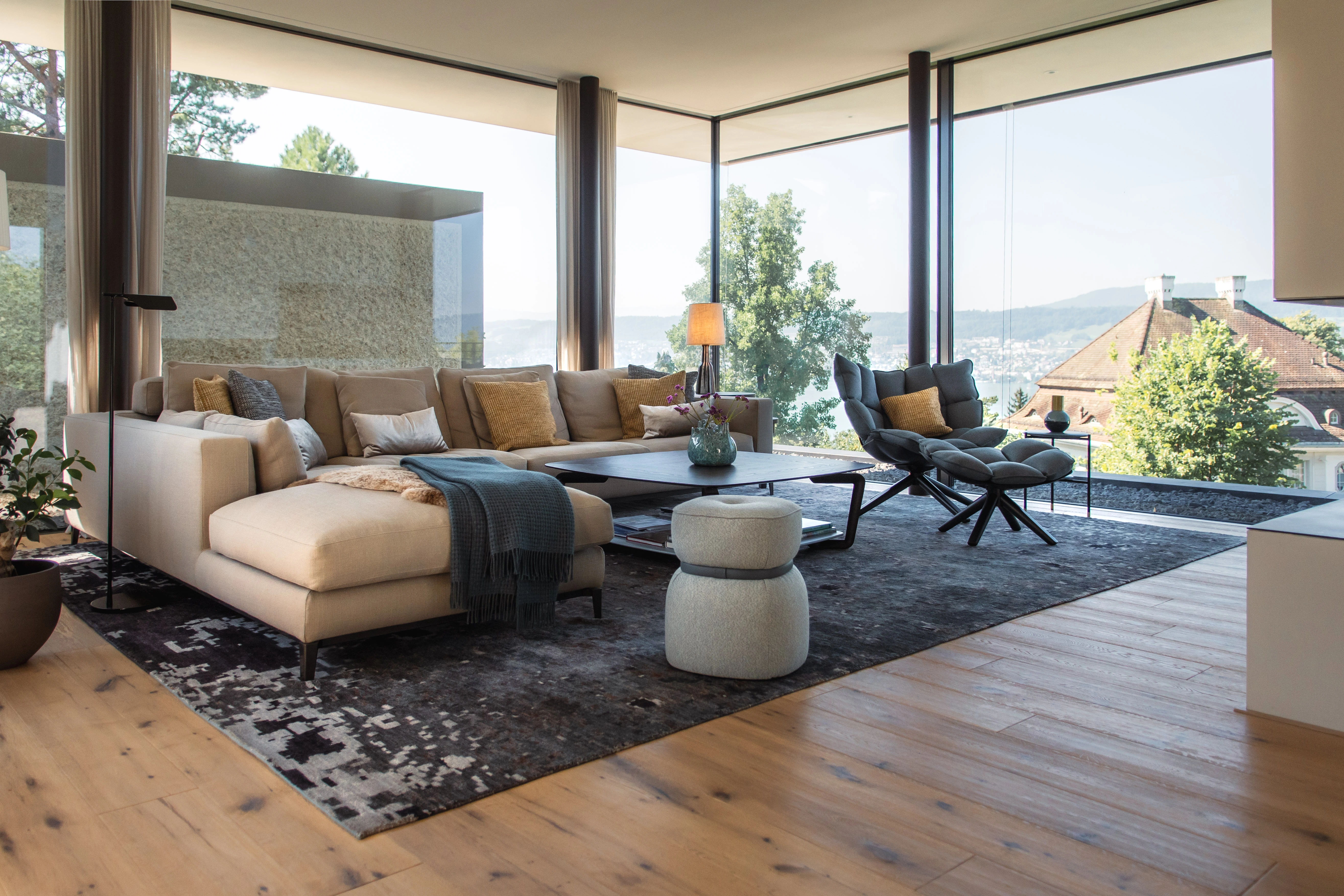
Financing a Dream Home in Switzerland: Mortgages, Investments and Creating Long-Term Property Value
Buying a home in Switzerland is more than a property transaction. It is often one of the largest financial decisions a family will make.
The right home can provide security, improve quality of life and become an important part of a family’s long-term wealth. However, purchasing a property also ties up a substantial amount of capital. This is particularly relevant in Switzerland, where prices in the most desirable residential locations can easily exceed several million francs.
Even families with enough liquidity to purchase a property without external financing may therefore benefit from using a mortgage. The objective is not necessarily to take on as much debt as possible. It is to find the right balance between property ownership, financial flexibility and keeping part of the family’s wealth invested.
Swiss interest rates remain low, but mortgage rates have moved slightly higher
At its monetary-policy assessment on 18 June 2026, the Swiss National Bank left the SNB policy rate unchanged at 0%. The decision maintained Switzerland’s comparatively low short-term interest-rate environment.
Mortgage rates do not, however, follow the SNB policy rate perfectly.
Long-term fixed mortgage rates are also influenced by Swiss capital-market yields, interest-rate expectations, lender margins and competition between banks, pension funds and insurance companies. As a result, fixed mortgage rates increased moderately during the first half of 2026, even though the SNB policy rate remained unchanged.
In mid-June 2026, the benchmark rate for a ten-year fixed mortgage was approximately 1.83%, while particularly competitive offers could be found at around 1.43% for suitable borrowers and properties. Actual rates vary considerably depending on the loan-to-value ratio, affordability, property quality, mortgage size and provider.
Indicative market ranges during 2026 included:
These figures are market indications rather than guaranteed offers. A strong borrower with substantial equity and a highly marketable property may obtain materially better terms than the advertised standard rate.
SARON or fixed-rate mortgage?
Most Swiss buyers choose between a SARON mortgage, a fixed-rate mortgage or a combination of the two.
SARON mortgages
A SARON mortgage is linked to the Swiss Average Rate Overnight. The bank adds a fixed margin, which depends on the borrower, the property and the financing structure.
Because the SNB policy rate is currently 0%, SARON mortgages remain attractive. However, the interest cost can rise relatively quickly if the SNB increases rates in the future.
A SARON mortgage may be suitable for borrowers who:
- have a strong and stable income;
- maintain sufficient financial reserves;
- can tolerate fluctuations in monthly interest costs;
- expect rates to remain low; and
- value flexibility more than complete cost certainty.
Fixed-rate mortgages
A fixed-rate mortgage locks in the interest rate for an agreed period, commonly between two and ten years.
This makes financial planning easier, but the borrower gives up some flexibility. Early termination can be expensive, particularly if the property is sold, the family moves abroad or the mortgage needs to be restructured before the end of the contract.
A fixed-rate mortgage may be preferable for families that want predictable costs or would find a significant increase in interest rates uncomfortable.
Combining mortgage tranches
Some families divide the mortgage into different tranches, for example:
- one-third in a SARON mortgage;
- one-third in a five-year fixed mortgage; and
- one-third in a ten-year fixed mortgage.
This reduces the risk of refinancing the entire mortgage at an unfavourable point in the interest-rate cycle.
However, excessive fragmentation can also make it difficult to change mortgage providers. A borrower should therefore understand the maturity dates, notice periods and exit conditions before dividing a mortgage into numerous tranches.
How much equity is required?
For an owner-occupied home, Swiss mortgage providers normally finance up to 80% of the property’s recognised lending value. The purchaser must generally contribute at least 20% as equity.
At least 10% of the property value usually needs to come from assets other than occupational pension savings. This may include:
- cash and savings;
- securities;
- Pillar 3a assets;
- a gift;
- an advance inheritance; or
- another property that can be pledged.
The remaining equity may potentially come from Pillar 2 pension assets, subject to the applicable pension and regulatory rules.
Buyers should also retain sufficient capital for expenses that may not be covered by the mortgage. These can include notary and land-registry fees, property-transfer taxes in certain cantons, renovations, moving costs, architecture, interior design and furniture.
The affordability calculation is more conservative than the current interest rate
A bank does not determine affordability solely on the basis of the interest rate available today.
Most Swiss lenders calculate affordability using a theoretical mortgage rate of approximately 4.5% to 5%, even when the borrower’s actual rate is much lower. They then add estimated maintenance and ancillary costs, often calculated at approximately 1% of the property value per year, as well as any required amortisation.
The total theoretical annual cost should normally not exceed approximately one-third of the household’s gross income.
Consider a home with a purchase price of CHF 2.5 million:
Even where the actual mortgage interest is closer to CHF 30,000 or CHF 40,000 per year, the lender may test the household’s income against theoretical annual costs of well over CHF 125,000.
This is intended to ensure that the property remains affordable if interest rates rise.
Switzerland’s ten most expensive luxury residential locations
Demand for high-quality Swiss homes continues to be supported by limited supply, economic and political stability, attractive infrastructure and Switzerland’s appeal to internationally mobile families.
According to the UBS Luxury Property Focus 2026, luxury residential prices rose by more than 3% on average during 2025. Mountain destinations recorded particularly strong growth, at around 6%. St. Moritz remained Switzerland’s most expensive luxury residential market, followed by Gstaad and Verbier. Cologny was the most expensive primary-home location outside the mountain regions.
Top 10 luxury residential locations in Switzerland
The figures represent approximate average prices in the luxury segment and are rounded. They are not the average prices of all residential properties in each municipality. Exceptional properties can trade substantially above these levels.
St. Moritz combines international recognition, exceptional scenery, limited supply and year-round appeal. Gstaad and Verbier attract an international client base seeking privacy, winter sports and access to high-quality services.
Cologny, Vandœuvres, Chêne-Bougeries and Collonge-Bellerive benefit from their proximity to Geneva, international organisations, private schools and the lake.
Küsnacht combines access to Zurich with lower cantonal taxation, strong infrastructure, international schools and highly limited availability of lake-view properties.
Editorial note: Insert the accompanying Marmot chart showing the top-ten locations and approximate price per square metre here.
Should you buy the property entirely in cash?
Paying cash has clear advantages. It eliminates mortgage interest, reduces financial complexity and provides emotional certainty.
However, it also concentrates a large portion of the family’s wealth in a single illiquid asset.
A family that uses CHF 4 million to purchase a house without a mortgage may own an impressive property but have substantially less capital available for retirement, business opportunities, family support or unexpected expenses.
A sensibly structured mortgage allows part of the capital to remain liquid and invested.
For example, a buyer with CHF 5 million of available capital might purchase a CHF 4 million property in one of two ways:
The financed strategy leaves an additional CHF 2.5 million available for investment and other financial objectives.
Letting your money work for you
When mortgage rates are relatively low, it may make sense to keep part of the family’s capital in a diversified investment portfolio rather than placing almost all available wealth into the home.
The relevant calculation is not simply:
Is the expected investment return higher than the mortgage rate?
A responsible comparison should consider:
- mortgage interest and fees;
- taxation;
- investment-management and product costs;
- expected returns after costs;
- potential market losses;
- the investment period;
- liquidity requirements;
- the stability of the family’s income; and
- the family’s ability to tolerate both debt and investment volatility.
An investment portfolio may reasonably be expected to earn more than a low mortgage rate over a sufficiently long period. But that return is not guaranteed. The portfolio may decline during a recession or market correction while the mortgage interest remains payable.
This strategy therefore works best when the family has a long investment horizon, a stable financial position and sufficient liquidity to avoid selling investments during a market downturn.
The objective is not maximum leverage. The objective is the productive allocation of capital.
Make the dream home part of your financial plan
A dream home should be treated as a measurable financial goal rather than a vague future ambition.
The planning process should consider:
- the likely purchase price;
- the required equity;
- purchase costs and taxes;
- renovation and furnishing costs;
- the desired purchase date;
- the future mortgage burden;
- the amount that can be invested regularly; and
- the return required to reach the target.
Marmot’s Financial Goal Planner helps investors model goals such as purchasing a dream home and understand how existing assets, regular contributions, investment returns and time can work together.
A family planning to purchase a CHF 3 million home in eight years may require considerably more than the minimum CHF 600,000 equity contribution. It may also want to reserve CHF 200,000 or more for transaction costs, renovation, architecture, interior design and furnishings.
Rather than leaving the full target amount in cash for eight years, an appropriate investment strategy can allow the capital to grow. As the intended purchase date approaches, the portfolio can gradually be made more conservative to reduce the risk of a market decline immediately before the property transaction.
The floor plan can be more valuable than the finishes
The purchase price and mortgage are only one side of a successful property investment. The layout and usability of the property can have a major influence on its long-term value.
Many buyers initially focus on surfaces, kitchens, bathrooms and furniture. These elements are important, but an improved floor plan can create considerably more value than a purely decorative renovation.
A skilled architect or interior architect may identify opportunities to:
- improve the relationship between the kitchen, dining and living areas;
- create an additional bedroom or home office;
- improve natural light and sight lines;
- reduce unused corridors and circulation space;
- add storage without making rooms feel smaller;
- create a more functional entrance;
- improve privacy between family and guest areas;
- introduce an additional bathroom;
- improve access to terraces, balconies or gardens; and
- make the property suitable for changing family needs.
In expensive markets, every square metre matters. A poorly arranged 180-square-metre apartment can feel less generous and be less valuable than a carefully planned 150-square-metre apartment.
A thoughtful redesign can therefore increase both the daily utility and the future marketability of a property.
Design decisions should begin before the purchase
An architect or interior architect can add significant value before a property is acquired.
They can assess whether walls can realistically be removed, whether the desired kitchen layout is feasible, how much storage can be created and whether the renovation budget is proportionate to the property’s potential value.
This is particularly relevant when buying older apartments, villas or alpine properties. What initially looks like an attractive renovation opportunity may involve structural restrictions, heritage requirements, difficult building access or substantial technical upgrades.
Conversely, an unremarkable property may have an excellent underlying structure and considerable potential through a better floor plan, lighting concept and material strategy.
For major purchases, the property adviser, financial adviser, architect and interior architect should ideally evaluate the project together. This allows the buyer to understand the total investment before signing the purchase agreement.
Upscale Interiors: Marmot’s preferred interior-design partner
For clients seeking to improve their homes or increase the value of their property portfolio, Marmot works with Upscale Interiors as a preferred and trusted partner.
Upscale is a Swiss interior architecture and interior-design firm that creates individually tailored interiors for apartments, houses, alpine residences, lake-view properties and offices throughout Switzerland.
Its central strength is the combination of interior architecture and interior design. Rather than beginning with furniture alone, Upscale considers the complete property:
- the floor plan;
- spatial proportions;
- lighting;
- materials;
- built-in elements;
- kitchens and bathrooms;
- furniture;
- art;
- accessories; and
- the way the client actually lives.
The team combines architectural thinking with access to an extensive network of furniture, lighting and material suppliers. Clients receive a coherent concept rather than a collection of disconnected purchasing decisions.
Upscale also provides visualisation and planning tools that allow clients to understand the proposed result before major construction or furnishing decisions are made. Its portfolio includes projects in Zurich, Lucerne, Engelberg and other Swiss locations.
For Marmot clients, this is particularly valuable when:
- assessing the potential of a property before buying it;
- repositioning an existing home;
- improving a property before a future sale;
- furnishing a secondary or holiday residence;
- coordinating a substantial renovation; or
- creating a consistent standard across several family properties.
Whether the home is in Zurich, Geneva, Zug, the Swiss Alps or directly beside one of Switzerland’s lakes, the goal is the same: to create a property that works better, looks coherent and retains its relevance over time.
Property, financing and investment should be planned together
A property purchase should not be viewed separately from the family’s wider financial position.
The mortgage affects cash flow. The equity contribution affects the investment portfolio. The renovation influences the total capital requirement. The floor plan and interior architecture influence the property’s future usability and value.
A coordinated plan can answer the most important questions:
- How much property can the family comfortably afford?
- How much equity should be invested?
- How much liquidity should remain available?
- Should the mortgage be fixed, SARON-based or divided?
- Which assets should be sold to fund the purchase?
- How should the remaining capital be invested?
- How much should be reserved for renovation and furnishing?
- Which design improvements are likely to create genuine value?
The best outcome is not necessarily the most expensive house, the largest mortgage or the highest expected investment return.
It is a home that supports the family’s life while allowing the rest of its wealth to continue working.
About Marmot
Marmot is a leading independent Swiss wealth manager for women, families and entrepreneurs.
Marmot combines independent portfolio management with financial planning based on the client’s actual goals, including buying a home, preparing for retirement, supporting children and preserving family wealth.
Unlike product-led private banking models, Marmot does not depend on proprietary investment products or sales commissions. The investment strategy starts with the client’s objectives, required liquidity, time horizon and capacity for risk.
For families considering a property purchase, this means bringing the mortgage, investment portfolio, liquidity planning and long-term financial goals into one coherent strategy.
This article is provided for general information and does not constitute individual investment, legal, tax, architectural or mortgage advice. Mortgage conditions, affordability rules and tax consequences depend on the lender, canton, property and personal circumstances.

.webp)





.jpeg)


.webp)



.svg)


