
Chart of the Week
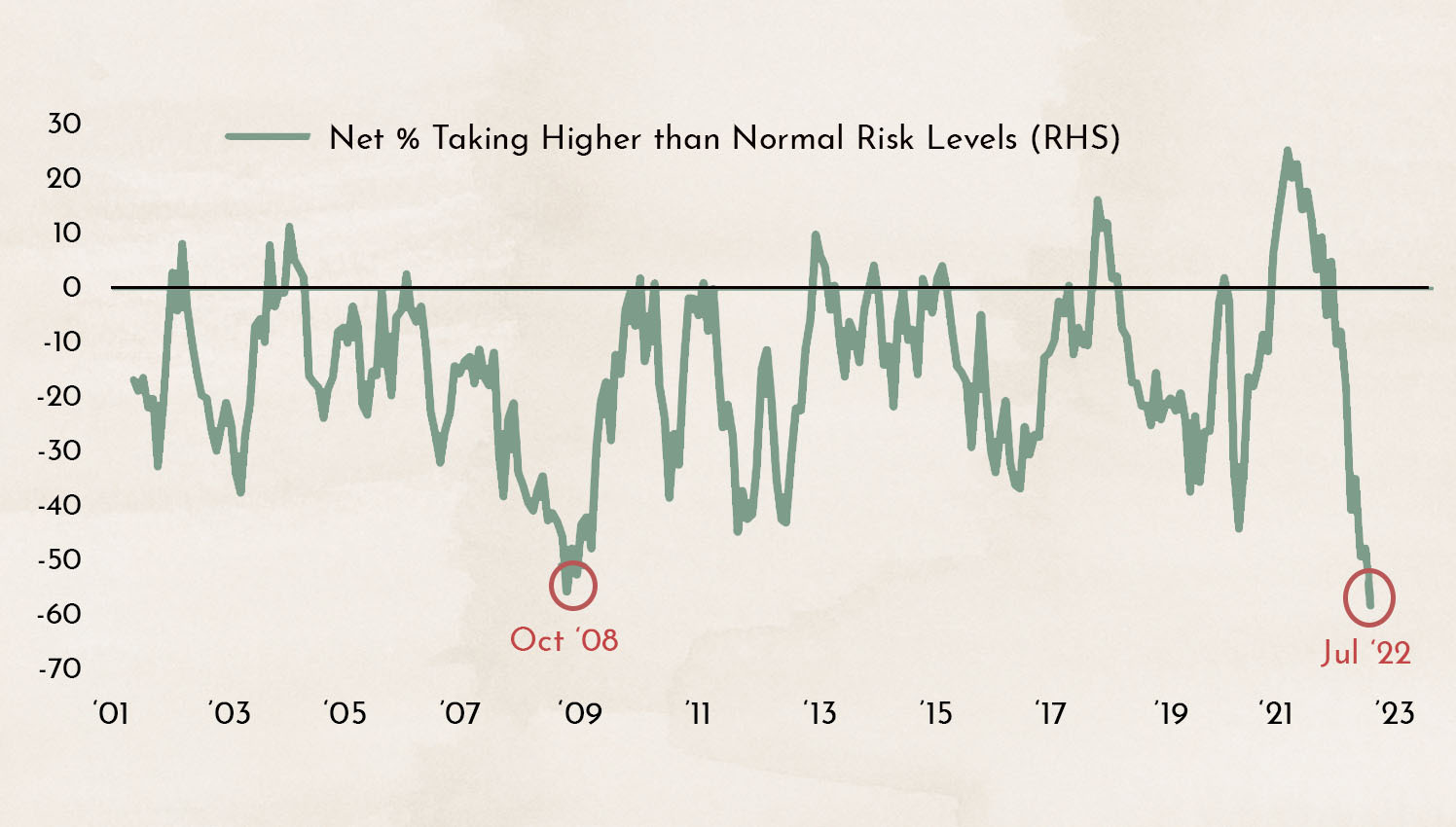
Bank of America conducts a monthly survey of the largest institutional investors, such as pension funds, banks, and insurance companies. One question it has asked since the survey began in 2001 is how much risk investors are currently taking in their portfolios. The current reading is the lowest since the survey began and even lower than during the financial crisis.
Why this matters
This indicator is considered a contrarian signal. When the largest investors are taking very little risk, it usually means they have already sold everything they wanted to sell or have hedged their positions through derivatives. As a result, major selling pressure is no longer expected. Even small buying activity can push markets higher.
Earnings Season Off to a Good Start
Traditionally, banks are the first companies to report their second-quarter 2022 earnings. However, Tesla also released its results this week. The picture from the first earnings reports was mixed, but slightly positive on average.
Next week, many more companies, including Apple and Amazon, will report their results. In addition, the publication of U.S. GDP growth (gross domestic product) is scheduled for July 28. After a decline of 1.5% in the previous quarter, growth of 0.9% is now expected. If the figure turns out to be negative against expectations, this would mean that we are officially in a recession.
According to the definition of a recession, this requires two consecutive quarters of negative growth. If the figure is positive now, a recession in the U.S. would only become possible in 2023. That would be good news for the stock market and for many politicians in the U.S., and it would have a major impact on the upcoming midterm elections in the country.
Record-high negative futures positions
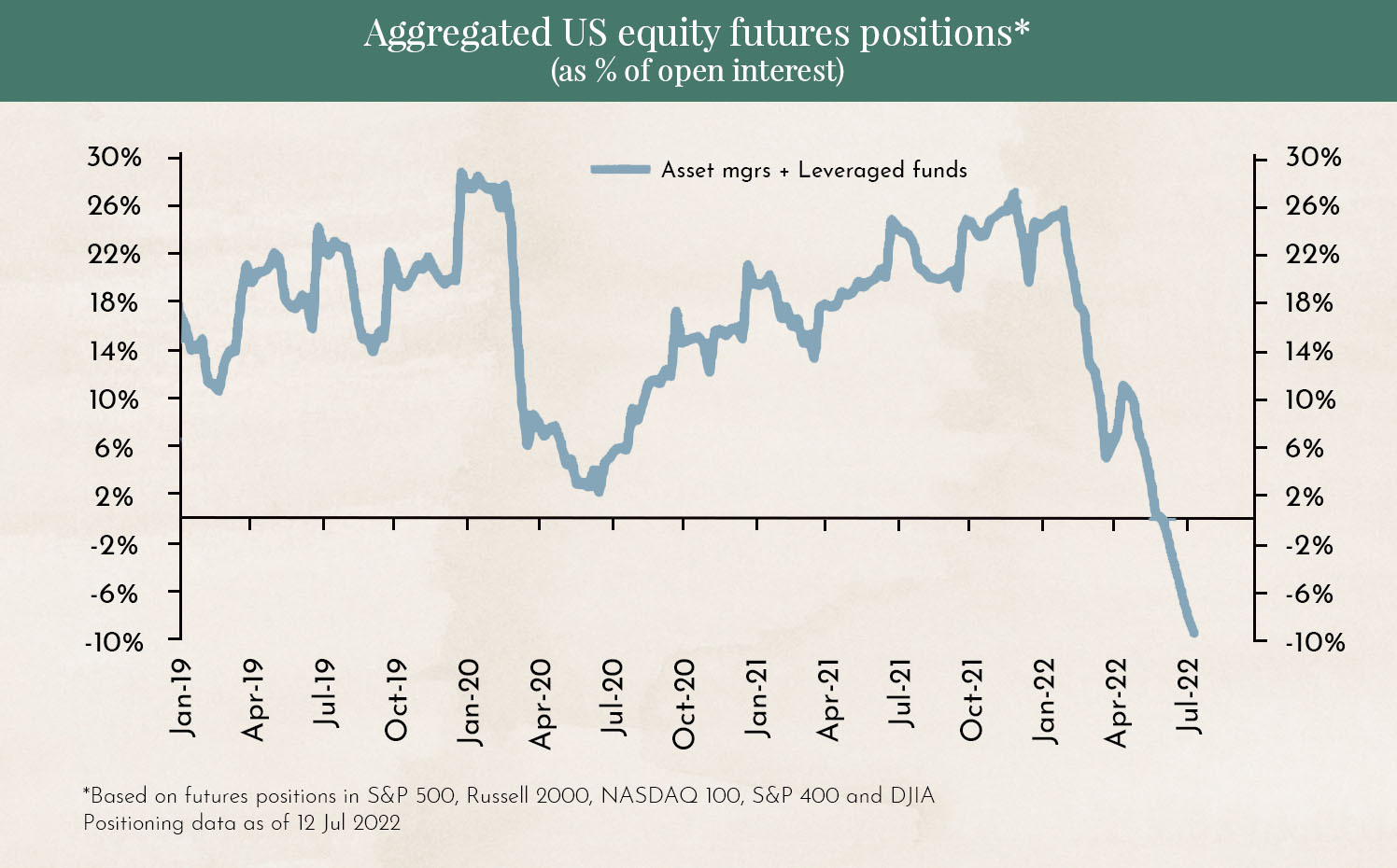
The chart shows how many investors are using futures contracts to bet on rising markets (futures long, positive value on the chart) or falling markets (futures short, negative value on the chart above).
In recent weeks, significantly more investors have built up short positions in futures. There could be two reasons for this:
- Hedge funds are betting on a stock market collapse. With large short positions in futures, often executed with high leverage, they would make substantial profits if the market were to crash now.
- Large institutional investors are hedging their equity holdings with futures. Selling futures acts like an insurance policy. If the market declines, the value of the futures increases by the same amount.
To reach the highly negative values shown in the chart above, both scenarios are needed. This means that many hedge funds are currently betting on sharply falling markets.
Side Note: Hedge Funds, Leverage and Margin Calls.
Hedge funds often operate with high leverage. What does that mean? Let us assume a hedge fund has $1 million of its own capital. It then takes out a $50 million loan from a bank and invests it in the market. In this case, it uses the $50 million to short S&P 500 futures, speculating on falling prices. The hedge fund is therefore investing with 50x leverage. This is quite common and can even go up to 100x leverage.
However, if the index rises by 2%, the loss on the position amounts to $1 million — exactly the hedge fund’s equity capital. The bank then issues a request to the hedge fund to either provide additional capital or immediately close the position. This is called a margin call. Since the hedge fund no longer has any equity left, the bank forcibly liquidates its position. To do this, the bank buys back $49 million worth of futures on the market that the hedge fund had previously sold short. This pushes the market even higher.
When there are very large short positions in the market, as is currently the case, this can trigger a domino effect. More and more hedge funds are squeezed out, and their positions are forcibly liquidated by banks. In such situations, the broader market index can rise by 3–5% per day.
In the current environment, such price surges are very likely over the coming weeks. A GDP growth figure on July 28 that surprises to the upside could trigger a chain reaction like the one described above.
Institutional Investors Are Waiting on the Sidelines
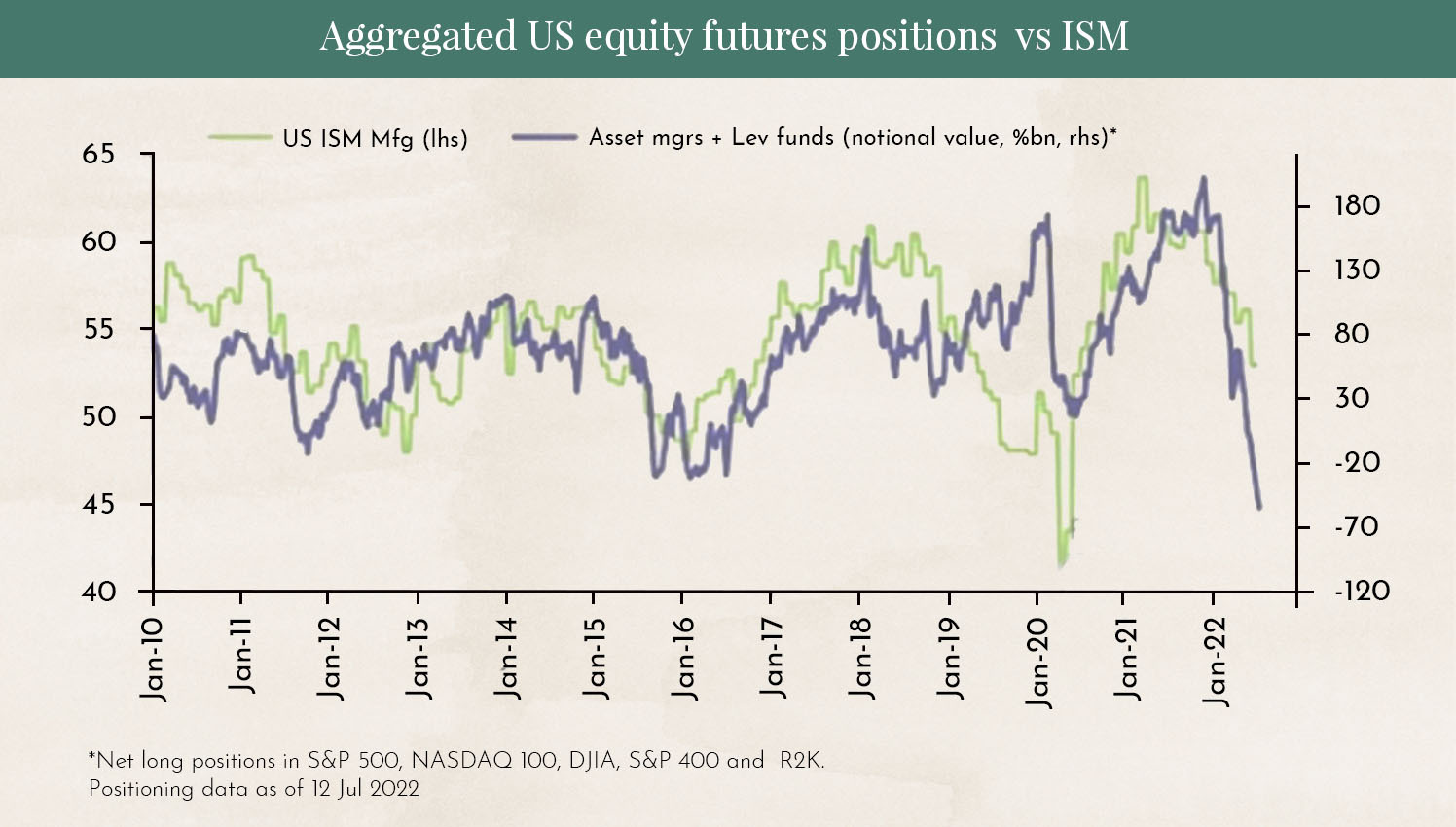
The chart in blue shows the same data as the previous chart — net futures positions in the market — but this time alongside the U.S. ISM Index. The Purchasing Managers’ Index (PMI) in the U.S. is considered one of the most important leading indicators of economic growth. As shown in the chart, the correlation between the two indicators is very high, and the current divergence is unusual. For us, this is an indication that markets are currently too pessimistic, or that a decline in the ISM Index has already been priced into market valuations.
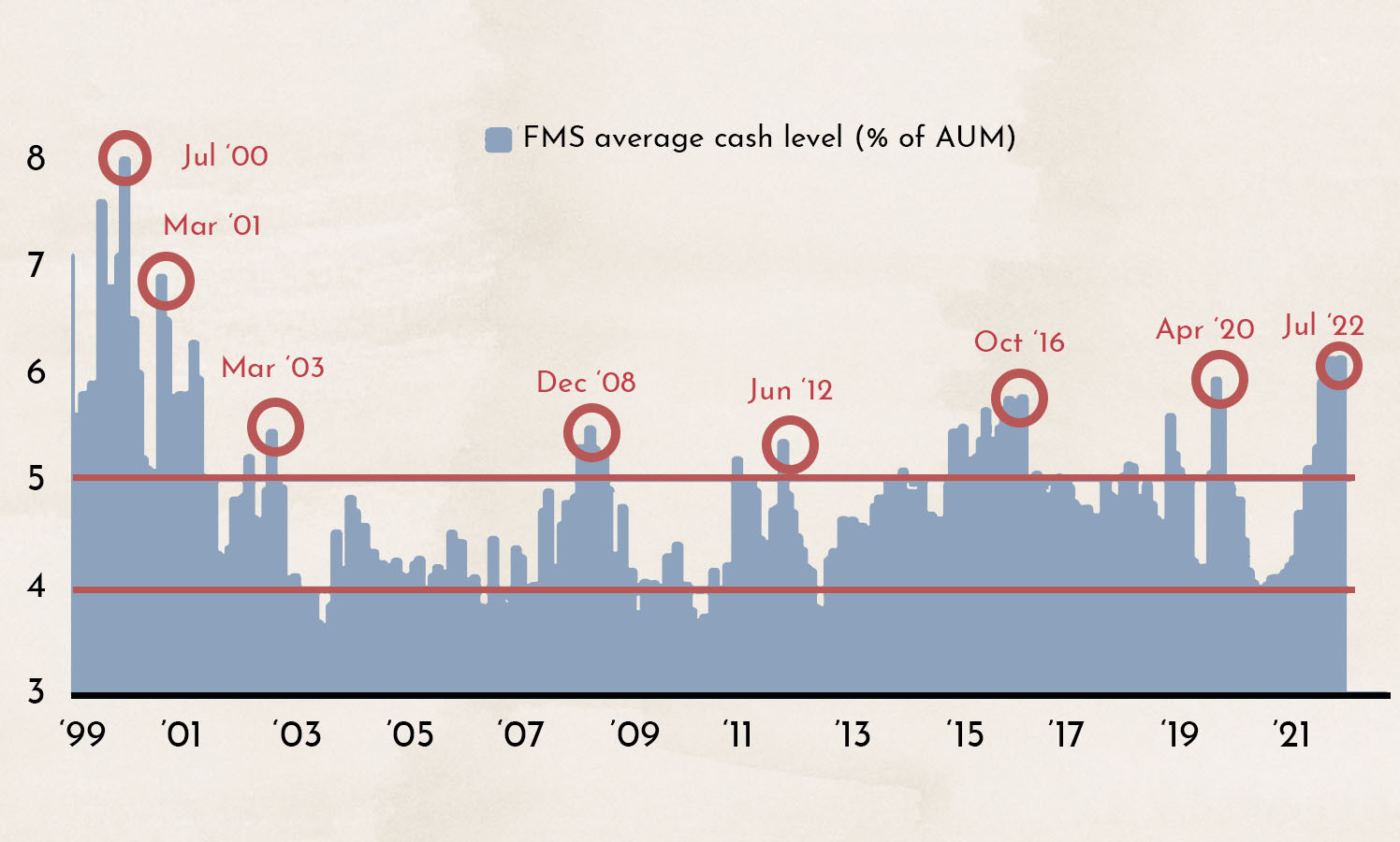
In the Bank of America survey of major institutional asset managers mentioned earlier, participants are also asked about the level of cash reserves they currently hold. As shown in the chart, cash levels are at their highest point in 20 years — even higher than after the COVID crisis or the financial crisis. The key question now is when this money will flow back into the market and push prices higher.
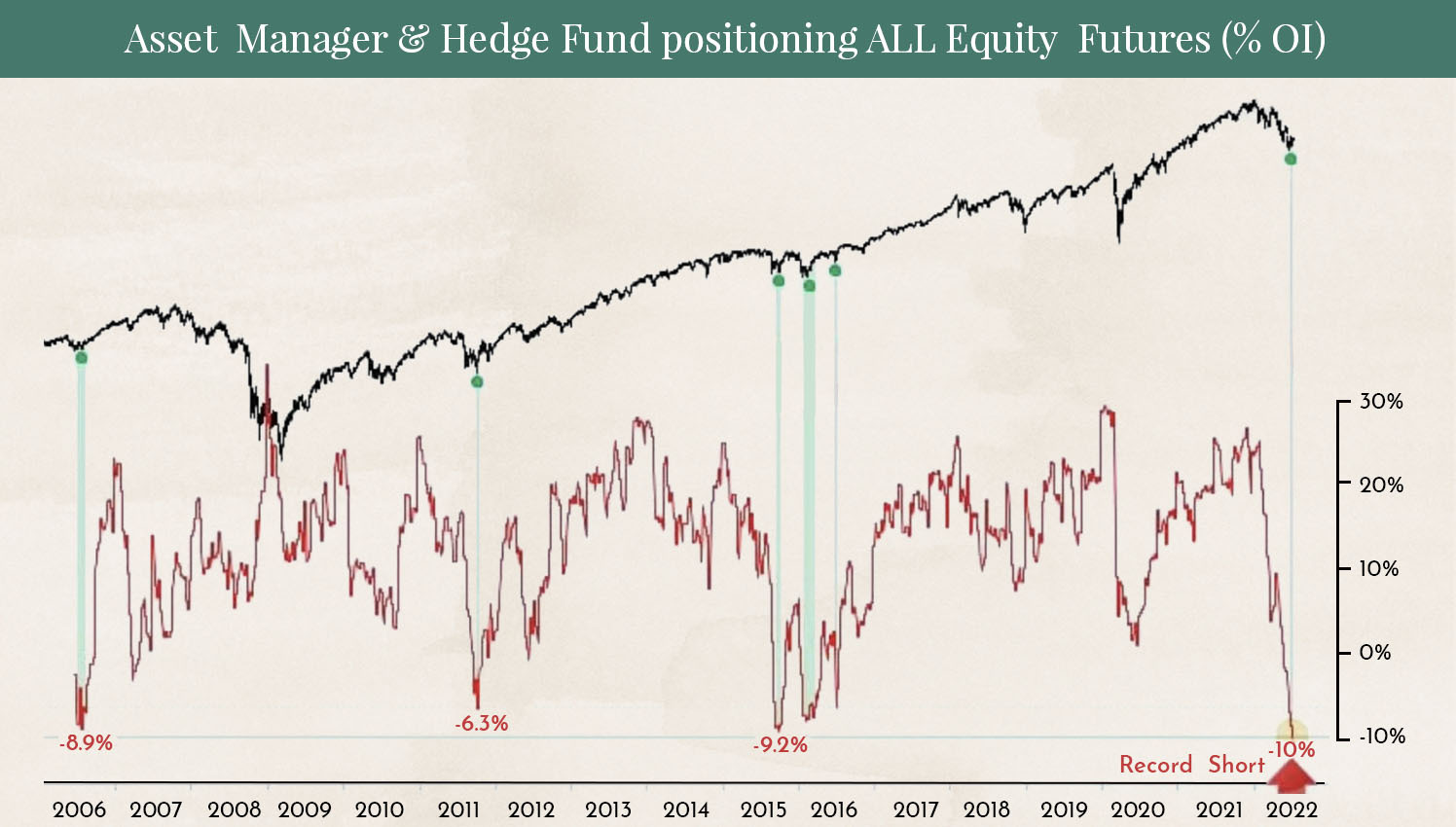
Unlike the previous charts, this chart does not show net open futures positions, but only short positions (red line). It therefore reflects only those investors who are operating with leverage.
In all cases where short positions reached similar extremes, the S&P 500 experienced an upward rebound.
Where Do Institutional Investors See the Highest Risks?
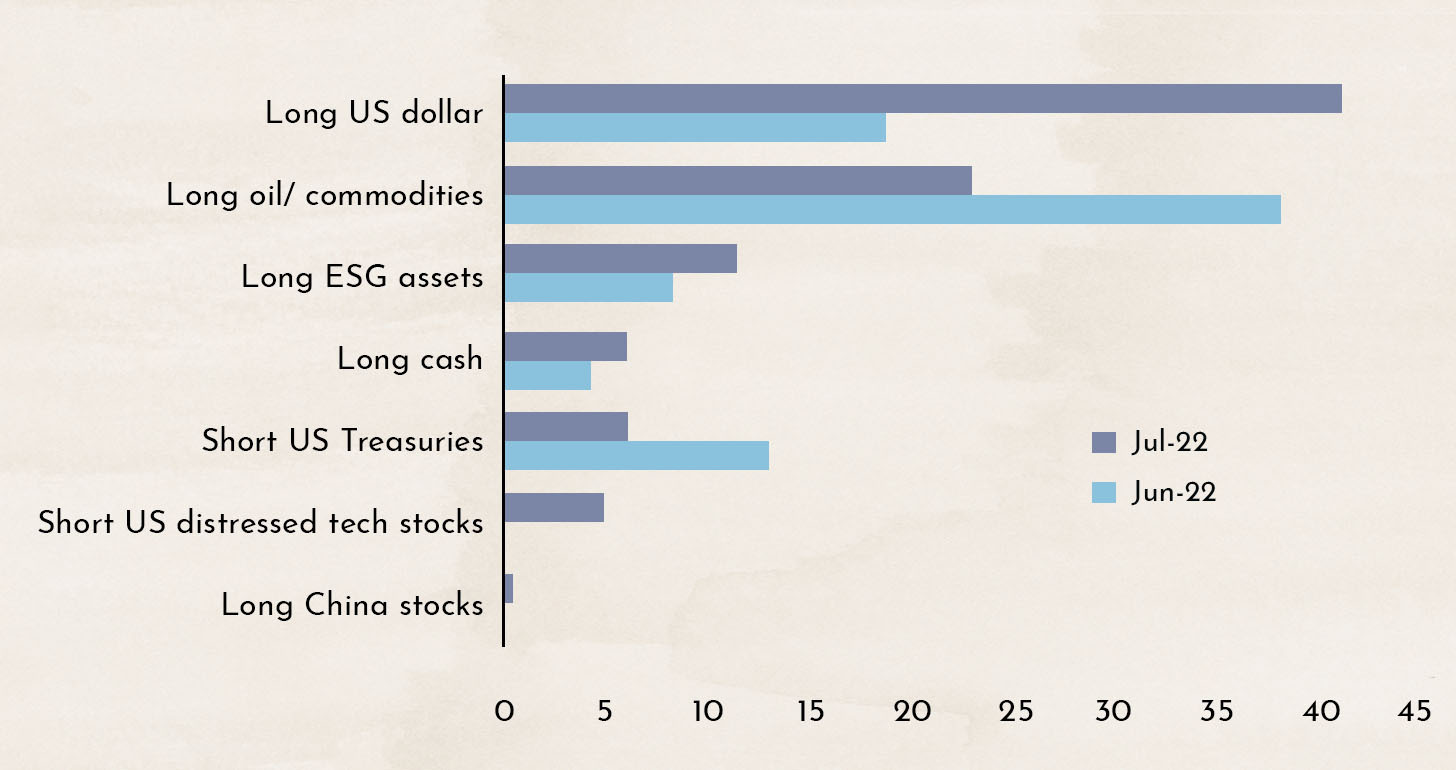
In a monthly survey by Bank of America, major institutional investors are asked where they see the greatest risks and where they believe a price bubble may have formed that could potentially burst.
Most investors see the greatest risk to portfolio returns in continuing to bet on a stronger U.S. dollar at this stage. Commodities are also still considered overvalued, even after last week’s correction.
Very surprising — and in our view unjustified — is the inclusion of “Long ESG Assets,” meaning stocks of companies that have incorporated sustainable policies into their corporate philosophy and are committed to environmental and ethical practices. We believe this is a long-term trend rather than a short-term bubble.
Additional image sources: Opening graphic Designed by Freepik
Disclaimer:
The content in these blogs is intended solely for general information purposes and to help potential clients gain an understanding of how we work. It does not constitute recommendations to buy or sell assets and is not investment advice. Marmot.Finance cannot assess whether or how the statements made align with your investment objectives or risk profile. Anyone making investment decisions based on these blog posts does so entirely at their own responsibility and risk. Marmot.Finance cannot be held liable for any losses incurred as a result of information contained in these blog posts. The products mentioned are not recommendations, but are intended to illustrate how Marmot.Finance works and selects such products. Furthermore, Marmot.Finance is completely independent and does not earn money in any form from product providers.


.webp)





.jpeg)




.jpeg)

.svg)


