Financial freedom reliably comes from six strategy groups: budgeting, clearing high-cost debt, building an emergency fund, investing regularly, using tax-efficient retirement vehicles, and layering in extra income. Rather than attempting all six at once, pick one or two to start this month: tracking 30 days of expenses is a realistic first step. Below, we outline concrete examples, drawing on frameworks like Pillar 3a contribution limits set by the Swiss Federal Tax Administration, FINMA oversight of regulated advisers, and the kind of structured planning we offer at Marmot Finance.
TL;DR:
- Keep emergency savings liquid: aim for three months of essential expenses, or start with one month in a separate account if that target feels distant.
- Pay minimums on every debt, then target the highest rate to reduce total interest or the smallest balance if visible progress keeps you motivated.
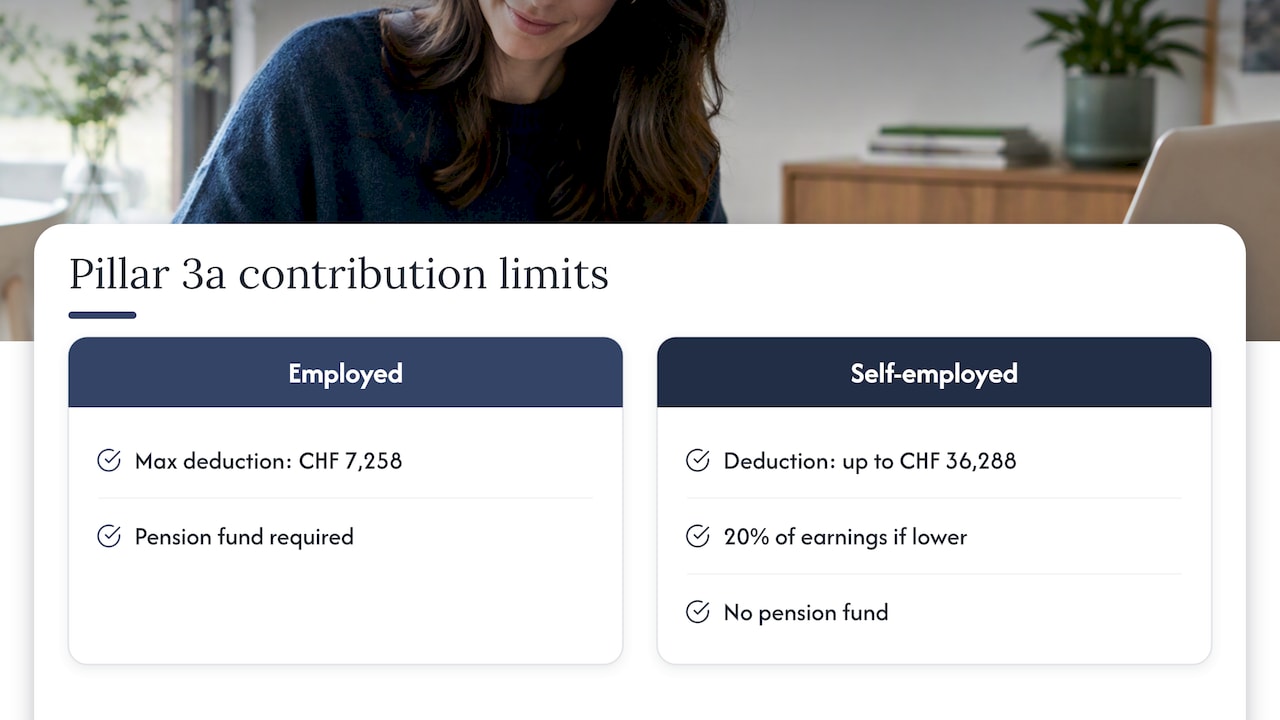
- For 2026, employees with pension funds may deduct CHF 7,258 through Pillar 3a; self employed people without one may deduct up to CHF 36,288 or 20% of earnings, whichever is lower.
- Clear costly debt before making locked Pillar 3a contributions when its interest exceeds the tax savings, and compare both amounts before deciding.
- Once your emergency reserve is established, invest regularly in diversified funds with low fees, since investment costs compound against returns.
Marmot Finance
Build a financial plan that fits
Marmot Finance combines personal consultations and digital tools to help women and families in Switzerland navigate investing and their financial journey.
1. Zero-based budgeting that assigns every franc a job
Zero-based budgeting means every unit of income gets allocated to a category, be it rent, groceries, debt repayment or savings, until nothing is left unaccounted for. It suits people who feel like their money disappears without explanation. The first action: list last month's bank statement line by line and sort each transaction into a category before the next payday arrives.
2. Envelope-style spending for variable or irregular income
For freelancers or anyone with fluctuating pay, physical or digital envelopes (one per spending category) prevent overspending in categories that feel flexible, like dining out or clothing. This method suits households managing multiple income sources or seasonal work. Start by setting up three digital envelopes this week: essentials, discretionary spending and savings.
3. Automating savings before you can spend it
Automated transfers move money to savings the day you get paid, before it sits in a current account tempting you. This works particularly well for people who find manual saving unreliable. Set up a standing order for even a modest amount, CHF 50 or CHF 100, the day after your salary lands.
Pro Tip: Automate transfers to land a day after payday, not on payday itself, so the money has already left before bills are debited.
4. Debt avalanche for the fastest mathematical payoff
The avalanche method directs extra payments toward the debt with the highest interest rate first, while making minimum payments on everything else. This suits disciplined savers who want to minimise total interest paid. List every debt with its interest rate today, then direct any spare cash toward the highest-rate balance.
5. Debt snowball for sustained motivation
The snowball method pays off the smallest balance first, regardless of interest rate, to build momentum through visible wins. It suits people who have tried budgeting before and lost motivation partway through. Order your debts smallest to largest and commit to clearing the first one within a set number of months.
- Common pitfall: switching strategies halfway through erodes the psychological benefit of either method.
- Common pitfall: ignoring a 0% promotional period that is about to end can undo months of progress.
As practical finance guidance notes, most financial planners recommend clearing expensive debt before prioritising tax-locked retirement contributions, because high-interest debt usually outweighs the near-term tax benefit of a locked savings vehicle.
6. Sizing and placing your emergency fund correctly
An emergency fund is money set aside purely to absorb shocks: job loss, medical costs, urgent repairs. Liquidity planning guidance generally points to a reserve around three months' essential expenses, held in an easily accessible account rather than tied up in investments. This suits almost everyone, but is especially important for single-income households or those with dependants. If three months feels distant, a realistic starter goal is one month's essential costs, held separately from your everyday spending account.
7. Regular, cost-aware investing into diversified funds
Investing a fixed amount on a regular schedule, sometimes called cost averaging, smooths out market timing risk and builds a long-term habit. Practical investing guidance points to low-cost ETFs or diversified funds as an accessible route for long-term growth, since fees compound against you just as returns compound for you. This suits anyone with a stable emergency fund who hasn't yet started investing. A first action is setting up a monthly transfer into a diversified fund, even a small one, rather than waiting for a "better" moment.
8. Using Pillar 3a for tax-efficient retirement saving
Pillar 3a lets you reduce taxable income while building a dedicated retirement pot, but it locks funds away until close to retirement age, with limited exceptions. For 2026, the maximum deductible contribution is CHF 7,258 for employed people with a pension fund, and up to CHF 36,288 (or 20% of earnings, whichever is lower) for self-employed people without one. This suits anyone with stable liquidity who wants to lower their tax bill while saving for later life. Where budgets are tight, practical guidance suggests starting with small, regular contributions rather than skipping the vehicle altogether, since the habit itself matters as much as the amount in the early years.
Pro Tip: Compare the after-tax benefit of a Pillar 3a contribution against your debt's interest rate before deciding which to prioritise. If the debt costs more than the 3a saves you, clear the debt first.
9. Building passive income through dividends and digital products
Dividend-paying funds, royalties from digital products, or returns from lending platforms all generate income without ongoing active work, though each carries its own risk profile and tax treatment. Peer-to-peer lending platforms and crowdlending options exist with varying availability depending on your country of residence, so checking local rules before committing funds matters. This route suits people who already have a stable investing habit and want to diversify income sources. A reasonable first action is researching one dividend-focused fund and reading its fact sheet before any decision.
10. Rental income as a longer-horizon income stream
Renting out a property, or a room within one, produces recurring income but requires capital, ongoing maintenance and a clear understanding of local tenancy rules. This suits people with access to property capital or those considering a second home as an investment. Before pursuing this, calculate the realistic net yield after maintenance, taxes and vacancy periods, not just the headline rent.
11. Investing in skills that raise earning potential
Upskilling, whether through a certification, a language course or a career pivot, often produces a better return than any single investment product, because it compounds across your entire working life. This suits early- and mid-career professionals with time still ahead of them. Identify one skill that would let you ask for a raise or a better role within 12 months, and book the first course or exam this month.
12. Organising insurance and estate documents
Insurance and estate planning protect everything the other strategies build. A simple first step is listing every policy you hold (life, disability, liability) and checking whether coverage matches your current life stage, not the stage you were in when you bought the policy. Keeping wills, account details and executor information in a secure digital vault, such as the one described in this guidance on organising estate documents, makes things considerably easier for whoever has to act on your behalf.
- Tool to consider: a password-protected digital vault for wills, account lists and executor contacts.
- Tool to consider: a shared document, reviewed annually, listing every policy and its renewal date.
How to prioritise and sequence strategies for your life stage
The order matters more than the number of strategies you try at once. A simple heuristic: secure liquidity first, stop high-cost debt from growing, then layer in tax-efficient retirement saving and investing, and only then focus on income growth or passive streams. Skipping ahead to investing while carrying expensive credit card debt usually costs more than it earns.
Before choosing where to start, ask yourself:
- Do you have dependants who rely on your income if something goes wrong?
- Is your income contract stable, or does it vary month to month?
- Do you already hold a mortgage or existing pension arrangements?
- How much of your monthly income is currently unaccounted for?
Three short pathways illustrate how this plays out:
A single person early in their career, with no dependants and a stable salary, might prioritise automating a small emergency fund, then starting a modest monthly investment, before layering in Pillar 3a once their income rises. A parent working part-time, balancing childcare costs and a partner's income, often benefits most from a tight budget first, then clearing any high-interest debt, before committing to retirement contributions. A later-career saver with an existing pension and no debt might focus almost entirely on maximising tax-efficient contributions and diversifying investments, since their liquidity needs are usually already met.
Pro Tip: Revisit your priority order every six months. Life stage, income stability and dependants change, and your sequencing should change with them.
How professional guidance and Marmot Finance tools help
Translating a list of strategies into a plan that fits your actual income, dependants and risk tolerance is where most people get stuck. We focus on providing personalised wealth management, Pillar 3a guidance, and financial coaching tailored to individual situations rather than generic templates.
A typical starting point is our Money Makeover Quiz, which gives a snapshot of where your finances stand before any conversation begins. From there, our coaching and advisory services can help with:
- Reviewing your cashflow to identify where automated saving or debt repayment fits realistically.
- Structuring investment allocation across ETFs and funds based on your timeline and risk comfort.
- Timing Pillar 3a contributions to balance tax efficiency against liquidity needs.
None of this guarantees a particular outcome, but a structured review often surfaces gaps that are hard to see from inside your own spreadsheet.
A pragmatic note on getting started
I've spent enough time looking at household budgets to know that the people who make real progress aren't the ones with the perfect plan. They're the ones who automate one transfer, track one month of spending, or set up one standing order, and then let that habit carry them forward. Financial freedom builds from small, repeated actions more than from any single clever strategy. This week, pick one thing: track your spending for 30 days, or set up an automatic transfer to a savings account you won't touch. Everything else can follow once that habit sticks.
Ready to put a plan around these strategies?
If budgeting, debt repayment and Pillar 3a timing feel like a lot to coordinate alone, wealth management and financial coaching services can help by combining personal advice with digital tools suited to your financial profile. A good starting point is our pricing and plan overview, or take the Money Makeover Quiz on our homepage to get a first read on where to focus.
This article is general information, not a substitute for advice from a qualified financial advisor. Consult a qualified financial professional about your own circumstances before acting on anything here.
FAQ
What are some examples of financial freedom?
Common examples include having an emergency fund that covers several months of expenses, being free of high-interest debt, and generating enough passive or investment income to cover essential costs without relying solely on a salary. For many people, financial freedom also means having tax-efficient retirement savings, such as Pillar 3a, already on track.
What are examples of financial strategies?
Core financial strategies include zero-based or envelope budgeting, debt avalanche or snowball repayment, building an emergency fund, investing regularly into diversified funds, and using tax-advantaged retirement vehicles like Pillar 3a. Adding income streams through skills development, dividends or rental property rounds out a well-sequenced plan.
What are the 7 levels of financial freedom?
Definitions vary across sources, but a common version moves from financial clarity, through financial independence (covering basic needs without a job), to financial security, financial freedom (covering wants as well as needs), and ultimately financial abundance. There's no single official framework, so treat the "seven levels" as a loose roadmap rather than a fixed standard.
What is the 7 7 7 rule for money?
The "7 7 7 rule" isn't a standardised or officially defined financial principle, and different sources describe it differently. Rather than relying on this label, we'd suggest focusing on the proven sequence covered above: liquidity first, then debt, then tax-efficient saving and investing.
Sources
- Zinssätze / Höchstabzüge Säule 3a bei der Direkten Bundessteuer DBST
- Wie viel 3a bei knappem Budget sinnvoll ist
- Liquiditätsplanung (VPI Schweiz)
- Planwise — practical Swiss finance tools and guides