

Inheritance planning in Switzerland (especially in areas like Wollerau) is defined as the structured process of transferring assets to heirs and beneficiaries in a legally compliant, tax-efficient manner across generations. Wollerau sits within the canton of Schwyz, which imposes no inheritance or gift tax on direct descendants. That single fact makes it one of the most favourable locations in Switzerland for intergenerational wealth transfer. Swiss law adds further tools, including the Vorsorgeauftrag under Art. 360 ZGB and compulsory portion rules under the Swiss Civil Code, that together shape how families can structure gifts, wills, and asset protection. Getting these elements right requires early planning, precise documentation, and a clear understanding of both cantonal and federal law.
How does the absence of inheritance tax in Schwyz benefit Wollerau families?
Schwyz canton levies no inheritance or gift tax on direct descendants, a distinction that sets it apart from many other Swiss cantons. This means parents in Wollerau can transfer property, investment portfolios, and business interests to their children without triggering a cantonal tax charge on the transfer itself. The financial advantage compounds significantly over large estates, where even modest tax rates in other cantons can erode meaningful portions of family wealth.im
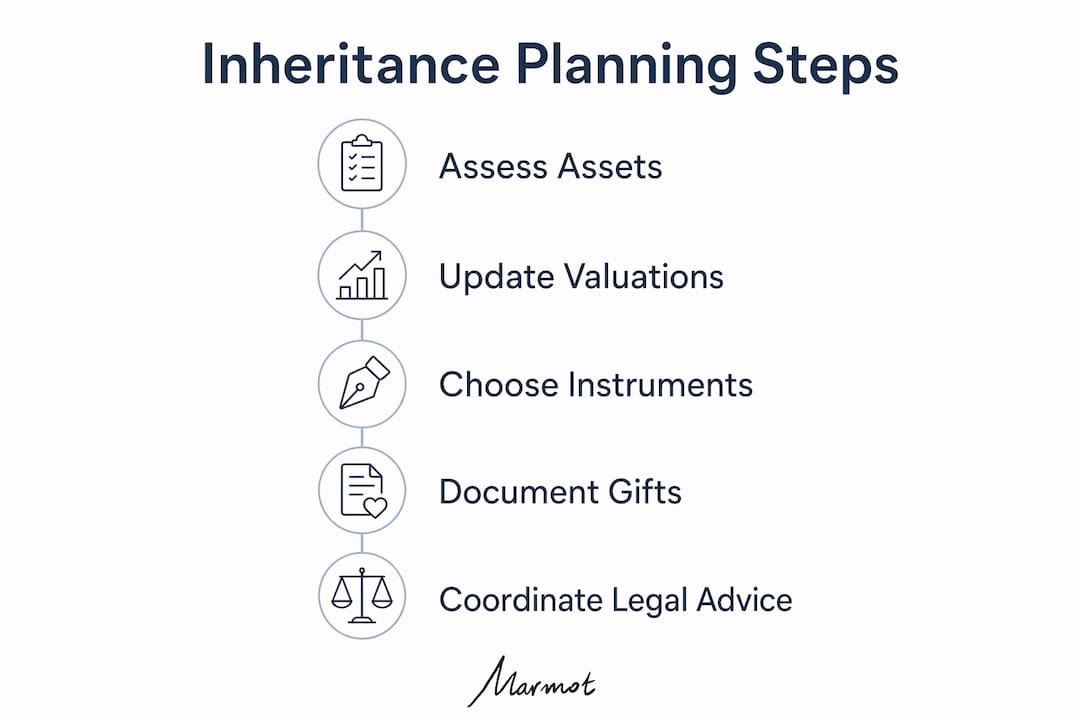
That said, the absence of inheritance tax does not mean transfers are entirely free of obligation. Proper documentation and timing remain essential to keep wealth transfers compliant with cantonal tax authorities. Notarised gift agreements and current asset valuations protect both the donor and the recipient if the transfer is later scrutinised. Families who skip this step often face administrative complications that delay or partially unwind the transfer.
Wealth tax still applies to net assets held in Schwyz, so asset structuring matters even when inheritance tax is absent. Higher mortgage leverage reduces the taxable net wealth base, though it increases liquidity risk and interest costs. Balancing debt levels against asset values is therefore a genuine planning decision, not simply a tax minimisation exercise.
Pro Tip: Update property and investment valuations before completing any gift transfer. An outdated valuation can create discrepancies that attract scrutiny from cantonal authorities, even in a low-tax canton like Schwyz.
Different communes within Schwyz apply varying multipliers to cantonal wealth tax rates, so the specific commune within Schwyz where assets are registered can affect the overall tax position. Wollerau consistently ranks among the lowest-tax communes in Switzerland, reinforcing its appeal for families focused on long-term wealth preservation.
What legal instruments under Swiss law support incapacity and inheritance planning?
Effective wealth transfer planning must go beyond wills and gifts. Planning under Art. 360 ZGB addresses what happens to your affairs if you become incapable of managing them yourself, before death ever becomes relevant. This is the Vorsorgeauftrag, a legally binding mandate that appoints a trusted person to act on your behalf.
The Vorsorgeauftrag covers three distinct areas of responsibility:
- Personal care: decisions about medical treatment, living arrangements, and daily welfare during incapacity.
- Financial management: oversight of bank accounts, investment portfolios, property, and ongoing financial obligations.
- Legal representation: authority to sign contracts, deal with authorities, and represent the incapacitated person in legal matters.
Without a Vorsorgeauftrag, Swiss courts appoint a guardian under the adult protection regime. That process is slower, less flexible, and removes family control over who manages the estate during a vulnerable period. A properly drafted mandate avoids that outcome entirely.
The Vorsorgeauftrag must be written in the mandator’s own hand or authenticated by a notary. It takes effect only when a doctor and the relevant authority confirm incapacity. The appointed person then acts within the scope defined in the document, with instructions the mandator set out in advance.
Pro Tip: Draft your Vorsorgeauftrag alongside your will, not separately. The two documents should name consistent representatives and reflect the same intentions for asset management, reducing the risk of conflicting instructions.
Complementary instruments include the Patientenverfügung (advance medical directive) and, for married couples, the marital property agreement. Together, these documents form a complete framework for continuity of wealth control across both incapacity and death.
How do compulsory portion rules interact with lifetime gifts in Swiss inheritance planning?
Swiss inheritance law protects certain heirs through compulsory portions, known as Pflichtteile. These are minimum shares of the estate that cannot be removed by will or gift. Spouses and children hold compulsory portion rights, and the law provides mechanisms to enforce them even against gifts made years before death.
The interaction between lifetime gifts and compulsory portions operates through two distinct legal mechanisms:
- Hotchpot (Ausgleichung): Gifts made to heirs during the donor’s lifetime are brought back into the notional estate and counted against that heir’s share. This prevents one child from receiving more than their fair portion through early gifts.
- Reduction (Herabsetzung) under Art. 527 SCC: If the estate, after hotchpot, still falls short of satisfying compulsory portions, lifetime gifts are subject to reduction. The recipient must return part of the gift to make up the shortfall.
- Five-year lookback: Gifts made within five years of death are scrutinised under Art. 527 SCC. Customary occasional gifts, such as birthday or wedding presents of modest value, are generally exempt.
- Documentation requirement: Lifetime gifts may be reclaimed or adjusted to protect heirs’ compulsory shares, making written records of the date, value, and intent of every transfer critical.
The practical implication is clear. A parent who gifts a property to one child five years before death may find that gift partially clawed back to satisfy another child’s compulsory portion. The solution is not to avoid gifts, but to document them carefully and time them with legal advice.
Coordination between hotchpot and reduction is complex and frequently overlooked, increasing the risk of legal disputes and unintended inheritance adjustments. Families who plan lifetime gifts without accounting for these rules often create exactly the conflicts they hoped to avoid.
What practical strategies can Wollerau families use to preserve and transfer wealth?
Early estate planning is the single most effective way to protect and transfer wealth across generations in Switzerland. Families who begin planning in their forties rather than their seventies have far more flexibility to structure gifts, adjust asset ownership, and document transfers before legal constraints tighten.
Several strategies are particularly well-suited to the Wollerau context:
- Coordinate lifetime gifts with your will. Gifts made during your lifetime should be reflected in your testamentary dispositions. Inconsistencies between the two create ambiguity that courts must resolve, often at significant cost to the estate.
- Use pillar 2 and 3a pension assets for tax-efficient wealth storage. Pension assets in pillar 2 and 3a are fully exempt from wealth tax until withdrawal in Schwyz. Maximising contributions to these vehicles reduces the taxable wealth base while building protected retirement capital.
- Notarise all significant transfers. A notarised gift agreement records the date, value, and conditions of the transfer. This documentation is essential if the transfer is later challenged under compulsory portion rules.
- Obtain professional valuations before transferring illiquid assets. Property and private company shares require independent valuations to establish a defensible transfer price. Without one, cantonal authorities may substitute their own valuation, which can differ materially.
- Engage a professional adviser for complex or high-value portfolios. Families with assets in multiple asset classes, business interests, or international holdings require coordinated advice across tax, legal, and investment disciplines. A single adviser who understands all three reduces the risk of conflicting recommendations.
Timing matters as much as structure. Gifts made well outside the five-year lookback period face less legal exposure than those made close to death. Planning transfers early, and maintaining clear records throughout, is the most reliable way to protect both the donor’s intentions and the recipients’ interests.
How do you coordinate wealth transfer with cross-cantonal or international elements?
Cross-cantonal differences in inheritance tax regimes require careful documentation and coordination for families with assets or heirs outside Wollerau. A family whose children live in Zurich or Geneva may find that the receiving canton applies its own rules to assets transferred there, even if the donor is resident in Schwyz.
Several issues arise regularly in multi-jurisdictional planning:
- Cantonal tax asymmetry: Schwyz exempts direct descendants from inheritance tax, but other cantons do not. An heir who receives a property located in a different canton may face a tax charge in that canton, regardless of where the donor lives.
- Registration and documentation gaps: Assets held in multiple cantons must be registered and documented consistently. Gaps in registration create disputes about which canton’s rules apply.
- International estate planning pitfalls: Families with heirs or assets outside Switzerland face additional complexity. EU member states may assert jurisdiction over assets located within their borders, applying local inheritance rules that conflict with Swiss law. The EU Succession Regulation (Brussels IV) allows EU residents to elect the law of their nationality, but this election must be made explicitly in the will.
- Currency and account considerations: Marmot manages CHF, EUR, and USD accounts, which reflects the reality that many Wollerau families hold assets across multiple currencies. Each currency position requires its own transfer documentation and valuation.
Pro Tip: If any heir lives outside Switzerland, obtain legal advice in both Switzerland and the heir’s country of residence before completing any transfer. Assumptions about which country’s law applies are a common and costly mistake.
Families with wealth management needs in Zurich or other Swiss cantons should ensure their inheritance plan explicitly addresses which cantonal rules govern each asset. A well-drafted will specifies the governing law for each category of asset, reducing the scope for dispute.
Key takeaways
Effective inheritance planning in Wollerau combines Schwyz’s cantonal tax advantages with Swiss legal instruments and disciplined documentation to protect family wealth across generations.
Why I think most families in Wollerau plan too late
Working with families across Switzerland, I have observed one pattern more than any other: inheritance planning begins after a health scare, not before. By that point, the five-year lookback window is already closing, valuations have not been updated, and the Vorsorgeauftrag has never been drafted. The family is then making decisions under pressure, which is precisely when mistakes happen.
Wollerau’s tax environment is genuinely exceptional. The absence of inheritance tax on direct descendants is not a loophole; it is a deliberate cantonal policy that rewards families who plan within it. But the benefit only materialises if the transfers are documented correctly and timed appropriately. I have seen families lose the practical benefit of Schwyz’s tax position simply because they transferred assets without notarised agreements, leaving the transfers vulnerable to challenge.
The other mistake I see consistently is treating the will as the only planning document. The Vorsorgeauftrag is equally important, and in some cases more urgent. A will takes effect at death. An incapacity mandate takes effect the moment a doctor confirms you cannot manage your own affairs. Families who have only a will have planned for one scenario and left the other entirely unaddressed.
My honest recommendation is to treat inheritance planning as a living process, not a one-time event. Review your documents every three to five years, or whenever a significant asset is acquired or a family circumstance changes. Transparent conversations with your heirs about your intentions reduce the risk of disputes far more reliably than any legal mechanism alone.
— Sophie Steinmann
Marmot’s approach to inheritance and wealth planning in Wollerau
Marmot is a FINMA-accredited wealth manager with deep experience in Swiss inheritance and estate planning for families and individuals across Switzerland. The team combines personal consultations with practical financial tools to help clients structure wealth transfers that are legally sound, tax-efficient, and aligned with their long-term goals.
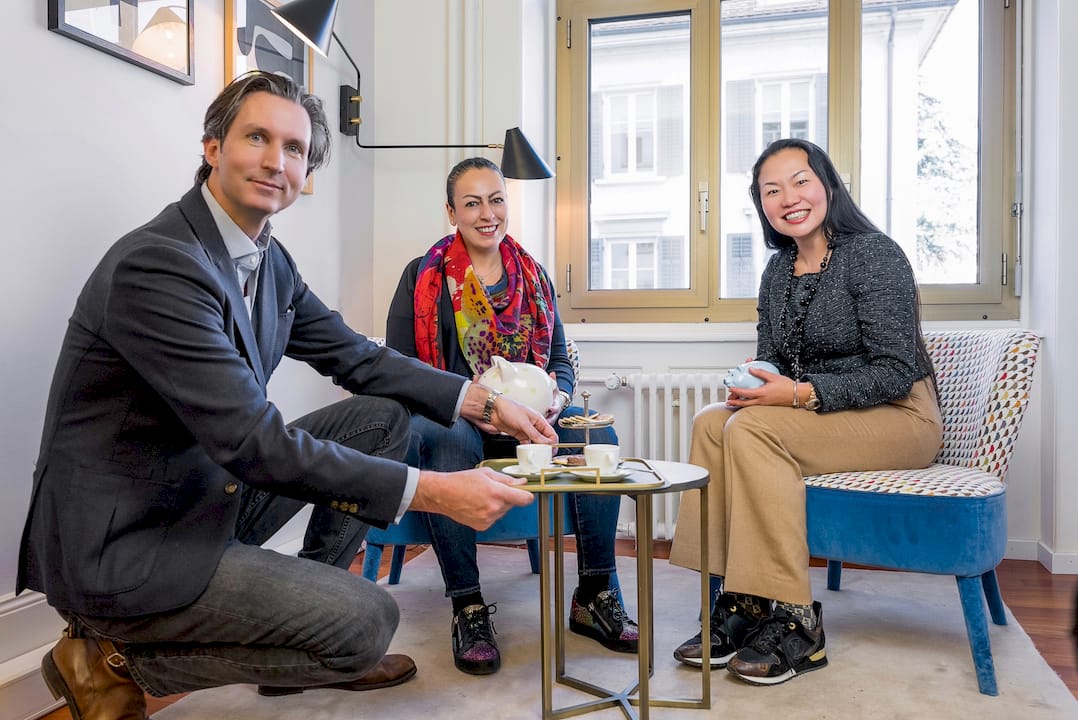
Whether you are coordinating lifetime gifts with your testamentary plan, structuring pension assets across pillar 2 and 3a, or managing a portfolio with cross-cantonal or international elements, Marmot provides the coordinated guidance that complex estates require. Over 350 clients have already worked with Marmot to clarify and strengthen their financial positions. To discuss your inheritance planning needs with an expert, contact Marmot’s team for a personalised consultation.
FAQ
Does Wollerau have inheritance tax?
Wollerau sits within Schwyz canton, which imposes no inheritance or gift tax on direct descendants. Transfers to spouses, children, and grandchildren are therefore free of cantonal inheritance tax.
What is a Vorsorgeauftrag and why does it matter?
A Vorsorgeauftrag is a legally binding mandate under Art. 360 ZGB that appoints a trusted person to manage your personal care, finances, and legal affairs if you become incapacitated. Without one, a Swiss court appoints a guardian, removing family control over who manages your estate.
How does the five-year rule affect lifetime gifts in Switzerland?
Under Art. 527 SCC, gifts made within five years of death are subject to reduction if they infringe on heirs’ compulsory portions. Customary occasional gifts of modest value are generally exempt, but significant transfers require careful documentation and timing.
Are pension assets in pillar 3a exempt from wealth tax in Schwyz?
Pillar 2 and 3a pension assets are fully exempt from wealth tax in Schwyz until the point of withdrawal. Maximising contributions to these vehicles is a compliant and effective way to reduce the taxable wealth base during the accumulation phase.
When should families in Wollerau start inheritance planning?
Early planning is consistently more effective than reactive planning. Beginning the process well before any health or family change allows families to structure gifts outside the five-year lookback window, update valuations, and draft all necessary legal documents without time pressure.
Recommended
- Estate Planning Essentials in Switzerland for Affluent Families | Marmot Finance
- Preserving Generational Wealth: Private Wealth Management in Switzerland | Marmot Finance
- Family Office Services in St Moritz: Managing Complex Wealth | Marmot Finance
- Tax-Efficient Wealth Structuring in Switzerland: Investor guide | Marmot Finance

.webp)




.jpeg)



.png)

.svg)


