
Chart of the Week
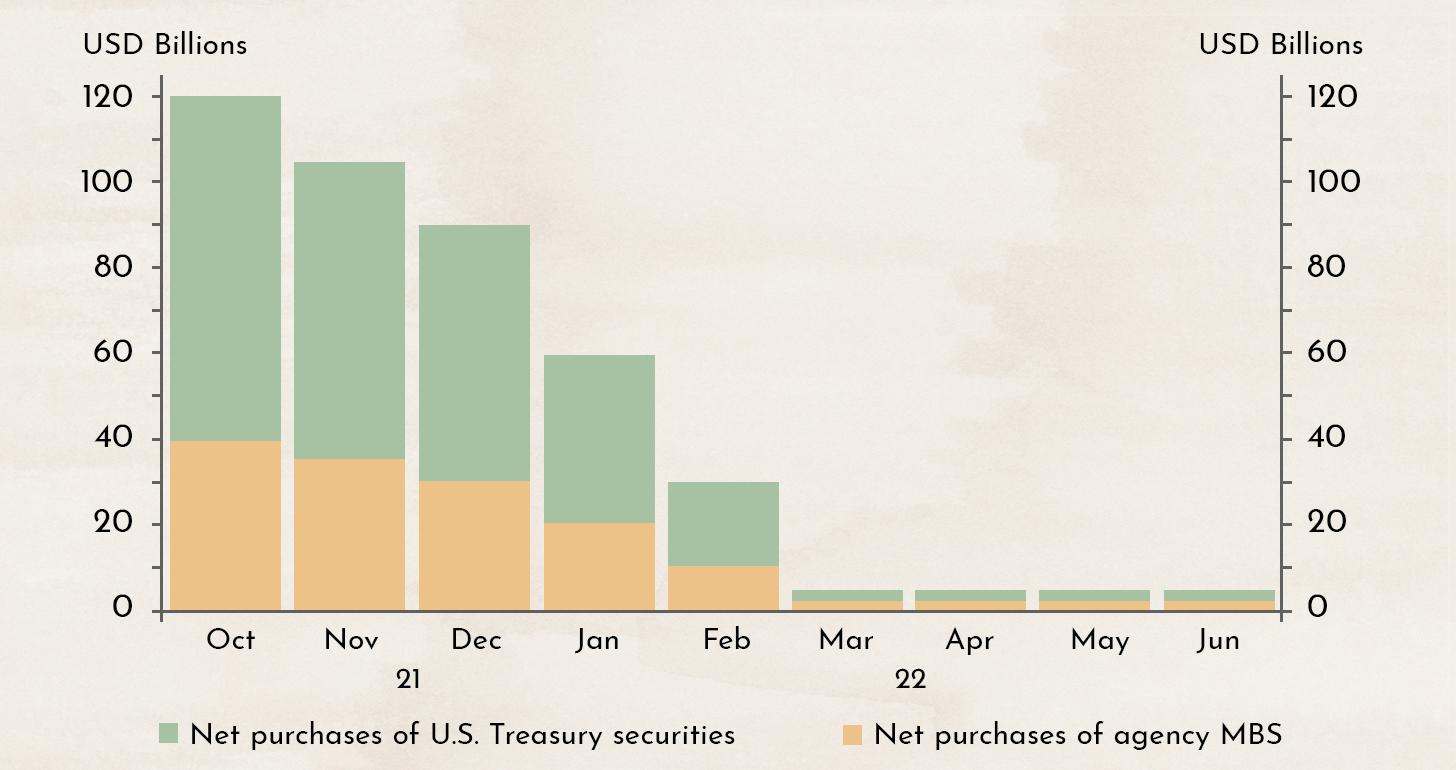
The chart shows how aggressively the US Federal Reserve has been buying back Treasury bonds and MBS (Mortgage-Backed Securities). Through this program, it supplied the markets with USD 120 billion every month until October 2021. In November, the withdrawal process began, with support initially set to be reduced by USD 15 billion per month. Last Friday, however, the US Federal Reserve announced that starting in January 2022, it would double the pace of this withdrawal.
Why this matters:
Inflation in the United States remains persistently high. The Federal Reserve needs to be in a position to raise interest rates soon. Raising interest rates while simultaneously injecting new money into the markets would be like a driver pressing the brake and the accelerator at the same time. This measure therefore signals that the US Federal Reserve will raise interest rates much earlier than previously expected. Most major banks now expect interest rates to be raised at least three times in 2022.
The US Federal Reserve is tightening the screws.
Friday’s press conference marks the beginning of a new phase for the stock and bond markets in the United States — and therefore globally as well. A turning point. The era of low interest rates and the US Federal Reserve’s expansionary monetary policy, which was designed to cushion the negative effects of the Covid crisis, is definitively over.
The situation in the bond markets is clear. The era of 30 years of declining interest rates is over. There will be no capital gains from bonds in the foreseeable future. If an investor does not hold a bond from issuance to maturity, they must expect a discount of 5–20% if they want to sell it early.

How will the stock markets perform in this changing environment? The chart above shows the average performance of the S&P 500 since 1955 during such phases (blue line). This is an average value, although the range of outcomes is relatively wide (grey shaded area).
From 365 days before the first interest rate hike until around 250 days afterward, stock markets have generally continued to rise. If the Federal Reserve raises interest rates for the first time on March 17, we are currently 87 days ahead of the first hike. If the first increase does not occur until June 16, then we are 179 days away.
This behavior in the stock markets can be explained fundamentally and logically. While higher interest rates are generally negative for stock markets, these negative factors are often offset by very strong corporate earnings when the economy is performing exceptionally well.
Historically, central banks have tended to act too late with the first interest rate hike. This is driven by the fear of pushing an already weak economy into a second recession. Such an outcome could cost any central bank president their job. The timing of the first rate hike therefore has to be chosen very carefully.
Once the first interest rate hike has taken place, central banks tend to raise rates too quickly. As a result, stock markets generally enter a prolonged sideways movement around 200 days after the first rate hike.
Even if the stock indices continue to rise, such phases are usually accompanied by massive sector rotations and portfolio reallocations.

These rotations have already begun. For several weeks now, investors have been shifting out of cyclical stocks and into defensive assets. We expect these reallocations to continue further.
All investments that previously benefited from low interest rates are likely to face a difficult period ahead. Companies that relied on cheap financing and have not yet generated profits are especially likely to struggle going forward. Stocks such as Beyond Meat (-70%), GameStop (-72%), and Virgin Galactic (-75%) have already suffered sharp declines.
Solid quality stocks, backed by business models that have worked for years and that have consistently delivered stable profits, are likely to come back into favor.
Even though central banks in Europe remain far more cautious, they will ultimately not be able to escape the pull of US monetary policy.
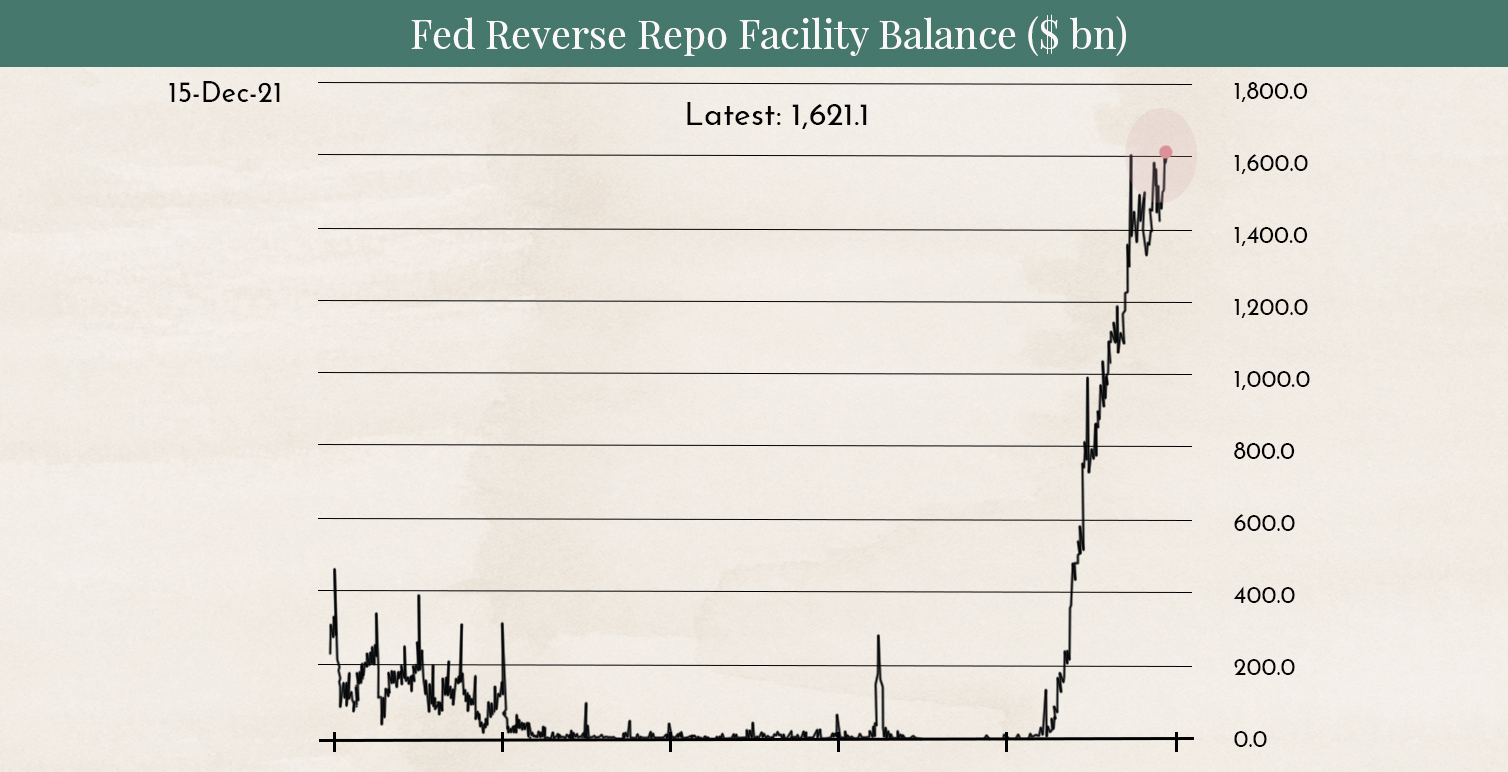
The current situation is causing the USD to strengthen as higher interest rates in the United States attract more investment capital into the country. The chart above illustrates a current strategy used by major banks: they obtain cheap money from the European Central Bank and place it into the Federal Reserve’s repo facility, where they receive higher interest rates.
The ECB is unlikely to tolerate this for much longer, but in practice it can only prevent it if the interest rate gap between the United States and Europe does not become too large. Since inflation figures in Europe are also running high, the ECB will likely have to raise interest rates soon as well.
Bitcoin: Massive Supply Shortage Fuels Hopes for a Rally
The crypto market is simultaneously the most anonymized and the most transparent market in existence. The blockchain clearly shows who created each Bitcoin and who has owned it since then. The username is visible, but the person behind it remains unknown. This level of transparency is remarkable. For example, it is publicly visible that the user 12ib7dApVFvg82TXKycWBNpN8kFyiAN1dr, who currently holds USD 1.7 billion worth of Bitcoin, presently owns block number 654039. This block (or parts of it) has already been traded 2,232 times.
Based on such data, it has been estimated that 78% of all Bitcoins ever created are illiquid, meaning they are held by long-term investors. Most of these holders are early Bitcoin supporters. Many are computer enthusiasts with strongly anarchistic views. Bitcoin was created by Satoshi Nakamoto as an alternative to central banks, which, through endless money printing, were seen as eventually destroying the financial system themselves. The goal was to create a currency that could not be manipulated by governments and where users could remain completely anonymous. In its early days, the whitepaper circulated mainly within hacker and anarchist circles. These early adopters deeply distrust centralized systems and therefore keep most of their holdings in cold wallets.
There are three ways to store Bitcoins:
- On trading platforms such as Coinbase where they were purchased. However, such platforms are repeatedly targeted by hackers, resulting in users’ Bitcoins being stolen. Since these exchanges are often based in places like the Cayman Islands and offer no customer protection, everything can be lost in the event of a theft. The latest such incident occurred on December 2, 2021.
- Soft wallets: The Bitcoins are stored on a personal computer and protected with a password. Since the computer is connected to the internet, it can also be hacked and the Bitcoins stolen. Alternatively, the owner may forget the password — like the user here who can no longer access Bitcoins worth USD 240 million.
- Hard wallets: Bitcoins are stored on a computer or USB device that is not connected to the internet. If the storage device is lost or the password is forgotten, the Bitcoins become permanently inaccessible. It is estimated that this applies to around 10% of all Bitcoins.
What conclusions can be drawn from this for the markets?
A short-term speculator who wants to make quick profits with Bitcoin within a week will usually keep their Bitcoins on an exchange. A user intending to hold them long term will transfer them to a cold wallet. Therefore, when large Bitcoin holders — so-called whales — such as 12ib7dApVFvg82TXKycWBNpN8kFyiAN1dr buy more Bitcoins and move them into cold wallets, it is considered a very positive sign for the market. And that is exactly what is happening right now:

The chart shows how many Bitcoins are held by long-term investors (red line). A very strong correlation with the Bitcoin price (black line) can clearly be seen. In May 2021, Bitcoin experienced a major correction because long-term investors took profits. However, during the current correction, long-term investors are significantly increasing their positions.
This activity has an additional effect. Bitcoin does not trade on one centralized market, but across many separate markets that are not directly connected to each other. Only the Bitcoins that users hold on the Binance exchange can be traded on Binance — and these holdings are declining drastically:
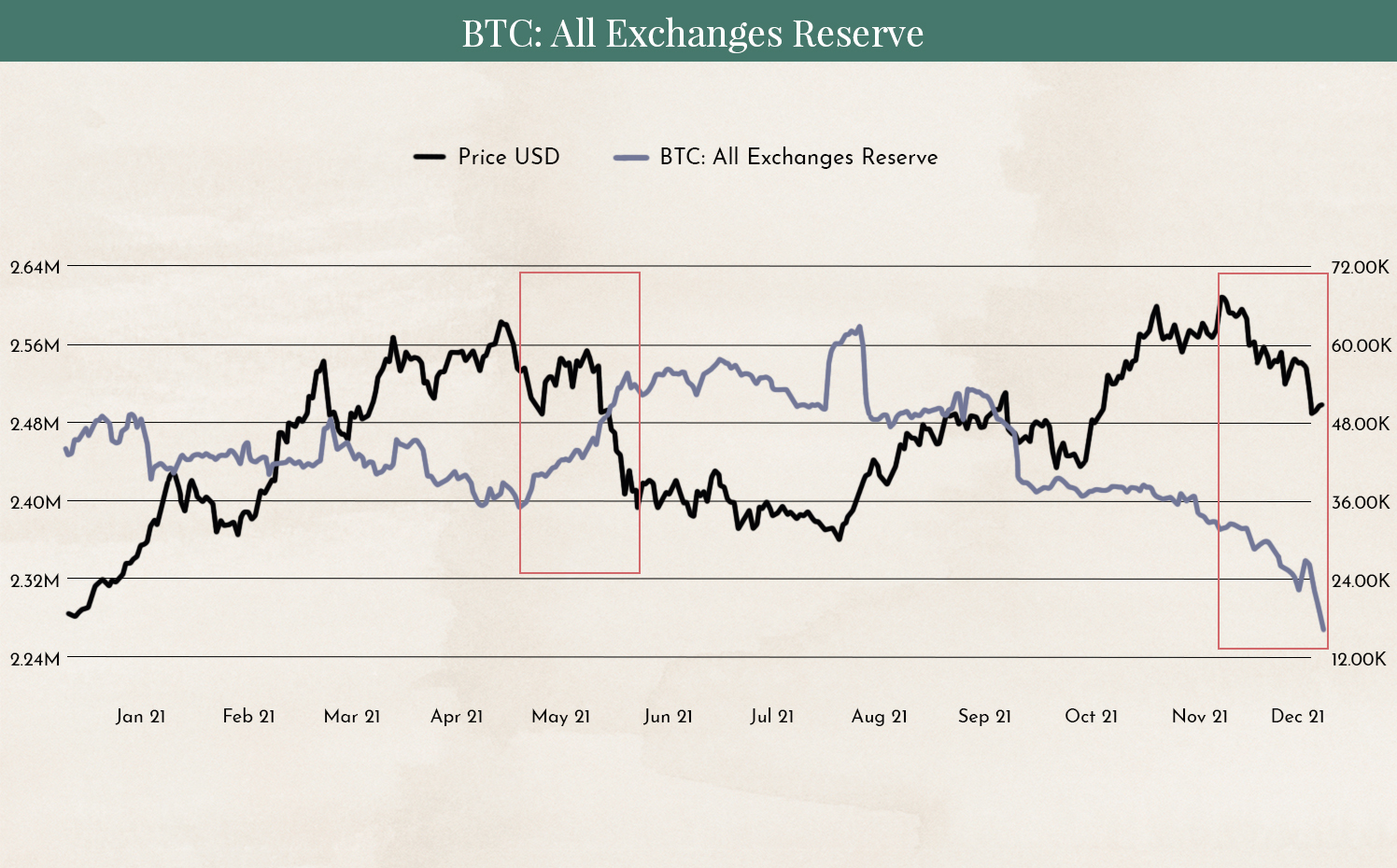
The chart shows the total Bitcoin holdings on exchanges (blue line). In May 2021, long-term investors transferred their Bitcoins from cold wallets to exchanges in order to sell them. Currently, the exact opposite is happening.
More and more Bitcoin holders believe in Bitcoin’s long-term success and future appreciation, and are therefore transferring their Bitcoins into cold wallets. As a result, new buyers are facing an increasingly limited supply. What we are currently witnessing is a massive supply squeeze that could soon propel Bitcoin sharply higher.
Critics may argue that what we are currently seeing is a massive and shameless manipulation of the entire Bitcoin market by whales. I do not believe there is a coordinated effort, but the structure of the market naturally encourages each whale to act in its own self-interest. In the end, this is exactly what makes the market so attractive to many investors: enormous risks, but also enormous opportunities. Nevertheless, many are calling for stronger regulation. While this would likely reduce the risks, it could also limit the potential for large gains in value. More on this will follow in a future market report.
Disclaimer:
The content in these blogs is provided solely for general informational purposes and is intended to help potential clients gain an understanding of our approach. They do not constitute recommendations to buy or sell assets and should not be considered investment advice. Marmot.Finance cannot assess whether or how the statements made align with your investment objectives or risk profile. If you make investment decisions based on this blog post, you do so entirely at your own risk and responsibility. Marmot.Finance cannot be held liable for any losses that may arise from the information contained in this blog post.
The products mentioned are not recommendations, but are intended to demonstrate how Marmot.Finance works and selects such products. In addition, Marmot.Finance is completely independent and does not earn any compensation from product providers in any form.


.webp)





.jpeg)



.jpeg)

.svg)


