

If you are approaching retirement, secure your income first, then invest the rest with a clear decumulation plan. Check your AHV and Pensionskasse statements, top up Pillar 3a where it genuinely reduces tax, hold two to three years of living expenses in cash, and put the remaining capital into a conservative growth portfolio built for withdrawals, not just growth.
This order matters more than most people realise. Swiss retirement income comes from three separate sources, AHV, your pension fund, and private savings, each taxed differently and paid out on different terms. Get the sequence wrong and you risk paying more tax than necessary or running short of liquid cash exactly when markets dip. A liquidity buffer protects you against forced selling in a downturn, which is often the single biggest threat to a retiree’s long-term income.
- Confirm your AHV contribution record and expected pension amount before deciding anything else
- Decide your Pensionskasse payout shape (annuity, lump sum, or a mix) based on your tax situation and health
- Top up Pillar 3a if you have unused capacity and the tax saving is worthwhile this year
- Build your cash buffer before you touch investment risk
Pro Tip: A CHF 7,258 top-up to Pillar 3a in 2025 for someone in a 30% marginal tax bracket can save over CHF 2,000 in tax that year alone, according to Zurich’s overview of the three-pillar system.
Marmot Finance helps women and families in Switzerland work through exactly this sequence, one decision at a time, without the jargon.
Key Takeaways
Retirement investment strategies in Zumikon work best when income security, tax-efficient Pillar 3a contributions, and a liquidity buffer come before any portfolio allocation decision.
Retirement investment strategies in Zumikon: a three-step playbook for this year
You do not need a complicated plan to get started, just the right order of operations. Most people delay retirement decisions because they feel overwhelming, but broken into three steps, it becomes manageable within a year.
- Verify your AHV and Pensionskasse statements. Request your official AHV contribution record and your pension fund’s latest benefit statement. This tells you your expected income and highlights any gaps, such as years spent abroad or on reduced contributions, that could shrink your state pension. Decide early whether you want your Pensionskasse paid as an annuity, a lump sum, or a blend of both, since this choice affects your tax bill and your flexibility for years afterwards.
- Prioritise your Pillar 3a top-up. If you have spare capacity and a marginal tax rate above roughly 20%, a 3a contribution nearly always pays for itself in tax savings within the first year.
- Build your liquidity buffer, then invest the rest. Set aside two to three years of expenses in cash or near-cash instruments, then allocate remaining capital toward a decumulation-aware mix rather than a pure growth portfolio.
Pro Tip: Do these three steps in order. Skipping straight to investment allocation before confirming your pension figures is one of the most common and costly mistakes near-retirees make.
How the three pillars shape your retirement income
Switzerland’s three-pillar system gives you three separate income sources, and each one has its own levers you can pull before you retire.
AHV (Pillar 1) is your state pension, calculated from your contribution years and average income. Order your AHV statement now and check for gaps. Missing years, even a handful, can permanently reduce your monthly payment, and in some cases you can still buy back recent gaps.
BVG (Pillar 2), your occupational pension fund, usually offers a choice between a lifetime annuity, a one-off lump sum, or a mix of both. An annuity gives guaranteed income but less flexibility and, in many cantons, a smaller total tax hit spread over years. A lump sum gives you control and investment flexibility but shifts market risk onto you and triggers a one-time capital-withdrawal tax.
Pillar 3a, your private tax-advantaged savings, comes in three flavours: a bank account, a fund-based solution, or an insurance policy. Bank and fund 3a solutions offer no built-in insurance cover, while insurance-based 3a products) can bundle death or invalidity protection, usually at the cost of flexibility and returns.
- Employed individuals with a pension fund can contribute up to CHF 7,258 to Pillar 3a in 2025, a figure worth reconfirming for the current tax year with your adviser
- Self-employed people without a pension fund can contribute considerably more, up to 20% of net income within statutory limits
What should your portfolio look like once you stop earning?
Decumulation is a different game to accumulation, and treating it the same way is where many retirees lose ground. The goal shifts from maximising growth to protecting a stream of withdrawals against bad timing.
Start with your liquidity buffer: enough cash or near-cash holdings to cover multiple years of living expenses, held safely to avoid market volatility. This money should never be exposed to sudden market swings because you may need to draw on it during a downturn.
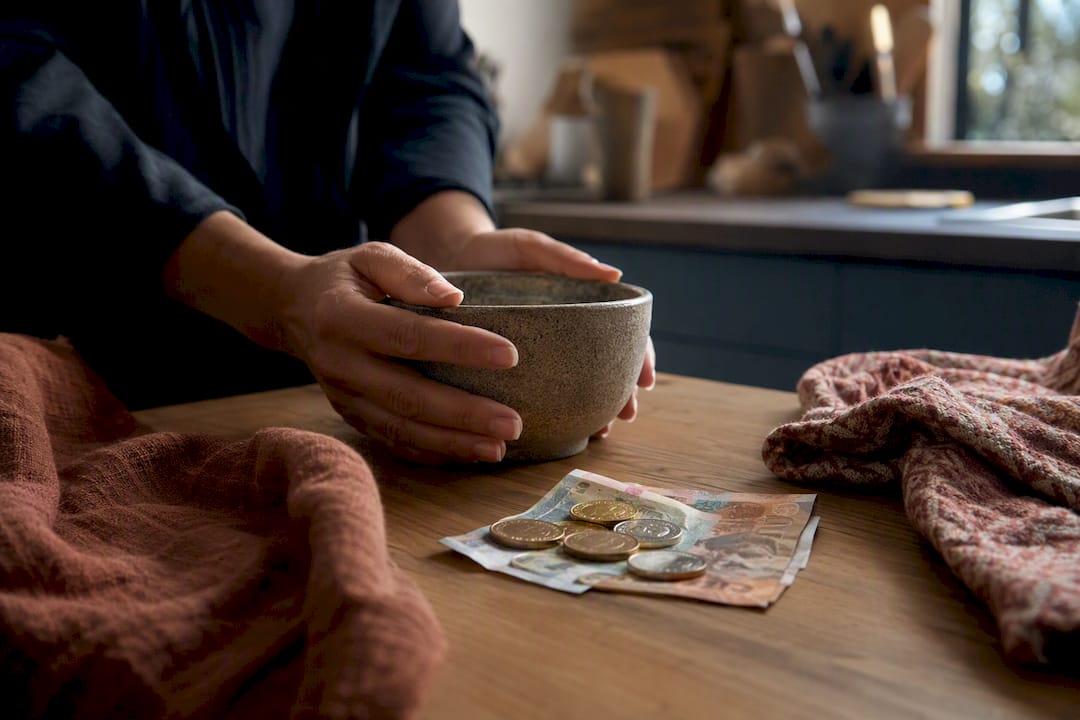
Beyond the buffer, a workable structure for many Swiss retirees includes a balanced mix of defensive assets like high-quality bonds and cash equivalents, growth assets such as globally diversified equities through low-cost funds, and deliberate management of currency exposure to reduce risk for Swiss franc-based expenses
Passive, all-equity portfolios tend to increase both sequence risk and currency exposure precisely when a retiree can least afford it. A total-return approach, where you draw from capital growth and income together rather than chasing dividend yield alone, usually fits Swiss tax treatment better and gives more flexibility on when you realise gains.
Pro Tip: Watch fees closely in retirement. A 1.5% annual charge on a CHF 1 million portfolio is CHF 15,000 a year, money that could otherwise extend your retirement income by months every decade.
What is sequence-of-returns risk and how do you protect against it?
Sequence-of-returns risk is the danger that a market downturn in your first few years of retirement does far more damage than the same downturn ten years later, because you are withdrawing money while your capital is shrinking. Losses in the first five to ten years are the ones that matter most; a crash at year fifteen barely dents a well-funded plan, but the same crash at year one can permanently reduce how long your money lasts.
Three protective tactics work well together:
- The liquidity buffer covers withdrawals during a downturn so you never sell equities at a loss to fund daily life.
- A glide path or bond tent gradually increases your bond allocation through the early retirement years, then eases back toward growth once the riskiest window has passed, which reduces sequence risk without sacrificing long-term growth.
- A bucket strategy splits your capital into short, medium, and long-term pools, so you always know exactly which money funds this year’s spending.
The often-cited American rule of drawing 4% of your portfolio each year does not translate cleanly to Switzerland. A more realistic starting range for many Swiss retirees is closer to 3 to 3.5%, depending on how much AHV and pension fund income already covers your needs.
Which tax moves cut your bill the most before retirement?
Two decisions do most of the heavy lifting: how much you put into Pillar 3a, and how you time your withdrawals.
Contributions to Pillar 3a are fully tax-deductible, up to CHF 7,258 for employees with a pension fund in 2025, and self-employed individuals without one can contribute substantially more. This is one of the few genuinely guaranteed returns available in Swiss finance, since the tax saving happens the moment you contribute, regardless of market performance.
Withdrawals are taxed separately from income, usually at a reduced rate, but taking everything in one year pushes you into a higher bracket. Staggering 3a withdrawals across several years, and coordinating them with your Pensionskasse payout timing, often reduces the total tax paid meaningfully.
- Check your remaining 3a capacity for this tax year before December
- If you hold multiple 3a accounts, plan staggered withdrawals across different years to smooth the tax impact
- Ask whether a voluntary pension fund buy-in makes sense; it is tax-deductible and can boost your eventual annuity
- Speak with a tax adviser about timing before you retire, not after
Your next 3 to 12 months: an action checklist
- Request your AHV contribution statement and your Pensionskasse benefit certificate this month.
- Decide, on paper, whether you want your pension fund paid as an annuity, lump sum, or mix.
- Check your Pillar 3a capacity and set up automatic monthly contributions if you have not already.
- Build or top up your two to three year liquidity buffer in a separate account.
- Review existing investments for hidden fees and unhedged foreign currency exposure.
- Book a review with a financial adviser if any of the above raises questions you cannot answer confidently.
How does inflation erode a Swiss retirement portfolio?
Inflation is the quiet risk that retirees underestimate, because it does not crash your portfolio overnight, it just slowly buys you less. Even modest Swiss inflation of 1 to 2% a year compounds meaningfully over a 25 or 30 year retirement, and cash sitting in a low-interest account loses real value every single year it sits there.
The main hedge is not gold or exotic assets, it is simply keeping enough growth exposure in your portfolio that your capital has a chance to outpace rising prices over time. A portfolio that is too conservative, all bonds and cash, feels safe today but risks running out of purchasing power by your mid-eighties. This is why the growth sleeve discussed earlier, roughly 45 to 60% of your invested capital beyond the liquidity buffer, matters even in retirement.
Real assets also play a role. Swiss real estate has historically tracked inflation reasonably well over the long term, and inflation-linked bonds, though less common in CHF, can be added through diversified funds for retirees who want more direct protection.
The practical takeaway is straightforward: do not let fear of market swings push you into an all-cash strategy. A total-return approach, drawing from both income and modest capital growth, tends to hold up better against inflation over a multi-decade retirement than a portfolio built entirely around safety.
Should you diversify your retirement savings internationally?
Diversifying beyond Switzerland reduces your dependence on any single economy, but it introduces two things you need to manage deliberately, currency risk and tax complexity.
Currency risk is the more immediate concern. Since your expenses are almost certainly in Swiss francs, unhedged exposure to US dollars or euros means your spending power can swing with exchange rates, sometimes significantly in a single year. A sensible approach is to hold a meaningful core in CHF-denominated or currency-hedged funds, while allowing a smaller portion of international equities to remain unhedged for long-term growth diversification.
Tax implications vary depending on where the underlying investments are domiciled and how they are structured. Funds domiciled in certain jurisdictions can create additional reporting requirements or withholding tax frictions for Swiss residents, which is why fund selection matters as much as the diversification decision itself. Working with an adviser who understands both Swiss tax rules and international fund structures avoids nasty surprises at tax filing time.
For most retirees, the practical answer is a globally diversified equity allocation, weighted toward developed markets, held through Swiss-compliant fund structures, combined with the CHF-based defensive sleeve discussed earlier. This gives genuine diversification without turning your annual tax return into a research project.
Can you include real estate in your retirement plan?
Real estate can sit inside a Swiss retirement plan in a few distinct ways, each with different rules attached.
If you own your home, you can use Pillar 3a or Pensionskasse capital toward a mortgage under specific withdrawal rules, though doing so reduces your future pension benefits and should be weighed carefully against your overall income plan. Indirect amortisation, where mortgage capital sits inside a pension vehicle rather than paying down the loan directly, is a common structure worth discussing with an adviser before retirement rather than after.
For those without a Swiss property, or wanting exposure beyond their own home, real estate funds and real estate investment vehicles offer a way to add property exposure without the illiquidity and management burden of owning a second property directly. These tend to behave differently to equities and bonds, which can smooth overall portfolio volatility.

Rental income from an investment property is taxed as ordinary income in Switzerland, so it needs to be modelled into your overall tax picture, not treated as a separate, tax-free income stream. Property held privately is also generally subject to wealth tax annually, on top of any income generated.
The right approach depends heavily on your personal circumstances, whether you already own your home, how much liquidity you need, and your appetite for the illiquidity that comes with direct property ownership.
What happens to your retirement assets when you die?
Estate planning is where retirement investing and family protection meet, and it is easy to leave until too late.
Swiss inheritance law reserves a portion of your estate for close family members, which means you cannot simply will your entire portfolio to whomever you choose if you have a spouse or children. Pillar 3a assets are treated somewhat differently to your general estate, they can often be directed more flexibly through a beneficiary nomination, so checking your 3a beneficiary designation is a small task with outsized importance.
Inheritance and gift tax rules vary considerably by canton, and spouses are typically exempt or taxed at very low rates in most cantons, while unmarried partners can face substantially higher rates. If you are in a long-term unmarried relationship, this is worth addressing directly, since the tax difference can be significant.
A basic will, reviewed every few years, combined with a clear beneficiary nomination on your 3a and pension fund, covers most of what a near-retiree genuinely needs. For more complex family situations, blended families, cross-border assets, or business interests, a conversation with an estate planning specialist alongside your financial adviser is worth the modest cost.
What actually goes wrong for people approaching retirement
The mistakes I see most often are surprisingly ordinary: cashing out a pension fund lump sum without modelling the tax hit, paying high-fee mandates that quietly erode returns over a decade, and ignoring sequence risk entirely by staying fully invested in equities right up to retirement day.
Marmot Finance’s hybrid model, personal consultations paired with digital planning tools, has helped over 350 women work through exactly these decisions. DIY works well if you are organised and comfortable with tax rules; a managed mandate earns its cost when your situation involves multiple pension pots, property, or cross-border complexity.
How Marmot Finance can help you put this plan into action
If you would rather not manage every decision above alone, Marmot Finance is built specifically for that. As a FINMA-accredited wealth manager working exclusively with women and families across Switzerland and Europe, Marmot Finance combines personal advisory sessions with digital planning tools, so you get expert guidance without losing visibility over your own numbers.
The practical starting point is Marmot Finance’s Money Makeover Quiz, which maps your current financial picture in minutes and points you toward the right next conversation, whether that is Pillar 3a structuring, Pensionskasse withdrawal planning, or building a full decumulation portfolio. From there, Marmot’s wealth management service tailors a mandate to your specific risk tolerance, tax situation, and time horizon.
This suits you particularly well if you are juggling multiple pension pots, want a second opinion on a lump sum versus annuity decision, or simply want someone to check your plan before you commit to it. Book an initial consultation through Marmot Finance to see exactly where you stand.
Sources
For official rules on AHV and Pensionskasse benefits, see the Federal Social Insurance Office. For a plain-language breakdown of the three-pillar system, read Zurich’s overview. For Swiss drawdown planning, see the Arvy retirement guide and Marmot Finance’s pension optimisation guide.
This article is general information, not a substitute for advice from a qualified financial advisor. Consult a qualified financial professional about your own circumstances before acting on anything here.
Recommended
- Schweizer Rentenoptimierung in Lausanne | Marmot Finance
- Swiss Pension Optimisation in Lausanne | Marmot Finance
- Vermögensschutzstrategien in Zermatt: Vermögen sichern | Marmot Finance
- Vermögensverwaltung in Zürich | Marmot Finance
.webp)





.jpeg)



.png)

.svg)


