

Why Swiss women face a retirement income gap of over 30%
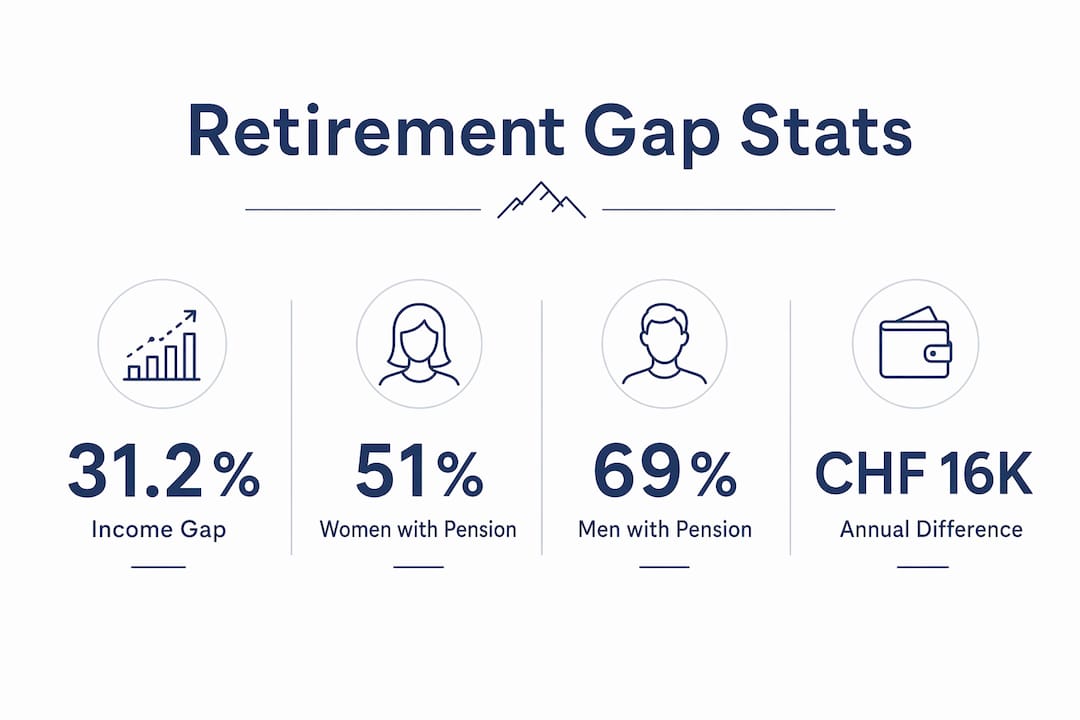
The hidden retirement risks women face in Switzerland are not theoretical. They are structural, measurable, and compounding over time. Swiss women’s average annual retirement income was 31.2% lower than men’s in 2023, amounting to CHF 36,108 compared to CHF 52,488 for men. That gap does not emerge at retirement. It builds quietly across decades of lower salaries, career interruptions, part-time roles, and pension rules designed around a full-time, uninterrupted working life.
The risks driving this outcome are interconnected and often invisible until it is too late to address them fully. The most consequential ones include:
- A significant gender pension gap, driven primarily by the second pillar (occupational pension)
- Lower occupational pension coverage rates for women compared to men
- The disproportionate impact of the coordination deduction on part-time workers
- Career breaks and caregiving roles that permanently reduce pension capital
- Women’s longer life expectancy, averaging 85.8 years, requiring savings to stretch further
- Rising healthcare and long-term care costs that are difficult to predict or budget for
- Financial vulnerability following divorce or widowhood
- Around 11% of Swiss women requiring means-tested supplementary benefits immediately upon retirement
Key figure: Swiss women’s average retirement income is CHF 36,108 per year. Men’s is CHF 52,488. That CHF 16,380 annual shortfall compounds across a retirement lasting, on average, more than two decades.
Understanding each of these risks in detail is the first step toward addressing them.
1. How income differences drive the gender pension gap
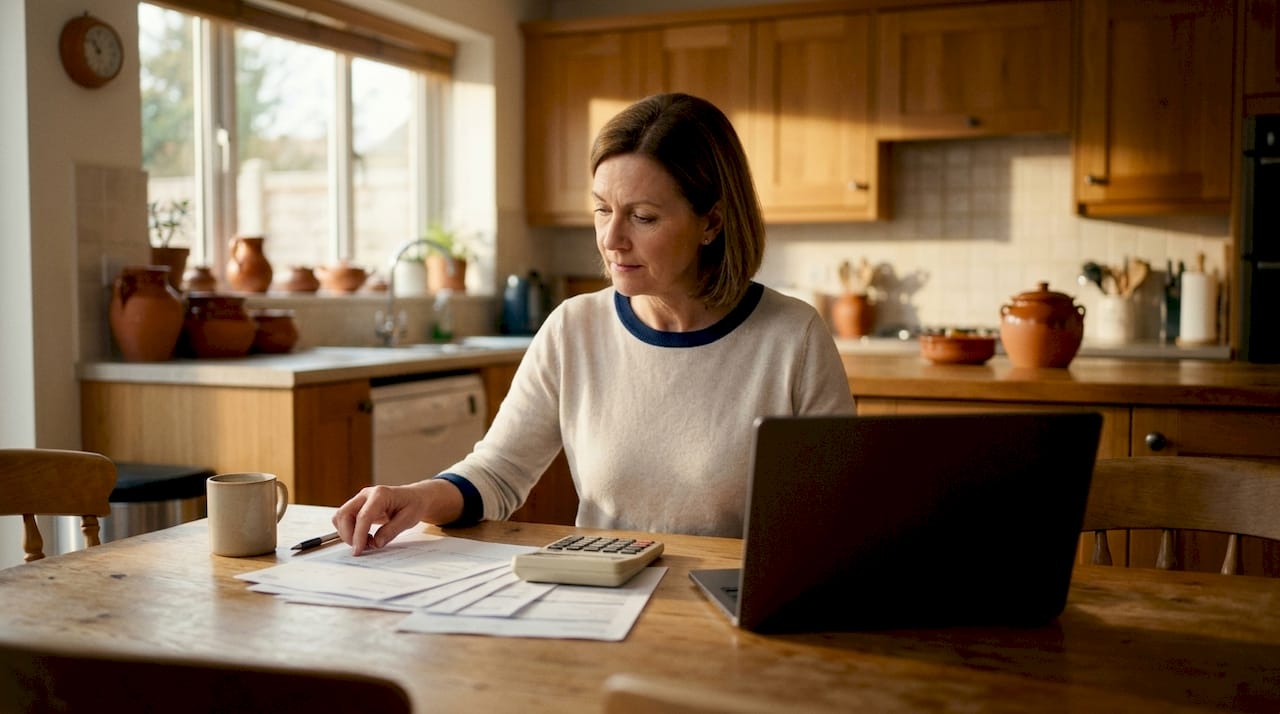
The CHF 16,380 annual gap between men’s and women’s retirement incomes traces back to one primary source: the occupational pension, known as the second pillar or LPP. Women’s lower lifetime earnings feed directly into lower pension contributions, and the system’s structural rules amplify the effect at every stage.
Only 51.1% of women receive an occupational pension compared to 69.5% of men, and women’s occupational pensions are on average 42% lower. The first pillar (AVS) is more equal by design, but it was never intended to fund retirement alone. The second pillar is where the real divergence occurs.
The coordination deduction sits at the centre of this problem. It is a fixed amount deducted from salary before calculating pensionable earnings, and it is not proportional to working hours. A woman working 60% of full-time hours loses a far greater share of her insurable salary to this deduction than a full-time worker does. The result is that part-time workers are insured for a much smaller proportion of their actual salary, and their pension capital accumulates accordingly. Lower salaries, career breaks, and this structural deduction combine to create a retirement income shortfall that is baked in long before a woman reaches 65.
2. Why caregiving and part-time work reduce pension savings so sharply
Around 60% of women in Switzerland work part-time, compared to roughly 20% of men. The primary driver is caregiving: looking after children, elderly parents, or both. These roles are socially valued but financially penalising within the Swiss pension framework.
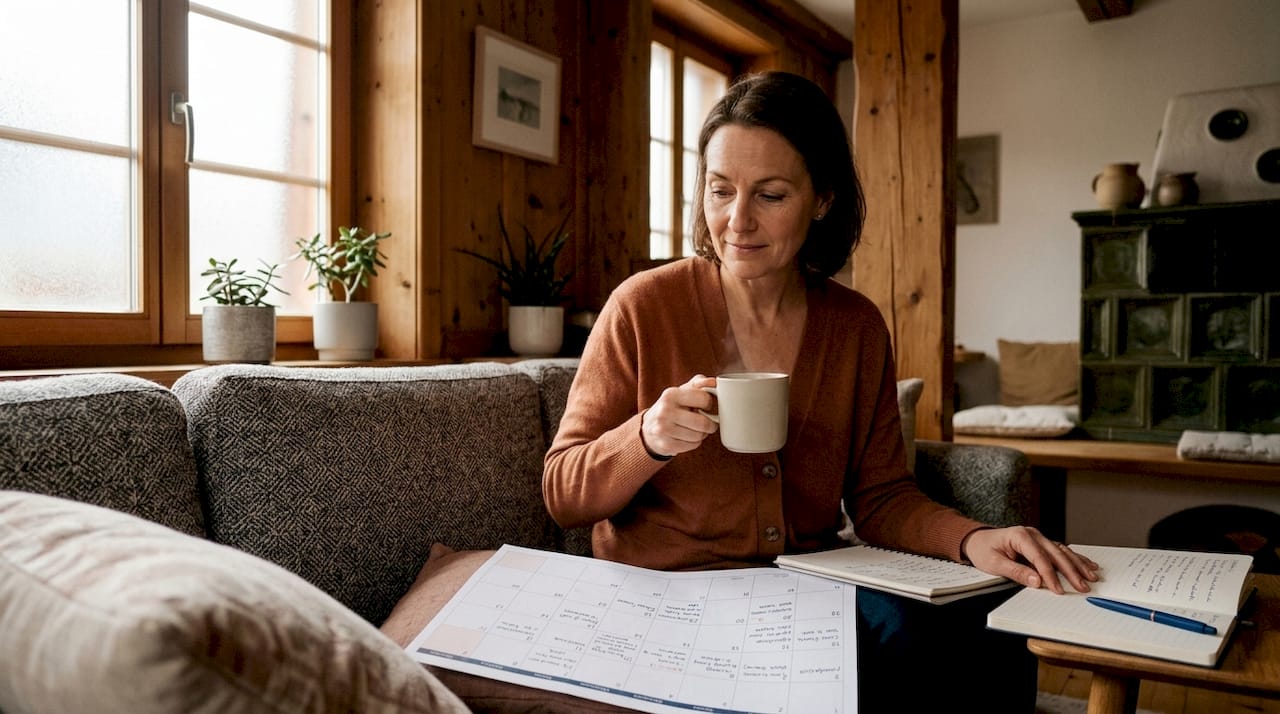
The Swiss pension system was built around the assumption of a continuous, full-time career. Career breaks for caregiving simply do not exist within its logic. Every year out of the workforce is a year without second-pillar contributions, and those gaps cannot be recovered through AVS alone.
The specific risks caregiving creates for retirement savings include:
- Contribution gaps: Years spent outside paid employment generate no occupational pension contributions, permanently reducing the final pension pot.
- Entry threshold exclusion: Women working below the annual entry threshold (currently set at a level that excludes many part-time roles) may not qualify for second-pillar coverage at all.
- Coordination deduction impact: As explained above, the fixed deduction hits part-time workers hardest, reducing insurable salary disproportionately.
- Compounding effect: Gaps and reduced contributions early in a career lose decades of investment growth, not just the missed contributions themselves.
- Supplementary benefit dependency: Around 11% of Swiss women need means-tested supplementary benefits immediately upon retirement, with dependency increasing with age.
Consider a woman who works 60% part-time for fifteen years while raising children, then returns to full-time work. Her second-pillar capital at retirement will reflect not just the lower contributions during those years, but the lost compounding on every franc not invested. The supplementary benefits system does provide a safety net, but it comes with strict asset limits: CHF 100,000 for individuals and CHF 200,000 for couples. Women with modest savings can find themselves in a difficult position, holding assets that disqualify them from assistance while still facing a genuine income shortfall.
Pro Tip: If you work part-time, ask your pension fund provider directly what your current insured salary is after the coordination deduction. Many women are surprised to find it is a fraction of their actual earnings. Knowing this figure is the starting point for any meaningful pension planning.
3. How longer life expectancy raises the financial stakes for women
Swiss women live, on average, to 85.8 years, compared to 82.2 years for men. That 3.6-year difference may sound modest, but it translates into a meaningfully longer retirement to fund, often on a smaller pension income.
Life expectancy gap: A Swiss woman retiring at 64 can expect to spend, on average, more than 21 years in retirement. A man retiring at 65 faces roughly 17 years. The same pension pot must stretch considerably further.
A longer retirement creates compounding financial pressure from several directions:
- Pension income sustainability: A fixed pension income that covers costs at 65 may fall short at 80, particularly as healthcare needs increase.
- Healthcare and long-term care costs: Rising medical expenses and the potential need for residential or home care add unpredictable costs that are difficult to plan for precisely. These costs disproportionately affect women retirees, given their longer average lifespan.
- Inflation erosion: Even modest annual inflation gradually erodes purchasing power over a 20-year retirement. Women, with longer retirements, face greater cumulative erosion than men.
- Widowhood risk: Women are more likely to outlive their partners, losing access to spousal pension income and potentially facing higher per-person living costs as a single household.
The widowhood dimension deserves particular attention. Survivor pension provisions under Swiss law provide partial protection, but they do not fully replace a partner’s income. A woman who has relied partly on her partner’s pension income can face a sharp reduction in household income at precisely the point when her own health costs are rising.
4. How Swiss women can proactively close their pension gaps
Policy reforms, including the recent raising of women’s retirement age to 65, have limited direct impact on lifetime pension income. Real retirement security depends on personal financial planning and making active use of the tools the Swiss system provides. The good news is that those tools are genuinely effective when used early and consistently.
The most impactful steps women can take include:
- Maximise Pillar 3a contributions: The third pillar is the most accessible private pension tool available. Annual contributions are tax-deductible and the capital grows tax-free until withdrawal. Women with gaps in their second pillar should treat Pillar 3a as a priority, not an optional extra.
- Buy into the second pillar (LPP buy-in): Women who have experienced career breaks or part-time periods can make lump-sum payments into their occupational pension fund to fill the gaps. This is a tax-advantaged approach that directly improves pension entitlements and remains underused.
- Delay retirement where possible: Early retirement before age 65 reduces the AVS pension by 6.8% per year, permanently. Conversely, delaying retirement increases the pension. For women with pension gaps, every additional year of contributions and deferred drawdown has a material effect.
- Review pension statements annually: Most women have never read their pension fund statement in detail. Understanding your projected pension income, your insured salary, and your accumulated capital is the foundation of any planning.
- Pursue career development and salary negotiation: Higher earnings directly increase second-pillar contributions. Closing the salary gap is the most direct route to closing the pension gap.
Women benefit greatly from proactive engagement with pension system mechanics and tools like Pillar 3a and occupational pension buy-ins, which remain underutilised across the board. The financial life-cycle approach, planning pension contributions alongside career decisions, family planning, and investment choices, produces materially better outcomes than addressing pension gaps reactively in the years before retirement.
Pro Tip: When reviewing your pension fund statement, look specifically at the “coordination deduction” line and the resulting “insured salary.” If the insured salary is less than 50% of your gross salary, a buy-in or a change in employment structure could significantly improve your retirement position. A qualified pension adviser can model the exact impact.
For women who want a personalised financial plan that accounts for their specific career history, family situation, and retirement goals, working with a specialist is often the most efficient path forward.
5. How divorce or widowhood reshapes retirement finances
Divorce and widowhood are among the most financially disruptive events a woman can face in the context of retirement planning, yet they receive far less attention than income or savings gaps. Both events can fundamentally alter the retirement income picture, often at a point when there is limited time to recover.
Under Swiss law, occupational pension assets accumulated during a marriage are split equally upon divorce, a provision known as pension splitting. This applies to both partners’ second-pillar capital. In theory, this protects the lower-earning spouse. In practice, the outcome depends heavily on the duration of the marriage, the relative pension capital accumulated by each partner, and whether the divorce occurs early or late in a career. A woman who divorces at 55, after years of part-time work and caregiving, may receive a share of her partner’s pension capital, but that capital may not compensate fully for her own reduced accumulation.
Widowhood creates a different set of risks. Swiss survivor pension rules provide a widow’s pension under the AVS and, in some cases, under the second pillar. However, these benefits are subject to conditions: the widow must have dependent children or be over a certain age, and the amounts are partial rather than full replacements of the deceased partner’s income. A woman who has been financially dependent on her partner’s higher pension income can face a sudden and permanent reduction in household income. The longer she lives after her partner’s death, the more significant the cumulative financial impact.
Both divorce and widowhood underscore the importance of women maintaining their own independent pension capital throughout their working lives. Financial dependence on a partner’s income, however stable it appears during the marriage, creates a structural vulnerability that the Swiss pension system only partially addresses.
6. What Swiss law and policy mean for women’s retirement benefits
The Swiss pension system rests on three pillars: the state pension (AVS), the occupational pension (LPP), and private savings (Pillar 3a). Each pillar interacts with women’s working patterns differently, and recent policy changes have altered the landscape in ways that matter for retirement planning.
The most significant recent reform is the raising of women’s statutory retirement age from 64 to 65, phased in under the AHV 21 reform. The stated aim was to equalise retirement ages and improve AVS funding. For women, the practical effect is an additional year of mandatory contributions and, for those who cannot or choose not to work until 65, a potential reduction in AVS benefits if they retire before the new threshold. Transitional provisions offer some compensation for women in the cohorts directly affected, but the long-term structural change is clear.
The LPP reform, which has been subject to extended political debate, aims to improve occupational pension coverage for part-time and low-income workers, a group that is disproportionately female. Proposed changes include adjusting the coordination deduction to make it proportional to working hours rather than fixed, which would directly increase the insured salary for part-time workers. As of 2026, the reform’s final form and implementation timeline remain subject to political process, but the direction of travel is towards greater inclusion of non-standard working patterns.
Women with international backgrounds living in Switzerland face additional complexity. Pension entitlements from previous countries of residence, gaps in AVS contribution records due to periods abroad, and the interaction between Swiss and foreign pension systems all require careful analysis. Switzerland has bilateral social security agreements with many countries, but the specifics vary considerably and the burden of navigating them falls on the individual.
The broader policy direction acknowledges the structural disadvantages women face, but legislative change moves slowly. Personal financial planning, informed by an understanding of the legal framework, remains the most reliable route to retirement security.
Key takeaways
Swiss women face a structurally embedded retirement income gap of 31.2%, driven by lower occupational pension coverage, caregiving penalties, and a longer lifespan that demands more from smaller savings.
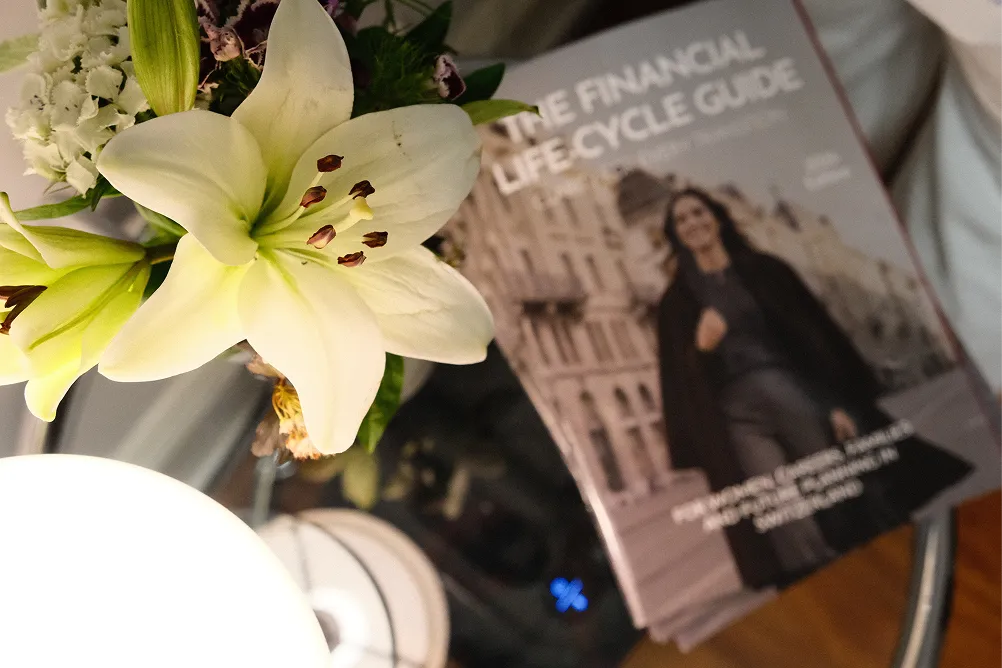
Marmot Finance works with women across Switzerland to build retirement plans that account for these specific risks, from pension gap analysis to investment strategy and tax planning. If you would like to understand your own retirement position in detail, speak to our team for a personalised consultation.

.webp)





.jpeg)



.png)

.svg)


