

Request your AHV and pension fund statements this week, open or top up a Pillar 3a account before the tax year closes, and book a focused review of where you stand. These three moves matter because women in Switzerland retire with meaningfully less than men, and most of that gap is fixable if caught early. A women-focused planner, such as Marmot Finance, can help you turn the numbers into a plan rather than a worry.
TL;DR:
- Women in Switzerland retire with about 30% less in income than men, mainly due to gaps in pension contributions during part-time work and career breaks.
- Reviewing AHV, pension fund, and Pillar 3a statements periodically helps identify contribution gaps that could be fixed through buy-ins or increased savings years before retirement.
- Building a consistent savings habit, such as automating Pillar 3a contributions and checking statements quarterly, significantly improves the chances of closing pension gaps.
- High living costs in Thalwil require early planning to maintain steady contributions, especially with reduced income or increased expenses from childcare or part-time work.
- Engaging a women-focused financial planner like Marmot Finance can provide tailored strategies, including pension optimization and tax-efficient savings, particularly for women with complex or cross-border assets.
Why this matters: the gender pension gap and the three-pillar system
The numbers are stark. Women in Switzerland receive on average about 30% less in total retirement income than men, which works out to roughly CHF 19,000 less per year. That is not a rounding error. It is the difference between a comfortable retirement and constantly checking your bank balance.
Switzerland’s retirement system rests on three pillars: the state pension (AHV), your occupational pension through your employer (2. Säule), and private savings through Pillar 3a. AHV is largely fixed by your contribution record, but the other two pillars respond directly to your choices, which is exactly why they deserve your attention.
The gap comes from somewhere specific. A large majority of part-time workers in Switzerland are women, and part-time hours often fall below the BVG entry threshold, meaning no occupational pension contributions get made at all during those years. Career breaks for childcare compound this. Each year without contributions is a year your 2. Säule doesn’t grow, and that shortfall rarely gets noticed until retirement is close.
Common pension and planning gaps to check first
Before you can fix anything, you need the paperwork. Gather these four documents:
- Your AHV account statement, showing your full contribution history
- Your Pensionskasse (pension fund) certificate, showing accumulated occupational pension capital
- Your Pillar 3a statements, if you have one or more accounts
- Payslips and a rough timeline of your employment, including any part-time or unpaid periods
Once you have them, look for three things: your projected pension at retirement age, any visible gaps in contribution years, and whether periods of part-time work fell below the BVG entry threshold. That last point matters more than most people realise, since WomenMatters’ guidance on AHV, pension fund and Pillar 3a makes clear that these gaps are common and often invisible until someone actually checks.
Whether a gap is still fixable depends mostly on timing. A gap ten or fifteen years from retirement leaves room for voluntary buy-ins, higher 3a contributions, or long-term investing to close the difference. A gap five years out needs a more targeted approach, often voluntary pension payments rather than market growth.

Pro Tip: Keep a simple spreadsheet with one row per year of your working life. Mark part-time years, career breaks, and 3a contributions. Patterns that are easy to miss in isolated documents jump out immediately once they’re side by side.
A practical 6 to 12 month plan for closing the gap
Fixing a pension shortfall isn’t about one big decision. It’s a sequence of smaller ones, spaced out over the year.
- Month 1: Request your AHV statement and Pensionskasse certificate. Open a Pillar 3a account if you don’t already have one, or make sure this year’s contribution is in before the deadline.
- Month 1 (parallel): Build or confirm an emergency buffer of three to six months’ expenses. This stops you from raiding long-term savings when something unexpected happens.
- Months 2 to 6: Automate your 3a contributions monthly rather than relying on a single lump sum in December. Set a simple long-term allocation for any additional savings, and check that your insurance and pension beneficiary details actually reflect your current life situation.
- Months 6 to 12: Evaluate whether a voluntary buy-in into your pension fund makes sense. This can be genuinely effective for closing large gaps, though it works best when retirement is far enough away to make the tax relief worth the tied-up capital, as WomenMatters notes in its guidance on private provision.
- Months 6 to 12: Decide whether a structured wealth management mandate or ongoing coaching fits better than managing this alone.
Professional advice tends to earn its cost once your situation has more than one moving part, multiple accounts, a cross-border tax question, or a portfolio large enough that a percentage-point difference in fees actually shows up in francs. In Switzerland, advisory fees are usually charged either as a flat coaching rate or as an annual percentage of assets under management, often tiered so the rate drops as your portfolio grows. For a single 3a account and straightforward employment, doing the checklist yourself is often enough. For anything more layered, a short paid consultation to sanity-check your plan is rarely wasted money.
How a women-focused wealth manager fits into the picture
This is where a service built specifically around women’s financial lives can genuinely change the outcome, not just the experience. Marmot Finance is a FINMA-accredited wealth manager working exclusively with women and families across Switzerland and Europe, and its services map directly onto the gaps described above:
- Personalised wealth management with pension optimisation built into the strategy, not treated as an afterthought
- The Money Makeover Quiz, a free starting point for understanding where your finances stand today
- Financial coaching for women who want guidance without handing over full portfolio control
- Community education and workshops that make pension and investment topics feel less intimidating
Over 350 women have already worked with Marmot Finance to reorganise their finances, and the firm manages accounts in CHF, EUR, and USD, which matters if your income or assets cross borders. If you mainly need clarity and a plan, coaching or a one-off advisory session usually covers it. If you want someone actively managing the investment side while you focus on everything else, a full mandate makes more sense, an approach Marmot Finance describes in detail when discussing the hidden retirement risks women face.
Where to find financial planning support in Thalwil
Thalwil sits in a part of Switzerland with no shortage of banks and advisory firms, but not all of them are set up to think about your finances the way a woman actually experiences them, career breaks, part-time years, joint accounts that quietly become one person’s responsibility. Local branches of major Swiss banks offer general pension consultations, and some run periodic events aimed at women, similar to the sessions Raiffeisen organises around pension planning.
What’s harder to find locally is a dedicated, ongoing relationship built specifically around women’s financial patterns rather than a generic retirement product sold the same way to everyone. That gap is exactly what women-focused advisory models exist to close, and it’s worth reading a broader perspective on the approach, such as this practical guide to financial planning for women, to see how different firms structure that support.
Marmot Finance serves clients in Thalwil as part of its Swiss and European coverage, combining remote consultations with digital tools so you’re not limited to whoever happens to have an office near you. For many women, that combination, a real person to talk to plus tools you can check on your own time, ends up mattering more than physical proximity to a branch.
Cost of living in Thalwil and what it means for your plan
Thalwil is not a cheap place to live, and that reality shapes financial planning more than people expect. Housing costs along the Zürichsee’s left bank sit well above the Swiss average, and higher fixed costs squeeze the amount left over for pension top-ups and long-term investing, particularly during years when childcare or part-time work already reduces income.

This is precisely why sequencing matters. An emergency buffer isn’t optional in a high cost area. If unexpected expenses force you to dip into your Pillar 3a or interrupt contributions, you lose both the immediate tax benefit and the compounding growth. Automating smaller, consistent contributions tends to work better here than committing to a large annual lump sum you might not be able to sustain in a tighter month.
Higher local salaries partly offset the cost of living, but they also mean more of your income sits in higher tax brackets, which makes tax-efficient tools like Pillar 3a even more valuable per franc contributed. A woman earning a solid salary in Thalwil but working reduced hours after having children faces a particular squeeze: living costs stay high, income drops, and pension contributions are often the first thing paused. Recognising that pattern early, rather than after several years have passed, is what makes the difference between a manageable gap and one that needs a much bigger correction later.
Tax considerations for pensions and investments
Pillar 3a contributions are deductible from your taxable income up to the annual federal limit, which makes it one of the few places in Swiss tax law where saving for retirement and reducing your tax bill happen in the same move. For women with irregular income, part-time years, or a career break on the horizon, timing 3a contributions around higher-earning years can meaningfully reduce the tax paid on that income.
Voluntary buy-ins into your occupational pension fund carry the same deductibility, often at a larger scale than 3a, which is part of why they’re worth evaluating seriously if you’re within fifteen years of retirement and have identified a contribution gap. The trade-off is liquidity: money paid into your pension fund is generally locked in until retirement, so this only makes sense once your emergency buffer and shorter-term goals are already covered.
Investment income outside your pension, dividends, interest, and capital gains on movable assets, is taxed differently depending on canton and your personal situation, and cross-border elements add another layer if you hold assets or income outside Switzerland. This is one area where a general checklist stops being enough. A short conversation with someone who understands both Swiss pension mechanics and your specific residency and asset picture tends to save far more in tax efficiency than it costs in fees.
A financial planner’s perspective on commuter towns
Working with women and families across Switzerland shows a consistent pattern: the gap between knowing you should check your pension and actually doing it is almost never about intelligence or capability. It’s about the paperwork feeling tedious and the numbers feeling abstract until retirement is uncomfortably close.
The reassuring part is that small, consistent steps compound just as reliably as the pension gap itself accumulates. A woman in a commuter town like Thalwil, juggling a demanding job, a household budget, and maybe reduced hours during a few specific years, does not need a dramatic financial overhaul. She needs pensionable income and tax-efficient savings prioritised over less consequential decisions, and a habit simple enough to actually stick.
Here is the one habit worth adopting above all others: review one pension statement every quarter. Not annually, not “when I get around to it”. Quarterly. It takes fifteen minutes and turns a once-daunting annual reckoning into a series of small, manageable check-ins that catch problems while they’re still cheap to fix.
Getting started with Marmot Finance in Thalwil
There are other routes into this: a bank branch consultation, a generalist advisor, or working through the checklist entirely on your own. But if you want a plan built specifically around how women’s financial lives actually unfold, career breaks, part-time years, joint decisions, Marmot Finance is the more direct route to that outcome, not a generic add-on to a broader banking relationship.
An initial consultation typically starts with reviewing your AHV and pension statements alongside your broader goals, and it benefits most women who feel like they’re managing money reactively rather than with a clear direction. Fees are structured transparently, either as a coaching rate or as a tiered percentage of assets under a full management mandate, and a mandate only makes sense once your situation has enough complexity to justify it.
The Money Makeover Quiz is the easiest place to begin if you’re not sure what you need yet. If you already know you want a proper conversation, book a consultation through Marmot Finance’s Thalwil service page, or explore the wealth management services and fee structure directly.
Sources
The Federal Statistical Office’s data on the gender pension gap is the primary source behind the figures in this article and worth reading in full if you want the wider Swiss context. For practical, step-by-step guidance on AHV, pension fund statements, and Pillar 3a, WomenMatters’ resource is a solid regional starting point. Marmot Finance’s own guide to the hidden retirement risks women face expands on several points raised here in more depth.
This article is general information, not a substitute for advice from a qualified financial advisor. Consult a qualified financial professional about your own circumstances before acting on anything here.
- Federal Statistical Office — gender pension gap and pensions in Switzerland
- WomenMatters — Vorsorge in der Schweiz: what women should know about AHV, pension fund & Pillar 3a
- Raiffeisen — women and pension planning
Recommended
- The hidden retirement risks women face in Switzerland
- How to build wealth as a single woman in Switzerland
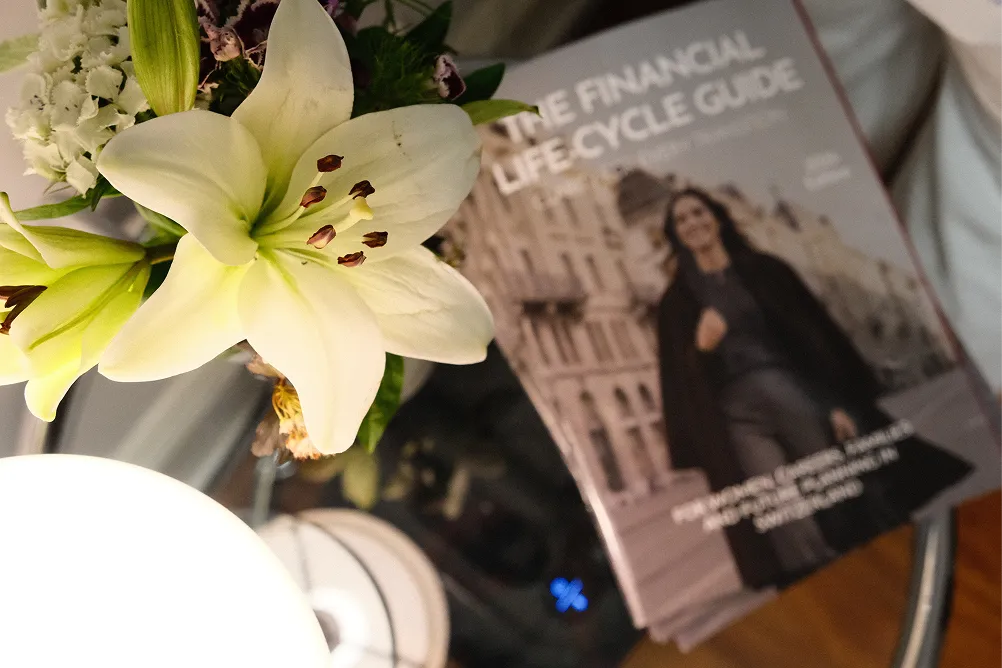
- Financial Life-Cycle Guide for Women in Switzerland
- How to build wealth as a mother in Switzerland 2026

.webp)





.jpeg)



.png)

.svg)


