

A practical starting point for most Swiss women is a balanced allocation of roughly 50% equities, 25% bonds (CHF-denominated or hedged), 15% alternatives, and 10% liquidity. A common Swiss starting allocation is 40–60% stocks, 20–40% bonds, 10–20% alternatives, and a 5–10% liquidity reserve; this framework is widely used by Swiss portfolio providers. That split reflects the primacy of allocation over product selection, gives meaningful inflation protection, and is steady enough to hold through a market downturn without panic-selling.
Three immediate actions to take this week:
- Check your pillar 3a. Confirm you have an account open and that contributions are invested, not sitting in cash.
- Set a monthly contribution. Even CHF 200–300 per month into a broad equity ETF compounds significantly over a 20-year horizon.
- Choose a core ETF mix. A global equity ETF paired with a CHF-hedged bond ETF covers the two largest sleeves of your portfolio with minimal cost and complexity.
Why does asset allocation matter more for women in Switzerland?
The structural reality is straightforward: Swiss women retire with significantly lower pension assets than men, largely because part-time work and career breaks reduce both pillar 2 contributions and AHV credits. That gap means the private portfolio has to work harder. Getting the allocation right is not a refinement — it is the foundation.
The three-pillar system shapes everything. Pillar 1 (AHV) provides a basic state pension, pillar 2 covers occupational savings, and pillar 3a is the private, tax-advantaged layer you control directly. Women who take time out for caregiving often accumulate less in pillars 1 and 2, which makes maximising pillar 3a contributions and investing them — rather than leaving them in cash — particularly consequential.
Discipline and steadiness in investing, traits that research associates more frequently with women investors, tend to produce better long-term results than frequent market timing. The advantage is real, but only if the money is actually invested rather than held in cash.
Holding too much cash is the most common and costly mistake. The UBS Frauenperspektiven 2026 study, which surveyed over 1,000 women in Switzerland, found that 57% of women name security as their primary investment criterion, well ahead of long-term wealth accumulation at 34%. That preference for safety is understandable, but over-holding cash erodes real purchasing power over time. A planned liquidity reserve within a moderate range is prudent; holding significantly more cash can be a drag on returns.
Pro Tip: Before reviewing your investment allocation, pull your most recent pillar 2 statement and calculate the projected retirement income. That number tells you exactly how much your private portfolio needs to contribute — and makes the case for investing rather than saving.
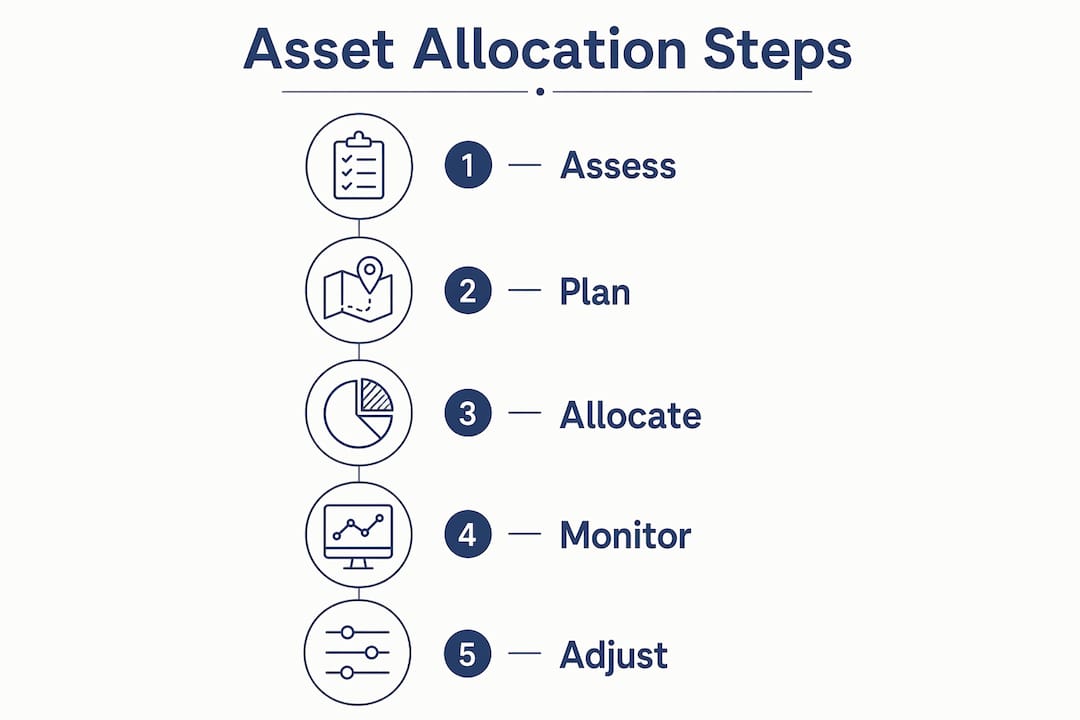
What do concrete allocation ranges and sample portfolios look like?
Swiss portfolio practice supports a broad allocation framework with equities as the largest portion, followed by bonds, alternatives, and a modest liquidity reserve. Within those bands, the right position depends on your time horizon and tolerance for short-term volatility.

For each portfolio, split equities roughly 30% Swiss and 70% global. Swiss equities provide currency alignment and dividend income; global equities add diversification across sectors and geographies that the Swiss market, concentrated in pharmaceuticals, financials, and consumer staples, cannot offer alone. Alternatives might include real estate funds, infrastructure, or a small allocation to gold as a diversifier, which has historically reduced portfolio volatility without sacrificing long-term returns.
Use these as starting points, not prescriptions. A woman in her early 40s with a stable income and a 25-year horizon can reasonably adopt the growth allocation. Someone approaching retirement in eight years, or with significant pillar 2 income already secured, may find the conservative split more appropriate.
How should you manage CHF exposure and bonds in a Swiss portfolio?
The rule is simple: keep the defensive sleeve in CHF or hedge it. A global bond ETF denominated in USD or EUR introduces currency volatility that undermines the very stability bonds are meant to provide. For a person spending in CHF, a bond that falls 8% in local terms but loses another 6% to currency moves is not a shock absorber — it is a second source of risk.
Practical instruments for the bond sleeve:
- Swiss Confederation bonds (Eidgenossen): the benchmark CHF-denominated government bond, low yield but genuinely defensive.
- CHF-hedged global bond ETFs: broader credit exposure with the currency risk removed at the ETF level, typically at a modest hedging cost.
- Short-duration CHF bond funds: useful for the portion of the defensive sleeve you may need to access within five years.
For equities, global exposure is appropriate and desirable. A global equity ETF tracking the MSCI World or FTSE All-World index requires no currency hedging in the growth sleeve, because equity returns over long horizons absorb currency fluctuations. The portfolio diversification benefit of holding non-CHF equities outweighs the short-term currency noise.
Pro Tip: Check the currency denomination on every ETF before you buy. A “global bond ETF” listed on the SIX Swiss Exchange may still carry unhedged USD or EUR exposure unless the fund name explicitly states “CHF hedged.”
What rebalancing rules actually work in practice?
Two methods are worth knowing, and most investors benefit from combining them.
- Calendar rebalancing. Once a year, review your allocation and sell overweight assets to buy underweight ones. Annual is sufficient for most long-term portfolios; more frequent rebalancing adds cost without meaningfully improving outcomes.
- Threshold rebalancing. Rebalance whenever any asset class drifts more than 5–10% from its target. This catches large market moves — a strong equity rally, for instance — without requiring constant monitoring.
- Contribution-led rebalancing. Direct new monthly contributions to whichever sleeve is currently underweight. This reduces friction and behavioural stress by avoiding the need to sell, and it is particularly effective during accumulation years.
Life events require deliberate allocation reviews, not just mechanical rebalancing. A career break for caregiving reduces income and may call for a temporarily higher liquidity reserve. Returning to full-time work is a good moment to increase monthly contributions and shift slightly towards growth. Approaching retirement within ten years, the standard guidance is to reduce equity exposure gradually, shifting towards the conservative portfolio profile shown above. The women’s wealth lifecycle is rarely linear, and the allocation plan should reflect that.
How do you implement this step by step in Switzerland?
- Check your pension statements. Request your pillar 2 statement and confirm your AHV record. Identify any gaps from part-time work or career breaks.
- Set a clear goal. Decide the target retirement income and calculate the shortfall your private portfolio needs to fill.
- Open or confirm accounts. A pillar 3a account with an investment option (not a savings account) and a taxable securities account (Depot) at a Swiss bank or online broker.
- Select core ETFs. A global equity ETF and a CHF-hedged bond ETF cover the two main sleeves. Add a real estate or infrastructure fund for the alternatives sleeve if the portfolio is large enough to justify it.
- Automate contributions. Set a standing order to invest monthly. Starting with small regular investments removes the temptation to time the market.
- Set your rebalancing rule. Choose annual calendar rebalancing or a ±5–10% threshold, and note it in your calendar.
On costs: custody fees at Swiss banks vary widely. Online brokers typically charge lower custody fees and trading commissions than traditional banks. The total expense ratio (TER) on a broad equity ETF is usually well below 0.25% per annum; actively managed funds often charge ten times that. Pillar 3a contributions are deductible from taxable income, making them the highest-priority investment vehicle for most Swiss residents before funding a taxable account.
Pro Tip: Treat your pillar 3a as part of your overall allocation, not a separate silo. If your 3a is invested in equities, that counts towards your equity sleeve. Integrating it avoids unintentional overweighting and improves tax efficiency across the whole portfolio.
When does it make sense to work with a wealth manager?
DIY investing works well when the portfolio is straightforward, the tax situation is uncomplicated, and you have the time and inclination to monitor it. The case for professional help strengthens when any of the following apply: a complex pillar 2 or 3a situation (multiple employers, gaps, vested benefits accounts), significant assets across multiple currencies, an impending life event such as divorce or inheritance, or simply a preference for having someone accountable for the plan.
Questions worth asking any prospective adviser:
- Are you FINMA-accredited, and do you act as a fiduciary?
- How are you compensated — fee-only, or do you receive product commissions?
- Can you show me a sample allocation and explain the rationale?
- How do you integrate pillar 2 and 3a into the overall plan?
- What happens to my portfolio during a significant market drawdown?
The most important question is the simplest: “Whose interest do you represent?” A FINMA-accredited adviser operating under a fiduciary standard is legally required to act in your interest. An adviser compensated by product commissions has a structural conflict, regardless of their intentions.
Red flags include opaque fee structures, a reluctance to explain the allocation methodology, and a tendency to recommend proprietary products without comparing alternatives. Any adviser who cannot articulate a clear rebalancing rule or explain how they handle currency risk in a CHF-based portfolio is not ready to manage a Swiss woman’s long-term wealth. For tailored portfolio strategies that account for life-stage adjustments, the value of a specialist is considerable.
Key takeaways
A balanced allocation of 50% equities, 25% CHF-hedged bonds, 15% alternatives, and 10% liquidity gives most Swiss women a practical, inflation-aware starting point. Allocation ranges commonly run 40–60% equities, 20–40% bonds, 10–20% alternatives, and 5–10% liquidity in Swiss practice, and can be tailored to your time horizon, income stability and risk comfort.
A note on staying invested when markets move
The behavioural side of investing is where most long-term plans succeed or fail, and it is worth being direct about it. Markets will fall. There will be a quarter where your portfolio is down and the news is alarming. The evidence is clear that women’s disciplined approach to investing, steady contributions, less reactive trading, tends to produce better long-term outcomes than the alternative. That is a genuine structural advantage, and it is worth protecting.
Three practical techniques help: a monthly money meeting (30 minutes, review contributions and allocation, nothing more), automated contributions so the decision is made once rather than monthly, and a written investment policy statement that records your target allocation and rebalancing rule. When markets fall sharply, that document is what you refer to rather than your emotions.
Marmot Finance has worked with over 350 women in Switzerland, all navigating the same combination of pension gaps, career complexity, and the need for a plan that actually fits their lives. The Money Makeover Quiz is a useful starting point for understanding where you stand before any formal conversation.
How Marmot Finance supports women building long-term wealth in Switzerland
For women who want a plan built around their actual situation — pillar gaps, currency exposure, life-stage adjustments and all — Marmot Finance offers something most Swiss wealth managers do not: a FINMA-accredited service designed specifically for women and families, combining goal-based allocation, pillar 2 and 3a integration, ongoing rebalancing, and financial coaching in one place.
The process starts with understanding your full picture: pension entitlements, existing assets, income trajectory, and goals. From there, Marmot builds and manages a portfolio aligned with your target allocation, reviews it at least annually, and adjusts it when life changes. There are no opaque product commissions and no generic off-the-shelf portfolios.
To get started, book an initial discovery meeting through Marmot’s contact page. Come prepared with your most recent pillar 2 statement, a rough sense of your monthly savings capacity, and any questions about currency exposure or pension gaps. That conversation is where the plan begins.
Useful sources and further reading
- UBS Frauenperspektiven 2026 — The most current Swiss research on how women approach money, investment, and retirement planning. Essential context for understanding the gender investment gap in Switzerland.
- Schweizer Finanzblog: Asset allocation — Practical Swiss guidance on allocation principles, the cost of over-holding cash, and pillar integration.
- Shielpath: Investment portfolio in Switzerland — Clear explanation of Swiss portfolio construction norms, including the allocation ranges and rebalancing thresholds used in this guide.
- Womenmatters: Finanzielle Vorsorge für Frauen — Swiss-focused resource on the three-pillar system and the specific pension gaps women face.
- Marmot Finance: Asset allocation for women in Switzerland — Marmot’s own guide to allocation approaches tailored to women, with risk calibration and life-stage adjustments.
- Marmot Finance: Best asset classes for Swiss women investors — Practical breakdown of which asset classes suit Swiss women and how to combine them across the allocation sleeves described in this guide.
Use these sources to validate the principles here against your own situation, and consult a FINMA-accredited adviser before making significant changes to your pension or investment structure.
Recommended
- Asset Allocation for Women Investors in Switzerland | Marmot Finance
- Women Investment Advice Explained: Your Swiss Guide | Marmot Finance
- Best Asset Classes for Women Investors in Switzerland | Marmot Finance
- Tailored Portfolio Strategies for Women Investors

.webp)





.jpeg)



.png)

.svg)


